by Unknown | 3/15/2010 12:50:00 PM
According to a new policy adopted by the American Historical Association, AHA members can now create "interest groups," or sub-societies under the AHA's auspices. All that's needed is an application and signatures from 50 AHA members.

I've argued before for a Bloggers' Caucus at the AHA to push for more recognition of history blogging as a vital scholarly endeavor deserving of favorable consideration during the hiring and tenure processes. It seems to me the interest group setup would be ideal for such a caucus; bloggers could constitute themselves as a pressure group within the AHA while also sponsoring affiliated panels, lunches, and awards at the conference to promote blogging as scholarship.

All we'd need to get started is an organizer. I nominate Ralph Luker, Jonathan Dresner, or Claire Potter for the position.

Labels: ,

 
by Unknown | 12/21/2009 10:32:00 PM
As Andrew wrote two weeks ago, my friend John Russell (aka Bastoche at ProgressiveHistorians) has died. John was a lovely man and a talented intellectual whose sharp analysis of neoconservative ideology was virtually without peer in the blogosphere or elsewhere.

As a tribute to John, I've compiled his online writings and made them available at The Political Writings of John Russell. If you haven't had a chance to read his insightful analysis, please do so -- you'll find it time well spent.

Labels: ,

 
by Unknown | 11/19/2009 08:00:00 AM
For the second year in a row, I've been snookered into asked to help judge the Cliopatria Awards. These are the premier awards for history blogging, sponsored by Ralph Luker's excellent group blog Cliopatria.

There are six awards offered: Best Group Blog, Best Individual Blog, Best New Blog, Best Post, Best Series of Posts, and Best Writer. I'll be helping to judge two of the six categories.

Nominations are open until the end of the month. They've been a little slow so far, so please head on over and nominate your favorite blogger, blog, or post. Thanks!

Labels: ,

 
by Unknown | 10/27/2009 06:00:00 AM
My colleague Elizabeth Nelson and I are in the opening stages of putting together a conference panel proposal for the AHA conference in Boston in 2011 (submission deadline: February 15 of next year). We're looking for a third panelist to join our proposal.

The topic of the panel will be "The Question of Rationality in History," or perhaps something with a bit more of a religion-based focus. My paper will focus on the non-rational experiences of converts of evangelist Billy Sunday in the early 20th-century United States. Liz will be excerpting part of her dissertation on the autobiographies of insanity penned by three late-19th century Western European scholars. Since the overall theme of the conference is "History, Society, and the Sacred," we think we have a good chance at making the cut.

Since we are aiming at a global and/or interdisciplinary focus (the panel chair and commenter will likely be world historians), we'd love to be joined by someone working in a non-Western historical field, a very different time period (e.g., Medieval), or another discipline. Your paper would need to be able to connect to the other two described above; we can tweak the theme of the panel to accommodate you if necessary.

If you're interested or would like more information, please e-mail me.

We look forward to hearing from you!

Labels: , , , , ,

 
by AndrewMc | 9/04/2009 08:39:00 AM
Sometime in the next few minutes the "Visit Count" for Progressive Historians, according to SiteMeter will pass 300,000. It's an incredible milestone. Looking at the map of visitors, one can see that in any given month Progressive Historians reaches people on all the inhabited continents. Amazing.

Browsing back through the archives of posts that go back to 2007, it's also amazing to see how many incredibly high-quality, thoughtful, and analytical posts have come through here.

Jeremy deserves a huge, virtual, pat on the back not only for starting this blog and working his ass off to keep it going, but also for corralling authors, responding to posts, and generally being tireless in his commitment to history blogging.


[A quick update: Visitor #300,000 was someone coming in from Bombay, India.]


Labels: , ,

 
by Unknown | 8/30/2009 11:44:00 AM
Cross-posted at Daily Kos.

"The greatest trick the Devil ever pulled was convincing the world he didn't exist." -- Kevin Spacey, The Usual Suspects


The greatest trick Karl Rove ever pulled was convincing the world he was the Devil.

The real Karl Rove was a political strategist of decidedly ordinary ability. I'll never dispute his ruthlessness, but it's equally indisputable that not a single one of his masterstrokes achieved any tangible results.


Let's look at the record. Rove first appeared on the national stage as the political genius behind George Bush in roughly 1999. Rove attempted to sell Bush as the inevitable frontrunner for the Republican nomination. However, Bush came shockingly close to losing to an upstart Senator named John McCain who had barely any name recognition and next to no money, and whose own home-state Governor had endorsed Bush. Bush eventually defeated McCain on the strength of his fundraising ability and the connections he had inherited from his father, things Rove had nothing to do with.

Bush then barely triumphed over Al Gore in one of the closest elections in history, again because of his superiority in fundraising and because his opponent ran one of the most dysfunctional campaigns of all time. Rove had little to do with any of this.

In 2004, Bush defeated another lackluster Democratic candidate, John Kerry, partially because of a wickedly effective dirty trick, the campaign of the Swift Boat Veterans for Truth. However, this campaign was run by a group of people who had nothing to do with Rove and whose leader, Jerome Corsi, was a member of the far-right Constitution Party and didn't answer to Rove in any way. Bush's most successful Rovian trick therefore had nothing to do with Rove at all.

Rove had some involvement with the Valerie Plame affair, in which the Bush administration attempted to shut up a low-ranking foreign service official whom no one was paying attention to by outing his wife as a CIA agent. Rove's plan backfired in his face, turned Joe Wilson into a national celebrity, gave him a perfect platform from which to launch further critiques of the Iraq War, and made Rove look like a grade-A jackass. Epic fail in the evil genius category.

Rove's most important secret plan was to maintain perpetual Republican control of Congress by pushing politically-motivated prosecutions of Democratic elected officials by the Justice Department. This plan was a tremendous failure that not only resulted in an expose that took down the Attorney General of the United States, but it also achieved not a single electoral victory for Republicans. Let's examine two cases in particular.

In New Mexico, Rove wanted U.S. Attorney David Iglesias to indict Patsy Madrid before she defeated Congresswoman Heather Wilson. Rove's strategy was to fire Iglesias when he refused to comply and replace him with a supportive political appointee. However, that process took several years and was woefully inadequate in discrediting Patsy Madrid in 2006 (Heather Wilson defeated her anyway). Not only was Madrid not indicted by Rove's flunkie in 2006, she still has not been indicted by that same U.S. attorney in 2009, though signs indicate that she soon will be. Had Madrid won the election in 2006, then, it would have taken Rove at least three years to have her removed from office through his master plan.

In what is generally considered Rove's most successful political prosecution, he railroaded former Alabama Governor Don Siegelman into federal prison on trumped-up corruption charges. However, Siegelman had already lost reelection when he was indicted, and there is no indication that he would have regained his seat in a rematch. What Rove did is to railroad a washed-up former elected official who had little chance of ever again holding public office.

Meanwhile, the one politician who was successfully run out of office on politically-motivated charges by a U.S. Attorney on Rove's watch was -- a Republican, Senator Ted Stevens of Alaska. So much for Rove's master plan.

The record shows that Karl Rove was a decidedly average, possibly well below average, political strategist. But Rove did one thing extraordinarily well: he made Democrats believe that he was a great strategist. He did more than that: he made them believe that he was invincible.

Look at this January 2003 article by Ron Suskind, a piece that played no small part in the making of the Rove mythos. It illustrates from first to last how Rove did it, how he created the image of himself as an unbeatable evil genius. There's Rove shouting at an aide, "We will fuck him. Do you hear me? We will fuck him. We will ruin him. Like no one has ever fucked him!" -- then flashing a smile and telling the reporter, "Come on in!" There's Rove telling all his friends from way back that he wanted to grow up to be Mark Hanna, the greatest of the great evil strategists. There's John McCain telling Suskind that in Rove's absence, most people assumed, "Oh, he's out ruining careers." There's John Weaver, Rove's arch-nemesis in the Republican Party, spreading vague and disturbing rumors of a falling-out between himself and Rove back in the eighties. The best line comes from a White House insider just after the 2002 elections, when the Republicans picked up seats. "It’s unbelievable," says the source. "Could Karl be that smart? Could anyone?"

So there is the myth, and it's a doozy; but there too is the record, and it's pretty lackluster. Do you see the disconnect between them? This is what we historians do: we find a disconnect, a gap, a mistake, something that shouldn't be there but is, and explain it. The explanation for this one is clear. This is a man who spent his entire career making people think he was a monster, for good and all. Karl Rove is extraordinarily good at only one thing: spinning a story that instills irrational fear in others. In another life, he would have made a fine horror novelist: the the dark fantastic creatures that devour children in their beds at night are at home in his fevered mind. As a political strategist, he was no great shakes. But as a character out of his own terrifying imagination, he was a superstar. He had Democrats running around in circles for years, afraid of their own shadows, looking over their shoulders for fear that Karl Rove might be standing behind them. No plan was so good that Rove could not foil it; no plot was so secure that Rove could not divine it; no victory was so assured that Rove could not turn it into defeat. It was all poppycock of course, but in politics perception was reality, and that was the perception. Rove won elections not because he was a good strategist, but because he gave birth to today's weak-kneed Democratic political class.

Karl Rove indeed deserves a place in the pantheon of great American evil strategists, with the likes of Mark Hanna and Lee Atwater. Rove defeated Democrats not by out-organizing them as Hanna did, or by out-sliming them as Atwater did, but by convincing them he was the Devil. He then sat back and watched as they defeated themselves. In a way, Rove was the most insidious evil strategist of them all.

Labels: , , , , , ,

 
by Unknown | 8/22/2009 07:00:00 AM
From the train-wreck of an interview Betsy McCaughey did with Jon Stewart Thursday night, we find this gem:

MCCAUGHEY: All I can say is, I've been reading legislation for thirty years -- I have a Ph.D. in this field, constitutional history -- and I've read this bill very carefully ... so I'm not an inexperienced student of this topic.


Right. And by that logic, I'm an expert on early Gnostic texts because I wrote a paper on Billy Sunday.

N.B. McCaughey apparently was a pretty impressive historian. Her dissertation at Columbia on William Samuel Johnson won the Bancroft Dissertation Prize there (according to Wikipedia. I don't really know what that says about the sanity of historians.

Labels:

 
by Unknown | 8/04/2009 08:50:00 PM
Cross-posted at Daily Kos and BooMan Tribune.

BooMan sez:

You'd think I'd be more interested in the campaign of Joe Sestak to defeat Arlen Specter and win the Democratic nomination for one of Pennsylvania's two senate seats. Unfortunately, I haven't been able to muster a whole lot of enthusiasm for the race. ... I might be geared up for such a battle [with the establishment], if only I thought of Joe Sestak as a sincere progressive. But, I don't. I can almost assure progressives that if he wins a stunning upset and becomes the next senator from Pennsylvania, we'll wind up preferring Bob Casey on every issue that isn't related to reproductive rights and stem-cell research.


I quote BooMan not because I disagree with his analysis of the Sestak-Specter contest -- I don't -- but because I think he misapprehends the reason it's so important for the Left to back Sestak strongly in this race.


BooMan's right that Sestak's no progressive, but for once I don't care. I'm not even convinced that we can elect a progressive Senator in Pennsylvania, particularly against Specter. Joe Hoeffel gave it the old college try back in 2004, and wound up losing by double digits against a bloodied Specter even with the national chairman of the Constitution Party sucking away votes on the right. The state's demographics have shifted to the left since then, and Hoeffel or someone else might be able to pull it off, but I'm still skeptical.

The main reason I don't care about Sestak's political views is that this isn't just about a Senate seat. This is a national campaign that is about sending a message to the conciliatory flank of our party, and President Obama in particular.

In December 2007, in a piece critical of Obama, I wrote:

...There can be no civility or compromise with a president who spies on American citizens without a warrant, who tortures suspected terrorists at Guantanamo Bay, who manipulates and fires U.S. Attorneys in order to politicize their positions, or who pardons an aide who has outed a CIA agent. We do not need Obama to heal the rift between good and evil, or to bind up the nation’s wounds with Bush’s venom still in her bloodstream. Obama’s balms of civility and bipartisanship may lull Americans into complacency, but they seem ill-equipped to end the outrages and injustices of the current administration’s policies and restore America to moral solvency. Obama has given us no indication that he will exercise the bold, far-reaching, and, yes, partisan leadership that will be necessary to undo the travesties of the past seven years.


Though I voted for Obama twice after I wrote that piece, I still agree with the argument. There is nothing in the President's agenda, even health care, that is as important as bringing justice to the Republicans who nearly destroyed America -- yet it seems there is nothing he is more reluctant to do.

For eight years, from 2001-2009, the United States was betrayed by own government. The Republicans in power flagrantly violated our constitution, sent our soldiers into an unnecessary war without body armor, committed unspeakable acts of torture in overseas prisons, spied on American citizens, stationed troops on American soil, forced federal attorneys to pursue the President's political enemies, and outed a CIA agent as political retribution. The only protection we have against such things happening again is from appropriate use of the justice system, augmented by political punishment. We need to prosecute the criminals and send their enablers into the political wilderness, not out of retribution (as Obama has charged), but as a warning to future transgressors against the American people: sow the wind and you will reap the whirlwind.

Arlen Specter was part of every single part of the Republican betrayal, and in some cases, such as the criminal FISA bill, he led the charge in covering up the President's actions. By welcoming Specter into our party, Obama is saying that the Republican betrayals don't matter. More importantly, he's setting a precedent that is going to invite politicians in the future to betray our country even more flagrantly, since they'll just be welcomed back into the fold when they're out of power.

In 2006, the Lamont-Lieberman race was about getting rid of an inconsistent, backstabbing Democrat and replacing him with a consistent, loyal Democrat. But more importantly, it was about sending a message. It was about saying, you cannot say the things about Democrats that Joe Lieberman says and call yourself a Democrat. We sent that message, and Lieberman left the party.

Now we need to send another message to Arlen Specter, and to all Republicans who expect to be forgiven for their actions against our country. We need to say, you cannot do the things that Arlen Specter has done and call yourself a Democrat. You cannot vote for the Detainees Bill, sponsor a coverup to let the President illegally spy on American citizens, support the President's agenda, vote for Trent Lott and Bill Frist and Mitch McConnell to run the Senate, and then be welcomed into the Democratic Party. Those actions are unforgivable, and standing against their perpetrators is what gives Democrats whatever moral character they possess.

Since Obama is not willing to draw a line in the sand against the Bush criminals, Joe Sestak is going to have to do it for him. And we on the left should support him in that effort. It's truly the most important fight of the 2010 cycle. If Sestak wins, we won't just have a centrist Democratic senator replacing another centrist Democratic senator. We'll also have confirmation that if the President wants to get reelected, he needs to take a harder line against the criminals who soiled the office he now occupies. This is our one and only chance to send that message, and we'd better take advantage of it.

Labels:

 
by Unknown | 8/02/2009 12:57:00 PM
I want to thank Aaron Bady for his latest entry in our ongoing discussion about Lucia Whalen and race. The amount of thought Aaron has been putting into this conversation is amazing, and he is making a lot of sense. He has shown himself to be a thoughtful and worthy intellectual sparring partner. I want to thank as well my interlocutors at The Wild, Wild Left, via Facebook and e-mail, at Aaron's place, and right here in the comments section at ProgressiveHistorians. Many of you have forced me to reexamine various aspects of my position, and that's unquestionably a good thing.

I also want to offer one apology, particularly to some of my PH commenters. Over the course of this discussion, I have essentially walked back some of my criticisms of Whalen, and I was too proud to admit it; the upshot was that I have waited too long in admitting that some of your criticisms were right on the money. For the record, I no longer believe that Whalen acted inappropriately in reporting Gates to the police. My continuing frustration with her revolves around the fact that she is insistent on denying any racism in herself at all, despite the fact that virtually all white Americans have at least some racism hardwired into their brains.

Aaron's latest post makes a lot of sense, and I don't feel the need to address all of his points, simply because I agree with some of them. What I do want to discuss are Aaron's contentions that we should focus on the consequences rather than the motivations of racism, and that we should seek to mitigate racism's effects while waiting for a solution that can end or significantly decrease those effects. Also, I want to address the notion that a more open and honest dialogue about race -- something that both Aaron and President Obama are pushing for -- can have meaningful effects on the experience of race in this country. My response to those points follows.


Believe me when I say that if I felt we could deal with racism's consequences without dealing with its motivations, or mitigate its effects without resorting to painful and difficult structural change, I would wholeheartedly support doing so. Unfortunately, those are exactly the things we have been trying to do since the last important civil rights legislation was passed in 1970, and staring us in the face are forty years of history and a barrel of socioeconomic indicators telling us we have failed. Against such a backdrop, the idea that more work in this vein can alter the course of history can have only two implications. One, that decades of work by scholars in African-American studies and related fields, public debates over race (including an important one in March 2008), and the like have been grossly ineffective and mismanaged -- something I do not believe. Or two, that continuing to do the same things we have been doing for forty years will eventually have the desired effect. This to me is a gradualism argument that resides in a fantasy world. Trying to mitigate the consequences of racism without rooting out its motivations and root causes has not worked. It will never work.

I have a similar objection to the idea that more dialogue will solve the problem -- and this represents perhaps the most deeply-held disagreement between Aaron and myself. Though I am in training to become an educator, I am deeply suspicious of the notion that education can achieve macro-level change. That is to say, while I know for certain that education can change individual minds -- I have seen it happen, and it has happened to me -- I do not believe that these individual changes add up to societal change. The idea that education is the vanguard of societal transformation has reigned supreme ever since John Dewey promoted it nearly a century ago; even Marx, despite his awareness of the need for major structural changes in society, displays a ludicrous optimism that enough education about Marxist doctrines will naturally bring the proletariat around to Marx's way of thinking.

Both Marx and Dewey have, I believe, been proved wrong. The work of B.F. Skinner has shown us that rational discourse cannot and will not achieve societal change, because sub-rational operant conditioning overrides rational instincts. Individuals can of course stand against this tide, but if you are expecting an entire society to do so you are misplacing your optimism. Further, Skinner and various child psychologists have shown that most of the relevant operant conditioning takes place when the subject is very young. That is to say, by the time we can get children in school to try to convince them racism is wrong, they already either have it or they don't, and the rest of their lives will be spent fighting against the tendencies that are already hard-wired into their brains. This is likely why Sugrue's argument about integrated housing has such currency; influencing who a child's neighbors are is almost the only thing we can do to change their race-related wiring at a time when it's actually effective.

But to return to the matter at hand: if school-age children are too set in their ways to have their basic views of racism meaningfully altered, then we adults are clearly too far gone. For us, attempting to mitigate the consequences of our racism is a lifelong struggle against our inclinations. We can accept that such a struggle is important and worthwhile while admitting that the vast majority of Americans are simply not going to undertake it; they haven't the moral fiber or even the desire. Doubtless denials like Whalen's only feed their desires to sweep their own racism under the rug, but the bottom line is that you cannot get most people to fight their inner natures, no matter how heroic some few of us may be in fighting our own. If we could do so, Wal-Mart would go out of business, climate change would be under control, and all bigotry would cease to exist. Clearly, this is a fantasy world, not the reality we live in.

Focusing on changing individual minds through dialogue might change a mind or two; it might have changed Crowley's attitude toward Gates during their confrontation. But changing one mind does not fix the larger issue. The societal problem is not that Gates was arrested in his home; it is the socioeconomic indicators Roediger mentions in his book. No amount of talk or thought about race is going to put more than a dent into those numbers. We know this, if for no other reason, because the last fifty years are living proof. If we did not have a frank and open discussion about race in the 1960's -- a discussion in which even Malcolm X and George Wallace had seats at the table -- then I don't know what such a discussion would look like. More recently we have heard frankly and openly from Pat Buchanan and others on the conservative side of the race debate. There was a long time in our history when race was taboo, but for half a century race has gotten a thorough Habermasian treatment in the public sphere. The stark result is Roediger's socioeconomic indicators -- many of which, as he notes, are getting worse.

We have talked racism to death. If it is not dead, it is because talk is not an adequate weapon against it. What we need now is action. Action is what ended slavery; action, on the part of Rosa Parks and others, is what ended segregation; action at Selma and elsewhere is what forged civil rights law. Now we need more comprehensive action of a kind the government alone can provide. Dialogue isn't going to get us there; law and power need to stand alone in forging a solution.

Labels:

 
by Unknown | 7/31/2009 12:55:00 PM
I was going to leave Lucia Whalen alone after her tearful press conference, but Aaron Bady's post has convinced me that there are people out there who still don't get it. So, let's try again.
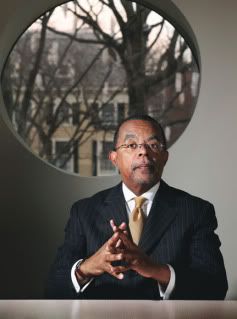
Bady claims that Whalen, the woman who called police on Henry Louis Gates for attempting to break into his own house, is "pretty much the only person involved in the Gates imbroglio who didn't over-react, the only person whose actions don't seem to reflect a sense of personal grievance or entitlement. ... There seems to be little or no room in the narrative for a person who simply tried to do the right thing in a difficult situation, with full cognizance and awareness of the difficulties of that situation. No good deed goes unpunished." Obviously, Bady buys Whalen's defense that because she never told the arresting officer that Gates was black, she can't be a racist. In doing so, he falls prey to the most simplistic of stereotypes regarding racism, and he fails to recognize the full import of the racism that likely did motivate Whalen's phone call to police, despite all her denials.


When people think of the term "racist," they think of folks like Bull Connor and George Wallace and Theodore Bilbo -- big swaggering brutes who display their hatred of black people like a badge of honor. Because people rightly observe that the Connors and Wallaces of old have virtually disappeared from the public scene, and that behavior such as theirs is now unacceptable, they assume that racism no longer exists in any important fashion. So really, the image of Bull Connor as the archetypal racist is one of the most nefarious cultural ideas active today. It blinds people to what's right in front of their eyes, because they're so focused on what's NOT there.

No one is claiming that Lucia Whalen is a Bull Connor-style racist. But then, very few people of any importance are these days. Bull Connor is to modern racism as ENIAC is to modern computers. Sure, there are still some of the old dinosaurs still around today, and sure, they occasionally wield some power, but really they're museum pieces, pariahs, and jokes.

The new racism -- again like new computers -- is sleek and shiny and unobtrusive. It's a velvet-cloaked, dagger-in-the-night kind of racism -- a kind made extra dangerous by the fact that few of us even recognize we have it. It manifests itself not in white hoods and burning crosses, but in the little flicker of revulsion white Americans feel when a black man walks by us on the street; the flicker of doubt we feel when a black woman demonstrates superlative achievement in college or on the job; the flicker of relief we feel when our new co-workers or neighbors turn out to be white rather than black; the flicker of discomfort we feel when we come into contact with African-Americans in our neighborhoods or anywhere else.

How can a mere flicker create a societal malaise? When we act on it -- something that we do with frightening regularity. The numbers on this do not lie. The following statistics are taken from pages x-xi of How Race Survived U.S. History (2008) by David Roediger, who is one of America's greatest historians of race. Roediger in turn got them from various government sources. Keep in mind when you read these that there are no real, tangible reasons for African-Americans to have a dfferent standard of living from whites nearly half a century after the end of Jim Crow.

  • Black males born in 1991 have a 29% chance of imprisonment. White males have less than 1/7 of that.

  • In 2004, the black poverty rate was nearly three times the white poverty rate. Nearly a third of black children lived in poverty, versus a tenth of white children.

  • In 2008, two-thirds of African-American urban students were in schools where less than 10 percent of the students were white.

  • In 1998, the average net worth of black and Hispanic families was 17.28% that of white families

  • In 2008, black unemployment was at 25% -- the peak level of American unemployment during the Great Depression. White unemployment in 2008 was less than 10% (it's higher now).


This is the very real and serious problem that Gates' arrest points up: the fact that our subconscious and unconscious racism has tangible and devastating effects on the African-American population. But racism today is a moving target, both because so few people are aware they possess it and because we are so resistant to being labeled racists. No one wants to be Bull Connor, and in the process we run headlong to the opposite extreme without acknowledging the very real damage our prejudices and racist impulses cause.

Of course Lucia Whalen isn't a racist -- and neither are most other people. She's not special or evil or, really, different from anyone else. Instead, she's a representative of a white American culture that is sown through with racism. The idea that she had to explicitly mention Gates' race or consciously think about it in order to be acting from racist motives is ludicrous on its face. Would she have called the cops if Gates and his driver had been white? I don't know. Would she have been less likely to do so? I guarantee it. That right there is the problem -- a problem not unique to Lucia Whalen, but common to virtually all non-black Americans. It's not a problem that's easily solved, nor should we assume that a solution can be achieved with any real speed. But the frustrating thing is when people like Lucia Whalen and Aaron Bady spend more time denying that they're Bull Connor than searching their souls to find out what they really are.

Labels:

 
by Unknown | 7/22/2009 12:42:00 AM
Chances are you've never been arrested. That's for two reasons: because you've never committed a serious crime, and because you don't look like a criminal. That is to say, you're probably well-dressed, clean, tidy -- and you're not a member of a race, whether African-American, Arab-American, or otherwise, that's associated with criminal activity in the American mind.
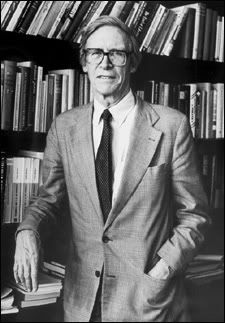
Unlike you and me, Henry Louis Gates, Jr. was born looking like a criminal to most Americans, becaue he was born black. Throughout his life, Gates has done just about everything humanly possible to dispel the notion that he is a criminal. He graduated summa cum laude from Yale, earned MA and PhD degrees from Cambridge, holds an endowed chair at Harvard, and has established himself as the world's preeminent African-American Studies professor. As an author, a teacher, and a public intellectual, Gates occupies a more dominant position in his field than any single historian can claim in ours. He is so well-known, and so respected, in his hometown of Cambridge, Massachusetts, that a local burger joint sells a hamburger named after him.

None of that mattered last Thursday, when Gates' own (presumably) white neighbors called the police on him for attempting to break into his own house.


A lot of criticism, both on- and offline, has centered on the policeman who arrested Gates for disorderly conduct on his own doorstep. Gates himself aimed most of his ire at the policeman, at one point calling him "a racist cop." I'm not entirely certain that's true. The police have to show up when someone calls in a break-in, and assuming the cop hadn't heard of Gates (entirely possible), he may honestly have needed the identification before he could be sure Gates did own the house. What's more, no amount of sensitivity training in the world is going to keep a cop's nerves from being on edge when someone starts yelling at him. I don't think the policeman acted entirely appropriately, but neither am I sure he's a foul racist.

What I want to talk about, instead, is the neighbor who called the police on Gates in the first place.

First of all, you don't call the cops on your neighbor if you know it's your neighbor. What kind of person doesn't know they live next door to Henry Louis Gates? The answer: someone who never bothered to find out. There are many reasons someone would choose not to know who their neighbor is, yet I think most people would know if their neighbor was famous. Go back and draw a street map around Marilyn Monroe's house. How many of her neighbors didn't know she lived there? Or pick any other famous person and do the same test.

Henry Louis Gates is a famous man. He's been on television more times than I can count. He's a household name for many people, even non-academics. But his own neighbors didn't know who he was?

Or let's look at it another way. The nosy neighbor can't claim that he or she never looked at the house or its occupants. since they were certainly watching while Gates and his driver jimmied the door. So even if they didn't know who Gates was, they had to know what he looked like. Couldn't they tell that the guy who owned the house and the guy who was jimmying the door were the same guy? Do you think they would have had that same problem with a white neighbor? Or is it just that Gates looked like any other black man, a criminal first, a resident after?

I live in an apartment complex, and I've never met most of my neighbors. But I sure as heck know what they look like. I couldn't imagine calling the cops on them for trying to get into their own front doors. Can you? What kind of person would do such a thing? Or is it simply a gut reaction to seeing a black man in one's neighborhood?

The upshot of all this is that Henry Louis Gates found himself inside his own house having to prove to the police that he was Henry Louis Gates, because if he wasn't he was obviously a criminal. You know, because he looked like one. The arrest a week ago proves that Gates' lifelong quest to define himself as one of America's leading scholars was absolutely necessary for his safety. The most shocking fact of the whole situation is this: the only reason anyone cares that Gates was harrassed by the police and arrested in his own home is that he's Henry Louis Gates. People expect African-Americans to be treated with indignity even on their own property, because they look like criminals; the only reason the cop erred is that he couldn't tell Henry Louis Gates apart from those other criminal blacks. "This is what happens to a black man in America," Gates said during the altercation. He's absolutely right.

Two and a half years ago, it happened to my friend, Weeping for Brunnhilde, a graduate student in medieval history who once wrote for this very blog. On January 12, 2007, Weeping was stopped by a policeman who asked him why he was smoking a cigarette on his own porch. As with Gates, a neighbor had reported Weeping to the police for having the audacity to occupy his own home while black.

Here's what Weeping wrote at the time:

Someone called in that there was a "young black male" on my stoop who didn't live there, and did I have ID.

The next maybe seven minutes (the entire duration of the encounter) is more or less a blur.

Although black, the officer seemed not to understand my rage and indignation at being rendered a suspect on my own stoop. I did make an effort to direct the rage away from him, lest he feel threatened, but I couldn't just stand there calmly.

At one point a raged out, from a place of despair, about how this has been happening to me my whole life and I'm sick of it. ...

I've had such encounters with the police I don't know, five, six, seven times?

Every couple of years something like this happens.

When the cop gestured at an apology towards the end, just doing my job blahblahblah I shot back, "I know, I fit the description, believe me, I know, this is NOT the first time this has happened to me." ...

Harrass me, fine, but don't insult me.

Don't ask me to pretend that I'm not being victimized.

The first time, fine.

The second time, fine.

The third time, fine.

But eventually a pattern emerges, you know? Even if each and every time I've been stopped is "procedurally legitimate," I feel no less victimized for it.

Especially if each and every time is "procedurally legitimate."

"Young black male."

I'm thirty-four.

I have a four-year old child and another on the way.

I'm young, but I'm not that young. Technically speaking, I'm middle aged.

I'm writing a dissertation about something that few people in the world could even begin to understand.

I could get ten Ph.D.s and win a Noble Peace Prize and at the End of the Day, I'm a "Young black male."

See my point?


Indeed. And I wish to say one more thing about the neighbors who called the police on Gates and Weeping.

The person who called the cops on the most accomplished African-American Studies scholar in the world lived in liberal Cambridge, Massachusetts, so statistically speaking he probably voted for Obama. Ditto the neighbor who called the cops on Weeping, since he lives in a college town. And so they probably believe they have moved beyond racism. Us racist? they say with incredulity. We voted for a black man to occupy the highest office in the land!

Wrong. The election of Obama accomplished only one thing when it comes to race. Before November 4, 2008, there was only one kind of black person: those who looked like criminals. Now there are two: those who look like criminals, and those who are Barack Obama. No one would ever, ever mistake Obama for a criminal -- but our race-blindness ends at the Oval Office door. Any other black man or woman, anywhere else, in our heart of hearts we know they look like a criminal. Post-racial society my ass -- the only person who benefits from post-racialism is Obama himself. If Henry Louis Gates can be arrested in his own home, any black man can.

As an American patriot, that makes me mad as hell.

Labels:

 
by Unknown | 6/12/2009 09:01:00 PM
If you want to understand President Obama's soul, read his books. But if you want to understand his beliefs, read John Rawls. The Harvard academic, who died in 2002, was the most important philosopher of liberalism in the twentieth century, mostly because, in so many ways, Rawls' ideas describe the world we live in. That has never been more true than today, when our President has, consciously or unconsciously, exalted Rawlsian ideas to the position of the greatest possible good.

Care to hear more about this explanatory model that is so central to Obama's thought, whether he acknowledges the influence or not? Read on.


* * * * * * * * *

The big question that confronted liberal theorists in Rawls' heyday was the problem of pluralism. The old liberal theories -- those by Locke, Kant, J.S. Mill, and others -- were based on the idea that one set of values was "right" and others were "wrong." For Locke, an atheist or someone who didn't believe in the afterlife couldn't be trusted to hold to the social contract (because they wouldn't be afraid of divine retribution), so such people were cut out of his philosophy. Mill was okay with nonbelievers but considered non-Western peoples to be "barbarians" who had to be educated in rationality before they could enjoy the fruits of liberalism. In the modern, post-colonial world, such assumptions simply didn't hold water. So could liberalism be made to encompass the immense variety of peoples and beliefs in the world -- without either losing its punch or discriminating against vast numbers of people?

Rawls' first attempt to solve this problem, A Theory of Justice (1971), was fairly well-received. Rawls imagined a bunch of reasonable people deciding to form a society from scratch -- what he called the "original position". Given that these reasonable people disagreed on many things, what kind of society would they make that could accommodate all of them? Rawls thought they would agree on two principles. The first principle was that all of them would have as much freedom as they possibly could without infringing on the freedom of others. This wasn't a new idea; in fact, it came straight from Mill's writings a century earlier. The second principle was more interesting. Rawls said that there would be equality of opportunity with regard to positions of power. He also said that inequalities, which were necessary in a non-Marxist society, would "be of the greatest benefit to the least-advantaged members of society." This last bit became known as the "difference principle." What Rawls was getting at, put simply, was that if someone was going to get a leg up from the system, it should be the least fortunate, not the most. A perfect example of this idea is affirmative action: since we can't make hiring and college admissions completely fair, they should be biased toward those who need them most.

A Theory of Justice was a good system, and it took into account a lot of the problems with earlier liberal theories. But soon critics, most prominently Michael Sandel, began to pick it apart. Rawls, they said, hadn't solved the problem of pluralism because he hadn't offered a theory that could supersede all other possible theories. Some people in the original position might choose Rawls' system, but other people would make other, equally valid systems. What made Rawls' ideas any better than anyone else's?

Rawls was stung by these criticisms, and he significantly reformulated his theory. The result was Political Liberalism (1993), a much more innovative and significant philosophy.

Rawls began Political Liberalism by acknowledging that his earlier theory was only one of many competing philosophies -- what he called "comprehensive doctrines" -- held by participants in liberal governments across the world. However, he noted that most liberals, whatever comprehensive doctrine they held, wanted at least some of the same things other liberals wanted. For instance, President Bush and President Obama (both "liberals" under the political theory definition) have strikingly different views on American politics, but they both supported the federal bailouts and stimulus packages. Bush's comprehensive doctrine is pro-business, and Obama's is pro-big government, but it didn't matter that they had different reasons for supporting the same legislation -- the bills got passed anyway, and both presidents were happy about it.

According to Rawls, a large majority of people with different views are able to form what he called an "overlapping consensus" -- a core set of policies and governing principles that are contained within all their comprehensive doctrines. So long as those people are "reasonable" -- that is, so long as they are rational and willing to work with other reasonable people -- there's no need for them to share the same comprehensive doctrine or agree on fundamental principles. They can govern just fine without any such philosophical agreement, just by passing laws that all or most of them can agree on for their own different reasons.

This is, of course, exactly how our government works: a bunch of people who disagree on ideas come together and agree on policies. But Rawls was the first to elevate this practical political solution to the level of a philosophy. Rawls' great insight was that our political system works precisely because of, not in spite of, the fact that we lack universal philosophical standards of right and wrong. The reason all previous liberal theories had run afoul of pluralism was that they had divided the world into right (those who agreed with the theory) and wrong (those who disagreed with it). Rawls replaced this dichotomy with another one: he divided the world into the reasonable (those who were willing to work within the overlapping consensus) and the unreasonable (those who weren't). Rawls' overlapping consensus was much more inclusive than previous theories, since only people with extreme positions would be unwilling to work with others in the overlapping consensus -- and it also meant that people could only be excluded from the consensus by choice, not for any other reason (deep-seated religious belief for Locke, incorrect beliefs for Kant, ethnic/racial/national origin for Mill). Anyone was welcome within the overlapping consensus unless they voluntarily absented themselves from it. And anyone who worked within the overlapping consensus had a voice in shaping what that consensus turned out to be.

* * * * * * * * *

I've given Rawls a lot of credit here, because I think Political Liberalism is one of the most innovative ideas ever formulated. But I also believe the Rawlsian system is fatally flawed. To understand why, we need to look at what it means to be "unreasonable" in a Rawlsian sense.

By definition, an unreasonable person is someone who's unwilling to work within the overlapping consensus. There are several reasons a person might choose not to work within this consensus. S/he may want to overthrow the system entirely, as Marx did from the left or Turner Diaries author William Pierce did from the right. S/he may object to some of the people working within the system and feel that she shouldn't have to work with such individuals. Or s/he may feel that the overlapping consensus is incapable of solving important problems within society. Let's take each of these cases separately to see the problems they pose for the Rawlsian model.

People who want to overthrow the system, like Marx and Pierce, are generally pretty extreme. And there aren't many people who are going to cry over the exclusion of either of these guys from the halls of power. But the problem with Rawls' theory is that it excludes them without providing any logical or moral reason for doing so. Rather, they are excluded precisely because their view differs from the mainstream (the overlapping consensus). Rawls' innovation was to eliminate the concept of a "wrong" political view, but in doing so he removed the justifications previous liberal theories had devised for excluding extremists from power. It's one thing to be told your opinions don't matter because they're morally and logically wrong; it's another to be told they don't matter because, regardless of their merits, most people think they're extreme. The latter option is familiar as mob rule, as the law of the street -- but no liberal philosophy has ever viewed this as a good thing, until Rawls.

Looking at the second case, we can quickly see that populism is not permitted in the Rawlsian world. "Throw the bums out," as Ross Perot put it, is a distinctly un-Rawlsian sentiment. You can't throw the bums out, because the bums want to be there and are willing to work with you. The only way to get rid of political figures you don't like -- not just to remove them from office, but to prevent them from exercising substantive political influence -- is to wait for them to retire. Rawls' overlapping consensus is so welcoming, so all-encompassing, that it denies the voting public the right to choose who influences their government. This is particularly problematic when it comes to powerful corporations and special interests. Corporate fat cats always want influence and are willing to work with anyone in power, so they can't be removed from a Rawlsian government, even though they usually don't represent the best interests of the people. Sure, you can vote the party in power out of office, but the corporations will just cosy up to the new party in power, and nothing will change. There's something profoundly undemocratic about a system where the people have to play Whack-A-Mole with nefarious characters who refuse to stay out of power no matter how many times they're sent packing.

As troubling as these cases are, it's the third case that poses the most problems. By doing away with the concepts of right and wrong, Rawls has ensured that the de facto "right" is what most people in power think at any one time. A government based on overlapping consensus operates within the Overton window -- the range of generally acceptable alternatives on any given issue. The problem isn't just that alternatives outside the Overton window are automatically devalued; it's that for some issues the objective truth lies outside the Overton window. Global warming is an excellent example. Most reasonable people (by the Rawlsian definition) agree that the range of possible alternatives ranges from no action (the Bush administration's choice) to the 5-7% carbon emissions reductions proposed by the Kyoto Protocol (at least theoretically Obama's choice). But the science clearly shows that only a 50% or greater reduction can stave off environmental holocaust. In the Rawlsian bizarro-world, the science is wrong because it disagrees with the overlapping consensus. Rawls gives us no way to move beyond the practical in order to achieve the necessary.

* * * * * * * * *

Sadly, we live in that Rawlsian bizarro-world. There have been plenty of presidents in our history who have elevated the overlapping consensus to a high art through the ideas of "bipartisanship" and "getting things done" -- think of Bill Clinton's "triangulation" or Eisenhower's inveterate moderacy. But few (perhaps only John F. Kennedy) have venerated the overlapping consensus as itself the supreme good of the nation in the way Barack Obama does. Few have failed to spend political capital on expansive policies, not because they feared losing reelection, but because they believed doing so would be breaking a sacred trust -- but Obama is one of those few.

Read his books and you'll see that, despite the fact that Obama holds strikingly liberal views on a variety of issues, his anger at the Bush administration is directed not at its policies, but at its politics. For Obama, Bush's supreme betrayal was in breaking the Rawlsian consensus. Bush's extreme partisanship, his utter disregard of the Democratic members of his government, turned Americans against each other and polarized the electorate. For Obama, that was Bush's greatest crime -- because to the President, we are a nation of consensus before we are a nation of laws or dreams or anything else.

It's the only interpretation that explains Obama's baffling and infuriating rejection of progressives and his embrace of the moderate wing of the Republican party. It's the only interpretation that explains his choice to elevate people like Judd Gregg, Ray LaHood, and John McHugh, who committed the unforgivable sin of voting to impeach a President because they didn't like him, to high posts in his administration. It's the only interpretation that explains his active support of Republican Arlen Specter against Democrat Joe Sestak. It's the only interpretation that explains his unwillingness to proceed in passing legislation without Republican support, or to pressure his party's Majority Leader to eliminate the Senate's pernicious filibuster rule and strip Republicans of their last vestiges of power. Obama does these things not because Mr. 68% in the polls needs the additional support, but because he truly believes that Republicans within the overlapping consensus are more important than Democrats outside it. The consensus, for Obama, is more important than the outcome.

John Rawls was a great thinker, and Barack Obama is a great man. But by excluding the unreasonable from meaningful political participation, they have ensured that only mediocrity can emerge from the political system they both venerate. And in these troubling times, mediocrity just isn't good enough. So I'm proud to declare myself a member of the unreasonable. It's the only place where great change happens, where democracy succeeds fully, and where populism reigns. In the Rawlsian world, where the practical defines the realm of possibility, the necessary simply cannot triumph.

Labels:

 
by Unknown | 5/31/2009 05:10:00 PM
Below the fold, my latest History News Service op-ed, currently published at HNN and perhaps elsewhere soon.


Sonia Sotomayor is too liberal to serve on the Supreme Court -- so, at least, say many conservative critics of President Barack Obama's first high court nominee. It's odd for them to protest Sotomayor's left-wing views, though, when the current Supreme Court is far more conservative than are the majority of voters.

Yet a Court that differs from public opinion is nothing new in U.S. history; in fact, disagreements between the Court and our elected officials are a natural and important part of our constitutional process. What's unusual is that conservatives are complaining about the Court at the same time they're benefiting from its rightward slant.

The Founders wanted the Supreme Court to be independent from the rest of the government. That's why they gave its occupants lifetime appointments. Since justices continue to serve long after the presidents who appointed them are gone, the Court's composition frequently lags behind the country's political mood. Justices who were popular when they took office often become jarringly out of touch before they leave. They're like a bad national hangover: we liked what we drank last night, but we wish it wouldn't stick around for quite so long.

As Obama knows, even winning the presidency doesn't guarantee winning over the Court. Chief Justice John Marshall, who served from 1801 to 1835, belonged to a political party so unpopular it actually disappeared while he was in office. That didn't stop him from making life difficult for the opposing-party presidents who served during his tenure. President Andrew Jackson, a frequent target of Marshall's legal opinions, finally pulled a stunt even Obama wouldn't get away with: he decided to just ignore Marshall altogether. "John Marshall has made his decision," an exasperated Jackson remarked at one point; "now let him enforce it."

The Court's independence means it's not obligated to vote with popular opinion even when doing so would be in the nation's best interest. In 1857, conflict over slavery was tearing the country apart, and only the fragile Compromise of 1850 stood between the United States and bloodshed. Oblivious to the precarious political situation, the Court, led by slave-owning Chief Justice Roger Taney, declared the Compromise unconstitutional -- paving the way for the Civil War.

Even the consummate political skill of Franklin D. Roosevelt wasn't enough to bring the Court to heel. Ignoring Roosevelt's friendly overtures, four right-wing justices -- nicknamed the "Four Horsemen" by liberal commentators -- proved hell-bent on striking down the entire New Deal. A panicked FDR tried to pack the Court in 1937 by adding six new justices -- but Congress rejected his proposal. A constitutional crisis was averted only when the other five justices decided to back Roosevelt's policies.

If disputes between the Court and popular opinion have a long history, so do complaints about liberal judges. Modern-day conservative attacks on the "liberal judiciary" date back to 1953, when Republican Earl Warren surprised everyone by becoming the most liberal Chief Justice in history. Over the next sixteen years, Warren and his fellow justices wrote a series of bold opinions that, among other things, struck down segregation and gave Miranda rights to accused criminals. Many Warren Court members were still around in 1973 to help legalize abortion through Roe v. Wade.

Just like today, conservatives were outraged by what they saw as the Court actively making government more liberal instead of just interpreting the law. At the time, they had a point. But since 1969, Republican presidents have appointed all but two new justices, and most of the newcomers have shifted the Court to the right. The last unabashedly liberal justice, Harry Blackmun, retired over fifteen years ago. Today's Court, led by right-wing ideologues such as Antonin Scalia and Clarence Thomas, is the most conservative since the days of the Four Horsemen.

Yet somehow, conservatives have managed to have their cake and eat it too. Despite the Court's obvious right-wing bent, the right continues to attack the judiciary as too liberal for the country. It's this popular misrepresentation of the current Court that's historically new. Slavery advocates didn't carp about abolitionist judges while Taney was Chief Justice; anti-New Dealers didn't grumble about judicial liberalism when the Four Horsemen were on the bench.

Conservatives are entitled to enjoy the fruits of a right-leaning Supreme Court in the midst of the liberal Obama administration; by lagging behind the nation's leftward turn, the Court is doing exactly what it's designed to do. But it's disingenuous for the right to whine about a liberal judiciary at the same time it benefits from a conservative one. If conservatives want their concerns about liberal judges to be taken seriously, they'll have to wait until a Democratic president or two actually tilts the Court to the left. At least then the right's attacks on the Court will mesh better with reality.

Labels:

 
by Unknown | 5/21/2009 10:11:00 PM
I'll be on this internet radio show today (Friday, 5/22) at some point between 6-7 PM to explain my statement of a few days ago: "I'm angrier at Obama right now than I ever was at Bush." I'll be identified as "Nonpartisan," my primary blog handle at political blogs. If you miss the show, you can listen later on archive at the same link.

Please note that the show features extremely far-left hosts and a fair amount of profanity; if that's not your style, you might want to sit this one out.

What's on your mind?

Labels:

 
by Unknown | 5/16/2009 02:12:00 PM
Like Kadima in Israel or Labor in the UK, Obama's administration now has more in common with the moderate wings of both parties than it does with the progressive wing of its own party. The nomination of Republican John Huntsman as Ambassador to China is just the latest in a series of appointments that prove this fact. Let's crunch sone numbers:

Number of Cabinet-level positions filled by members or former members of the DLC: 9 (Hillary Clinton, Rahm Emanuel, Ken Salazar, Tom Vilsack, Kathleen Sebelius, Gary Locke, Janet Napolitano, Ron Kirk, Joe Biden)

Number of Cabinet-level positions filled by former Clinton Administration officials: 7 (H. Clinton, Tim Geithner, Eric Holder, Emanuel, Peter Orszag, Larry Summers, Leon Panetta)

Number of Cabinet-level positions or high-ranking Ambassadorships filled (or intended to be filled) by Republicans: 5 (Huntsman, Ray LaHood, James Jones, Judd Gregg, Robert Gates)

Number of positions filled (or intended to be filled) by individuals who voted to impeach Bill Clinton: 2 (LaHood and Gregg)

Number of Cabinet-level positions filled by movement progressives: 1 (Hilda Solis)

The upshot: there is no longer a political party in the United States that caters to progressives, except for the Green Party.

Labels:

 
by Unknown | 5/08/2009 09:19:00 PM
Not a knock on HNN, but this piece by David Greenberg is the most idiotic thing I've read there since I began reading the site three years ago.

The gist of Greenberg's argument is that the defection of liberal Republican John Lindsay to the Democrats in 1971 was a warning sign that the GOP couldn't govern without representing a broad range of ideologies, and that Arlen Specter's recent party switch should be seen as a similar warning sign. So -- let's look at the GOP's record since Lindsay made that switch. In 1972, they won one of the most lopsided Presidential races in history. In 1976, they came within a point and a half of victory despite a deeply unpopular President and a virtual civil war within Republican ranks. In 1980, 1984, and 1988, they dominated the electoral map as few parties in American history had done before. In 1994, they dramatically retook both houses of Congress. Meanwhile, as Greenberg himself notes, Lindsay quickly fizzled out and retired from politics. Contrary to Greenberg's assertions, Republicans have proved that they can govern just fine without Lindsay and his ilk.

Greenberg is so busy being disproved by his own evidence that he misses the real significance of the Specter switch -- which is precisely the opposite of what he suggests. Rather than being a warning sign for Republicans, Specter's move threatens to undermine the fragile coalition that brought Barack Obama to power. The prospect of a prominent left-wing grassroots primary challenge to Specter -- likely from Congressman and two-star Admiral Joe Sestak, though there are other potential candidates -- should terrify Obama because it would pit his various constituencies against one another. Obama succeeded in November because his big tent included grassroots progressives, big labor, and free-thinking independents in addition to the Clintonian centrist Dems. But in a Specter-Sestak battle, Obama would be on the side of the Beltway, while progressives, unions, the netroots, and even some independents would line up against him.

Obama's engineering of the Specter switch is going to go down in history as one of the most idiotic political moves ever made by a sitting President -- and it's because Obama has surrounded himself with hacks like Greenberg who think the only people who matter are the enemies you can get to cross over to your side, however opportunistic their motives. Meanwhile, Obama is poised to lose a number of his friends over this whole situation, and he doesn't seem to understand the electoral consequences of that loss. Perhaps a better comparison than the Lindsay switch would be Franklin Roosevelt's handling of Huey Long, which almost resulted in Roosevelt's electoral loss in a three-way race.

Labels:

 
by Unknown | 4/10/2009 09:26:00 PM
Back when this site got started, we had a blogger named Weeping for Brunnhilde. Weeps was history grad student, a medievalist at an Ivy League institution, and one of the most brilliant people I've ever met. Around Summer 2007 or so, though, Weeps just sort of disappeared. He told me he had to start studying for exams and just didn't have enough time to devote to blogging. Since then, with very few exceptions, he's stopped writing not only at PH, but at all of the other half-dozen or so sites at which he was a regular contributor. He often doesn't even have time to respond to my Facebook messages any more.

At the time, I remember thinking, "This guy's putting me on. He's been in grad school for two whole years and he never got so busy he couldn't blog. What's so different now?" Two years later, the same thing is happening to me.

This, my fourth semester in graduate school, was the semester when school stopped being time-consuming and started being all-consuming. I'm not even studying for exams yet (that's starting this summer), yet I have virtually no time to do anything other than study, read, and write academic things. What's more, I don't expect it to get any better any time soon.

I didn't expect to drop off the face of the earth when I handed this blog over to Andrew, but that's exactly what's happened. I haven't blogged for over a month, and with the exception of this brief respite, I don't intend to come back with any regularity for a long time, maybe ever. I love what I'm doing academically, but I simply have no time to do anything else besides study and write.

I'm thrilled with the excellent job Andrew's been doing as blogpresario, and I've enjoyed the writing of the great authors we've got here. I'm really happy that the site hasn't died without me at the helm, and that, on the contrary, it seems to be thriving. Maybe I'll be able to get back to this in earnest once I get a real job. For now, it's back to the salt mines, and you'll have to make do with an occasional howdy from me on my rare free days. (I'm still, as always, reachable by e-mail.)

Use this as an open thread. What's on your mind?

Labels:

 
by Unknown | 2/26/2009 02:12:00 PM
I just received word that David Horowitz and Ben Johnson decline to publish my solicited followup to this exchange with them concerning their book Party of Defeat. In their e-mail, they argue, rather snipplily I think (in notable contrast with FrontPageMag Managing Editor Jamie Glazov, who has been a perfect gentleman to me throughout the entire process), that my response makes no significant addition to my original argument. I'll willingly grant that, but my response is twofold: first they never said I had to change my original argument when they invited me to respond, and second, it's their fault for failing to make any significant criticisms of my essay. Most of my key arguments they just laugh at, which makes it hard for me to understand why I'm supposed to change them. In their e-mail, Horowitz and Johnson also assume that I think America is the enemy in the Middle East, which is pretty silly given that I'm an avowed war hawk who supported the war in Iraq and still think it was justified.

Anyhow, since my response isn't going to be published over there, I'm publishing it over here. The full text is below the fold.

Finally, I should clarify that I'm no longer billing myself as the "Editor" of ProgressiveHistorians, but I was when I first sent in the original piece, and they haven't corrected my description in all places. Apologies to the very capable AndrewMC.


Incommensurate to the Threat Posed

Jeremy Young

I want to thank David Horowitz and Ben Johnson for their response to my critique of their book Party of Defeat. However, their comments indicate that they have not read my piece as carefully as I read their book, which is a shame. For instance, they failed to understand the first three paragraphs of my essay, in which I lecture other liberal critics of Horowitz concerning the best way in which to engage him. Let me be very clear: my comment that Horowitz is a provocateur – “a profession,” as I note in the original essay, “with a long and distinguished pedigree” – was not intended as an “insult” or even a criticism. On the contrary, I admire and respect Horowitz for his ability to reduce otherwise intelligent liberals to spluttering inarticulateness. Horowitz is extremely good at what he does, and I appreciate him for his ability and for his staying power. Nor, contrary to the erroneous claim of the authors, did I intend any “insult” to Ben Johnson; since I know virtually nothing about the man, I would not dream of making personal criticisms of him. The reader will search in vain for such comments in my essay.

Horowitz and Johnson also write of my belief “that previous critics made the mistake of attempting to refute the arguments in our book, when of course provocation is really our game.” Again, this statement runs exactly counter to my claims in the first three paragraphs. I argued in that passage that critics have spent too little time focusing on Horowitz and Johnson’s broad arguments, and too much time nitpicking over specific pieces of their evidence. “Horowitz's readers deserve a serious and substantive response to their views,” I wrote in the original piece. Does that sound as if I’m against “refuting the arguments” in Party of Defeat?

Horowitz and Johnson claim that I believe jihad doesn’t exist, that I oppose taking any action to prevent Islamic terrorism, and that I support treasonous acts by an opposition party during wartime. None of these statements accurately represents my views as expressed in my original essay. As I stated clearly, I acknowledge the jihadist beliefs of Al-Qaeda leaders, I oppose treason, and I support the war in Afghanistan and American counterterrorism efforts at home and abroad. In comically misstating my views, however, the authors conveniently ignore the points I was trying to make. For instance, I argued not that jihad did not exist, but that our response to it has not been “commensurate to the threat posed.” Granting for the sake of argument that “jihadists” are supported by nearly a dozen Middle Eastern governments, as Horowitz and Johnson state in their response, that does not necessarily mean that we need to fight those governments or to strain our national resources in opposing them. In fact, every time the authors emphasize the vast nature of the jihadist conspiracy, they underscore its weakness. If supporters of the jihadist movement “are conservatively estimated at more than 100 million,” yet they have managed to kill fewer than 10,000 westerners in (apparently) thirty years of trying, how great a threat to American security do they really represent?

Similarly, I don’t defend the treasonous acts of the Hartford Convention or of Clement Vallandigham in America’s earlier wars. However, the historically pervasive nature of opposition-party treason in wartime makes one wonder why Horowitz and Johnson want to condemn the non-treasonous acts of today’s Congressional Democrats. If, as I wrote in my original essay, “History shows that it is more common for American opposition parties to engage in open treason during wartime than to support the government’s efforts,” then why are the authors wasting their time attacking people who chose not to engage in treason? While their argument contains a kernel of truth, like the Bush administration with whom they have allied themselves, their outrage is not commensurate to the threat posed.

The authors accuse me of avoiding their fundamental argument that “the Democratic leadership betrayed a war they authorized while falsely claiming that they were deceived by presidential lies” – despite the fact that I describe this claim in detail and return to it at several points in my piece. Horowitz and Johnson apparently expect me to critique them using a line of argument of their choosing, perhaps a rousing defense of the integrity of Congressional Democrats. However, they won’t find me offering any such defense of a group of people whom I consider for the most part lily-livered and almost comically inept. Instead, I refute the argument of Party of Defeat by rendering it meaningless. As I show in my essay, the authors have “proved” that Congressional Democrats, motivated by political concerns, undermined in a non-treasonable and far from unusual way the prosecution of an unnecessary war against an unimportant opponent. There’s no need to debating their conclusion because they fail to show why it matters.

Furthermore, they fail to respond to my third and most important argument: that the certainty of America’s military ability to defeat the entire Middle East makes the War on Terror “a fundamentally different war from…any other war the United States has fought.” “The question,” I wrote, “is no longer whether we can achieve victory; it is how much victory we are willing to pay for, given the financial, political, and human costs of invading and conquering countries.” Congressional Democrats disagree with Horowitz on the amount of victory that is worth achieving given the costs, but that does not make them a “party of defeat.” Instead, the disagreement represents the type of healthy debate that is necessary for a democratic society to function properly.

Horowitz and Johnson consider my final paragraph laughable. In response to my claim that “Global climate change, epidemics of infectious disease, volcanic eruptions of massive force, [and] the sudden impact of a large asteroid” are more serious threats than terrorism to American security, they write that I “advise we replace the War on Terror with the War on Tors.” In this instance, the authors are exactly right. In fact, one would need to be ignorant of natural history to argue that tors were not far more dangerous than terrorists. If Horowitz and Johnson require evidence of this fact, I would suggest they consult, respectively, the woolly mammoths, the third of Europe’s population that perished during the Black Death, the Minoan civilization on Crete, and the dinosaurs – all of whom learned the hard way that one ignores the dangers of environmental catastrophe at one’s peril. On the other hand, if the authors can find a historical example of a civilization wiped out or even seriously threatened by terrorism, I suggest they offer it forthwith.

Labels:

 
by Unknown | 2/22/2009 12:57:00 AM
New York Times public editor Clark Hoyt pronounces the definitive epitaph for Patricia Cohen's article of article about the Nixon Tapes, declaring that "The Times blew the dispute out of proportion with front-page play, allowed an attack on a respected historian’s integrity without evidence to support it, and left readers to wonder if there was anything here that would change our understanding of the scandal that ended Nixon’s presidency." (H/t HNN.) The story is pretty well warmed-over by now (previous coverage at ProgressiveHistorians here, here, and here), so I won't belabor it here. However, I do want to respond to a quote Hoyt received from a prominent historian:

But David Greenberg, a Rutgers historian and the author of “Nixon’s Shadow,” argued that the tale did not involve a significant dispute and was more like the Watergate version of global warming, with most historians long ago coming to a consensus and only a few outliers arguing against it. “Professional scholarly consensus is not sacrosanct, but it should count for a lot,” he said.


Assuming Greenberg was quoted and paraphrased properly, I understand what he was getting at, but I wish he hadn't gone there. For one thing, it's just not true that the critics of Kutler are "a few outliers" in the sense that scientific critics of global warming are. Joan Hoff and Frederick Graboske, for instance, are highly-respected scholars whose opposition to Kutler is bolstered by impeccable academic pedigrees. Even Peter Klingman holds a doctorate in history from a reputable institution (the University of South Florida) and has taught at several such institutions, which makes him hands-down more reputable than virtually any of the global-warming deniers.

But there's a more important point to be made here: historians just don't deal in the kind of certainty or near-certainty that scientists do. The reason is that the scientific method, which is built on the falsifiablity of hypotheses, is only sporadically useful for historians. Many claims in history can't be proven or disproven -- what was going on in Stanley Kutler's head when he mistranscribed parts of the Nixon Tapes is an excellent example. True, there are some things that historians have pretty well figured out; for instance, no reputable historian today argues that large numbers of black slaves in the U.S. South enjoyed their captivity, as many scholars once claimed. But even a cut-and-dried situation like that isn't comparable to the sort of certainty science can offer.

The late Steven Jay Gould, who during his life was the most dogged and most eloquent defender of evolution, once remarked that scientists have more evidence that evolution occurs than historians do that Caesar lived. It's a wonderful comment, and it elegantly sets out the difference between the two disciplines. Science is fundamentally the quest for certainty, even though scientists acknowledge that true certainty is never attainable. Historians, on the other hand, seek to understand human nature at a more intuitive level; they are satisfied with interpretations that match the available evidence, so long as those interpretations prove useful in understanding ourselves. Greenberg's comment was unfortunate because it gives people outside the profession the idea that what we do is comparable to what scientists do, which is far from the case. The historian's work is different from the scientists, but I'd argue that it's no less important.

Labels:

 
by Unknown | 2/20/2009 02:54:00 AM
Top billing in the latest issue, no less. I'm honored.

I'll be responding to their critique soon.

Labels: