by Jeremy Young | 10/31/2007 12:27:00 AM
Starting tomorrow, Cliopatria will throw open the floor for nominations for the Cliopatria Awards, the most prestigious awards in the history blogosphere. The Awards encompass all history blogging from December 1, 2006 through November 30, 2007, and grant mention only to content that is chiefly historical, not political, in nature. Awards will be presented at the Cliopatria Banquet at the American Historical Association Conference in Washington, DC in January. As I did last year, I will be making a series of nominations in the six categories: Best Individual Blog, Best Group Blog, Best New Blog, Best Post, Best Series of Posts, and Best Writer.

My nominations don't mean any more than anyone else's, and you're welcome to nominate anything you want if I didn't mention it. (Nominations require both a name and a link to the post or series of posts. If you have a specific ProgressiveHistorians post in mind, first check to see whether I've put it up here, then ask me and I'll try to resurrect it from the archive.) Also, unlike last year, I'll be nominating several non-PH bloggers in addition to my PH nominations, and also cutting down on the total number of nominations entirely (only one from me per category, except I'm nominating three pieces for Best Post). However, given my capacity as editor of ProgressiveHistorians, I thought I'd share an expanded version of my nominations here, complete with "honorable mentions" that won't actually be nominated (by me) for the Awards. Consider this my own personal list of ProgressiveHistorians Awards, in which inclusion, given the large volume of posts here over the past year (nearly 2,000), is itself an honor.

If you've got any posts you'd like to add to this discussion, feel free to mention them in comments (or to nominate them at Cliopatria), whether they're from this site or from somewhere else.


Best Individual Blog: Lisa Pease's Real History Blog. While I often disagree with her conclusions, Pease's research (focusing on theories of 1960's assassinations) is always incredibly exhaustive. She's that rare conspiracy theorist whose impeccable reasoning makes you constantly reevaluate your own scholarship.

Honorable Mention: Rachel Leow's A Historian's Craft; Zenpundit's eponymous blog; Ralph Brauer's The Strange Death of Liberal America; Kevin Levin's Civil War Memory; Dave Praeger's Poop the Book.

Best Group Blog: ProgressiveHistorians, of course! (Classic posts here; complete post archive here.)

Best New Blog: I'm proud to nominate Rachel Leow's A Historian's Craft, a vibrant and erudite voice that has burst onto the blogging scene. Rachel's willingness to tackle esoteric subjects with verve and insight, as well as her unforgettable "Bookporn" series, make this a must-read for all history bloggers.

Honorable mention: Paul Harvey et al's Religion in American History; our own PhDinHistory's eponymous blog.

Best Writing: In my view, David Kaiser is the best writer in the history blogosphere today, bar none. This was an easy choice.

Honorable mention: Unitary Moonbat at ProgressiveHistorians (link is to his Daily Kos page, which contains much the same content); Ralph Brauer at ProgressiveHistorians and The Strange Death of Liberal America; Rick Shenkman at POTUS.

Best Post: Three nominees in this category: Eugene, Whither -- or Whether -- Wikipedia?, a rumination on Wikipedia's role in the classroom drawing on themes from the late Roy Rosenzweig; midtowng, Into the Unknown Heart of America, an excellent retelling of Cabeza de Vaca's Western expedition; pico, Nous Sommes Tous Americains, and The Death of Irony, a skillful application of textual analysis to two post-9/11 public documents; all from ProgressiveHistorians.

Honorable Mention: James Livingston, Lincoln the Revolutionary; Yetimonk, A Jigsaw of School Shootings; Ralph Brauer, Harry Truman: The Welfare of the Whole People Should Come First and Bryan, Bryan, Bryan, Bryan (from The Strange Death of Liberal American); all, unless otherwise noted, from ProgressiveHistorians.

Best Series of Posts: With due respect to the several fantastic series that have been posted here this year, the runaway nominee in this category is Gordon Taylor's The Pasha and the Gypsy (2 3 4 5 6). Through a careful reinterpretation of sections of Zsa Zsa Gabor's two autobiographies, Taylor brings to life the vanished world of late Kemalist Turkey through the 15-year-old Gabor's eyes. Taken as a whole, these six essays constitute probably one of the two or three most powerful things I've ever read online in nearly five years of blogging. Every year there's one nomination in a Cliopatria category that I feel particularly strongly about; this is it for 2007. If I had one wish, it would be that Gordon would stop blogging and become a full-time paid essayist -- his stuff's that good, and believe me, I've seen a lot.

Honorable mention: Series by midtowng (Kurdistan), Ralph Brauer (Presidential rhetoric), Bastoche (the ongoing History and the Kagans), and Unitary Moonbat (several different series), all available in whole or in part here. Our folks are good at series!

Labels:

 
by Gordon Taylor | 10/30/2007 11:46:00 PM


These days the online papers seem to be full of news about the PKK. It's as if the editors are saying, "Hey, send somebody up there and get a story." You can find a good sampling of the latest at Mizgin's blog, including one from the L.A. Times and another from the Sunday Times of London. The latter brings us the news that, lo and behold, there are several Britons in the ranks of the PKK army. The L.A. Times article informs us that, yes indeed, they are scattered across an extremely remote and inaccessible area. Mizgin has these and the translation of a statement by Murat Karayilan of the PKK on the condition of the 8 captured Turkish soldiers. (They're fine, he says. Basically, the PKK just wants to get rid of them; unfortunately the Turks keep shelling the mountains and keeping his men from getting them out. But then, the Turkish Army hasn't even admitted yet that the men are prisoners.) Meanwhile, in Istanbul, the pro-Kurdish newspaper Ozgur Gundem keeps getting knocked out of cyberspace by the Turkish authorities. Their sin: publishing news that people want to read about. It happens all the time.

I'm going to publish some more photos from the PKK website, but first I want readers to remember the obvious: if you're the parent of a Turkish soldier who has been drafted, sent to the East, and killed in a firefight with the PKK, you have good reason not to like these people. War is hell, on both sides, and both sides have endured their share of grief. Pretty pictures should not blind us to that reality. As for the PKK themselves, we'll have plenty of pictures to show later.


Actually, the photograph above was not taken by the PKK. I took it in May 1977. It shows the village of Kespiyanish, inhabited by Kurds and now branded by Turkish bureaucrats as Mutluca, or the happy little place. Kespiyanish used to be inhabited by Nestorian Christians. They were driven out during the First World War. The church they built still stands, a testament to the skill they put into the stonework. All mountain churches are entered through a porthole-like opening, requiring the visitor to step over a knee-high threshold and duck his head. This has effectively kept the Kurds from making any use of the structure. The Kurds of Kespiyanish were convinced that the Christians had buried gold on the premises, and nothing I said could dissuade them from this. Actually, the gold is elsewhere:

Photo Sharing and Video Hosting at Photobucket


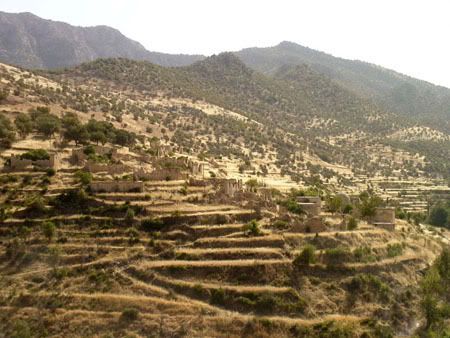
This is where their gold really lay: in the Nestorians' terracing systems, intricately laid out and arduously maintained. Here they grew everything they needed. This is a PKK photo. I can't say for certain that it depicts a deserted Nestorian village. There are, after all, plenty of deserted Kurdish villages in the mountains. And travelers' accounts make it clear that, depending on which district they found themselves in, the Kurds too excelled in this type of agriculture. But travelers in the district of Hakkari (now in Turkey) point out that in one particular tribal area (Tiyari) the Christians were so feared, and held in such dread by the Kurds, that they felt secure enough to keep their houses spread out and close to their fields. Usually, it is otherwise: mountain village houses are always bunched together, stacked one on top of another, as a means of gaining security. More like this:

Photo Sharing and Video Hosting at Photobucket


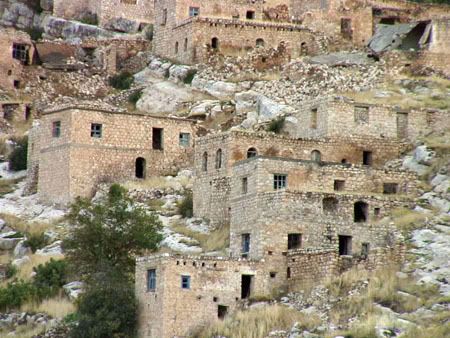
Again, I have no idea where this village is, but it's probably in Turkey. Note the sharpness of those right angles in the stonework. Again, it's a feature that varies from district to district. I've seen Kurdish stone dwellings in Mardin that were superb; elsewhere, the walls are stacks of rough stone mortared together with mud, then roofed over with branches and more mud on top of that.

Photo Sharing and Video Hosting at Photobucket


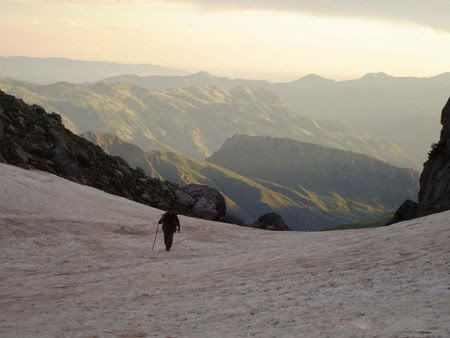
This is more like it. This gives us a feeling of the immensity of it all, of a place where you can stand upon snow and look off onto the plains of Mesopotamia, and temperatures well over 100 degrees. It's the guerrillas' world, and here is their rations:

Photo Sharing and Video Hosting at Photobucket


This is the classic peasant meal in Turkey: a beaten shield of metal, a fire, and the simplest bread possible. Bun and Run. But there are a few compensations:

Photo Sharing and Video Hosting at Photobucket


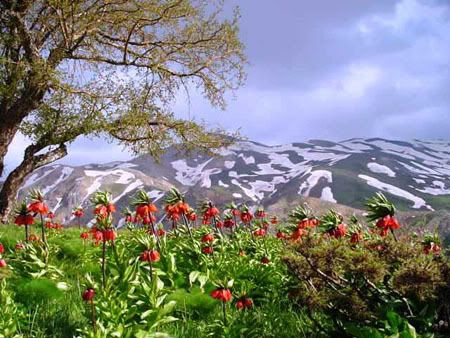
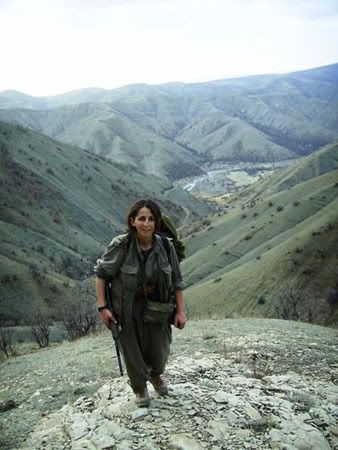
On April 26, 1849, Justin Perkins, an American missionary from Amherst, Massachusetts, wrote in his journal from the Kurdish mountains: "Another villager brought us the finest flower I ever beheld, which he had picked, in its wildness, on the neighboring mountains." He then went on to describe the flower shown above. In gardening circles it is called the Crown Imperial fritillaria, and it grows (from a bulb) to a height of 3-4 feet. In Turkish it is called the "ters lale," or "inside-out tulip," and it is a protected species in the mountains of Hakkari province. The PKK women like them, too, as this photo shows:

Photo Sharing and Video Hosting at Photobucket


And what would a survey of the flora be without this?

Photo Sharing and Video Hosting at Photobucket


These are, please take note, the real deal: genuine wild tulips blooming in the place where the species originated. In a way, the tulipomania of Holland (its genes, at least) can be traced back to here.

But it's scenes like the following that we need to think of when the war comes:

Photo Sharing and Video Hosting at Photobucket


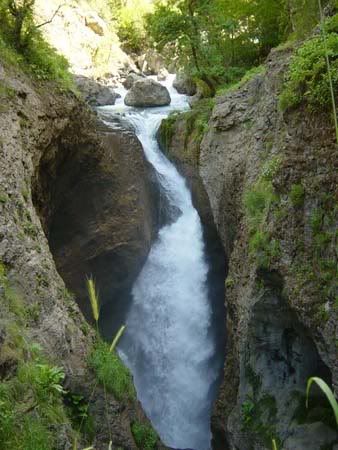
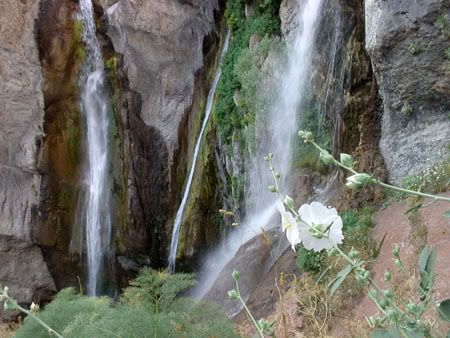
Hidden torrents; brush-covered canyons; waterfalls:

Photo Sharing and Video Hosting at Photobucket


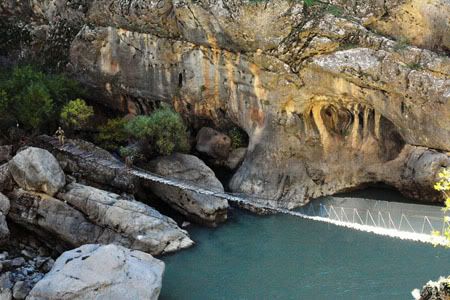
With only occasional aids to navigation:

Photo Sharing and Video Hosting at Photobucket


Next time, I believe, it's time to start looking at people:

Photo Sharing and Video Hosting at Photobucket


That, as we'll see, will contain some big surprises.

Labels:

 
by Winter Rabbit | 10/30/2007 05:30:00 PM


Herstories on the issue of violence against women

A Cheyenne proverb states, "A nation is not conquered until the hearts of its women are on the ground. Then it is done, no matter how brave its warriors or how strong its weapons." Our hearts are not on the ground. Our feet are. And we are moving forward.


A travesty to the true spirit of justice is taking place on the Standing Rock Reservation that covers North and South Dakota. Predominantly white male rapists are sexually assaulting American Indian women and getting away with inadequate consequences or no consequences whatsoever.


Crossposted at Native American Netroots

Show me a rapist of an American Indian woman and I'll show you an upstanding member of society. That's what the Major said about a man who plead guilty to raping an American Indian woman. Maybe the thieves and vandals who have caused property damage so severe that Pretty Bird Woman House had to close its doors for now are "upstanding citizens" as well.


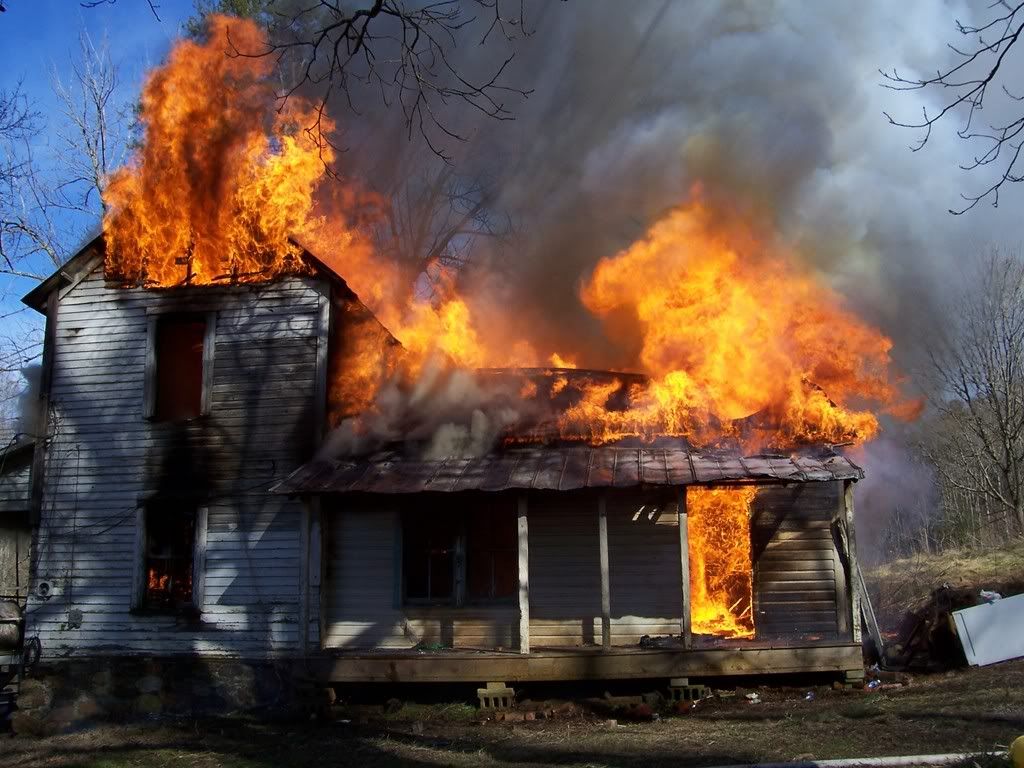
Thieves have stolen food and a television set from Pretty Bird Woman House. The very walls were smashed through to break inside or destroy it; then, it was set on fire.

(Not Pretty Bird Woman House)

Photo Sharing and Video Hosting at Photobucket

What if this occurred in a Caucasian controlled city or county? Allow me to share a story from my personal experience.

I left a gig with horn and stand in hand; I was walking to the parking garage. I witnessed a couple fighting when I got to the elevator. "A little unusual, but none of my business," I thought. However, next the man called his girlfriend a slut and slammed her up against the wall. It became my business. While three others were standing around, wondering if they should call 911, I said "Stop" firmly to him. Ignoring me, he became more violent; so, I commanded her to get out of the elevator.  One of the others was calling 911 at that point. She did not get out of the elevator, "My keys are in his truck." He lowered his head and pushed his hand towards me for me to back off; he couldn't look me in the eye. I told her to get out again. The doors closed.


I told the others with cell phones to follow me up the stairs and to be calling 911. They bailed. I went to the second floor and waited. Nothing. I didn't know which floor they went to, "Battered wife syndrome" I thought as I went down the stairs and found a police officer on the street. I told him what happened and he went into the parking garage to investigate. That is the difference between what happens on the Standing Rock Reservation and a Caucasian controlled city or county - justice.


Source

In 1978, the Supreme Court ruled in Oliphant v. the Suquamish Indian Tribe that tribal governments have no criminal jurisdiction over non-Indians. When a crime is committed, tribal police and their non-Indian counterparts must hash out whether the suspect is Indian or not.


I have two primary reasons why I did what I did. The first one is that violence against women doesn't happen in front of me; I won't allow it. The second one is that that woman, whatever her name, is my cousin. She is my relative.


Here is a CHIPIN CAMPAIGN from PiledHigherandDeeper, who asked me to do this here.


Please make a donation at the CHIPIN CAMPAIGN for the Pretty Bird Woman House to help keep the hearts of the women off the ground.


Source

"I prefer to characterize rape simply as a form of torture.  Like the torturer, the rapist is motivated by the urge to dominate, humiliate, and destroy his victim.  Like a torturer, he does so by using the most intimate acts available to humans -- sexual ones."

Helen Benedict, Virgin or Vamp, 1992


Labels:

 
by Jeremy Young | 10/28/2007 04:07:00 PM
Josh Trevino is the vice president of a conservative think tank and the co-founder of Redstate (with which he is no longer affiliated). Despite these facts, I've always found Josh to be exceptionally thoughtful, well-spoken, and full of fresh ideas -- an individual, in short, for whom I have great respect.

In July, Josh posted an essay titled Turks and Tolerance (originally published in the National Review Online), which I reviewed in a (now-deleted) Open Thread at ProgressiveHistorians. While my comment was mostly favorable, I criticized Josh for his comment that "we should have enough experience with political Islam by now to regard it with wary skepticism until given reason to trust." Josh e-mailed me for a clarification of my views, and the result was a fascinating e-mail discussion that lasted over a month and touched on a wide-ranging variety of topics.

Josh has asked that I repost our correspondence here, and I do so now in the format of a conversation between the two of us, with light edits. I think it's a wonderful example of how two people from two differing political traditions can have a respectful, enjoyable, and enlightening discussion about political issues.


Josh Trevino: Do you believe that we don't have enough experience with political Islam to render judgment; or that our experience with political Islam is that this judgment is unjustified?

Jeremy Young: I don't believe it's political Islam that's necessarily at fault in many Middle Eastern countries, but the dictatorial governments that are in place prior to political Islam's ascendancy. We see the provocation for such governments in examples both new and old: in the Shah of Iran, and in today's Musharraf and Mubarak, among others. Treating political Islam as a monolith of evil results in the same sort of strategic miscalculations the U.S. committed during the Cold War: backing an ineffective leader like Mubarak who does not have the support of his own people is no better than funneling money to the Contras just because they were not Communist.

You acknowledged this in your original piece by inferring that political Islam in Turkey is better than Kemalist nationalism. I'm simply taking the next step and suggesting that we have no need to stereotype political Islam as being negative at all, despite specific examples such as Khomeini and the Taliban. Rather than viewing it with skepticism, I believe, political Islam should be viewed just like any other government, on a case-by-case basis based on its commitment to the betterment of its people.

Josh Trevino: Your point is well taken, although I differ from your assessment on two points:

First, political Islam is as proactive as reactive, and so its faults are not wholly, nor even mostly, the responsibility of its predecessors or enemies. The crimes of Hamas or the Iranian regime, for example, are not meaningfully the faults of the Israelis or the Shah. We should credit Islamists with the independent volition and sophistication that they undeniably possess.

Second, I am not sure that a "commitment to the betterment of its people" is a useful metric for the assessment of a government. Particularly where theocratic impulses are concerned, that commitment is undeniably strong -- by the lights of those impulses, anyway. The Saudis, for example, are extremely concerned with promoting that betterment -- by beheading, if necessary.

Bottom line is that the relevant metric is probably concurrence with our own stated values -- and the plain data of experience.

Jeremy Young: Regarding your first point, I suppose what I'm trying to say is that political Islam often doesn't become unduly restrictive unless it's brought in to replace an unpopular dictatorial government. It's the more virulent strains of political Islam that can most easily withstand political unrest or dictatorship; think of Moqtada al-Sadr maintaining an effective militia while the more moderate Sistani sat on his duff under house arrest by Saddam, or the increasing radicalization of political Islam in Chechnya as the more moderate elements are literally blown up. As a general rule, Muslims would prefer to see more reasonable leaders, rather than radical Islamists, overthrow their dictatorships; we saw that when the Iranians turned first to Mossadegh before moving reluctantly toward Khomeini. (The exceptions are in Palestine and southern Lebanon, where many Muslims view the moderates as ineffectual, and Afghanistan, which is a natural warlord state where the radicals managed to secure enough money to build a superior army to their neighbors' and then set about conquering everybody in sight.) So if we want to promote moderate political Islam, we should start by no longer propping up unpopular dictators, and then see if we can't make common cause with the moderate Islamists --something the Clinton administration did admirably in Iran, for instance.

As for your second point, it's an excellent one; when I said "the betterment of their people," I was thinking of Hugo Chavez, who has undeniably raised the standard of living for his people, but is opposed anyway by the United States for his geopolitical antics. (I personally consider him a buffoon, not to be taken seriously on the international stage, but would advocate a rapprochement with his government on the grounds that he has helped his people and remains popular at home.)

Josh Trevino: I suppose I'm not convinced that "moderate Islamists" really exist as a meaningful subset of Islamists in general. The only example that I can think of whom we could morally approve of (as opposed to live with in a realpolitik sense) may be the AK party in Turkey. Elsewhere, even the Iranian "moderates" whom you cite are still enthusiastic proponents of annihilating Israel; and any Islamic polity, by definition, will impose some manner of Islamic law, which is ultimately incompatible with our ideas of (classically) liberal democracy. Admittedly this may range from the horrors of the Taliban to the comparative liberality of the present Indonesian regime; but the fundamental contradiction always remains.

Agreed of course that autocrats are a poor investment on pragmatic and moral grounds -- but it does not follow from this that their alternatives are inherently better.

Jeremy Young: I think Mostafa Moeen could be realistically considered a moderate Islamist -- and I don't believe he wants to annihilate Israel, though I couldn't find his position online one way or the other (I don't read Persian, so I couldn't check out his blog).

And I'm not saying we should necessarily invest in Islamic regimes -- but neither do I think we have the right to dismiss them because they don't believe in classically liberal democracy. To me, the fundamental principle of democracy (not political democracy, but theoretical democracy) is the right of the people to choose whatever government they want, be that democratic, Communist, monarchist (as the Afghanis would surely have chosen had their king consented to return permanently), or Islamist. If the U.S. wants to support alternatives financially as we did in Serbia, I'm all for it; but we should also recognize the will of the people when it goes against us.

Josh Trevino: I think we're getting to the rub here, which is not so much about Islamism as it is differing valuations of classical liberalism and democracy. You appear to value the latter over the former, and I hold the opposite valuation. Am I misunderstanding you?

Jeremy Young: No, I think you've got it just about right, with the caveat that I'm talking about the idea of democracy rather than a specific governmental system. i.e., I think the U.S. should treat Hugo Chavez as a full partner because he's democratically elected and enjoys the authentic support of his people (even though I personally think he's a pompous windbag and a joke), while you, I take it, think we should continue to fund protests against him because he opposes a classically liberal government. Correct?

Josh Trevino: Leaving aside Chavez specifically, you're correct. I see democracy as a morally-neutral mechanism, rather then a prerequisite for just governance. In this, I agree with the Declaration of Independence: "[T]o secure these rights, Governments are instituted among Men, deriving their just powers from the consent of the governed." The primary purpose of government is to secure rights, and the legitimacy of its power is derived from popular consent. It's perfectly possible to have a monarchy (or even a theocracy) that secures those rights, and acts with the consent of the governed. Early America under the Constitution, in which only a few thousand per state actually held the franchise, fit this bill; as does modern Lichtenstein, in which the population recently voted to dramatically expand monarchical power.

The metric of our assessment of foreign regimes, then, should be that of the Declaration: do they secure the rights of the governed? Translating this into policy would indeed bring us into opposition to leaders with substantive internal support: Chavez and Putin come to mind. They may be popular, but they're also autocrats at best.

Jeremy Young: But we haven't gotten to the root of the matter yet, I don't think. More people can vote percentagewise under Chavez and Putin than could in early America, or for that matter in the loya jirga in Afghanistan. These leaders have popular consent in every sense of the word. Then you have individuals like King Abdullah of Jordan, who enjoys wide popular support and provides his people with virtually every right they could desire, except the right to vote. To me, Abdullah would also fall under the idea of democracy: if his people could vote, he'd be pretty likely to be elected.

In my view, the people's most sacred right is the right to choose whatever kind of government they want -- whether that means a left-wing regime like the Sandinistas or Chavez, a right-wing regime like Putin or (God forbid) Jorg Haider, or even a king like Abdullah. The only one of these leaders I think the U.S. should oppose is Putin, because he does not provide that most sacred right to a section of his people -- the Chechnyans. The rest, I think we should work with.

So I think the difference between us is that I feel the U.S. has no right to impose its view of government on other countries, while you feel the U.S. has a responsibility to advocate for a government that secures their rights. I don't think we differ significantly on popular legitimacy. Am I correct?

Josh Trevino: As an aside, and not that I'm an expert, I was surprised to find how many Jordanians were willing to disparage King Abdullah in private conversation. For what that's worth.

I dissent from your conception of "the people's most sacred right" on two counts: I believe rights are individually, not collectively, held; and the most sacred rights are therefore individual -- "life, liberty, and the pursuit of happiness." Now, I should admit that the Declaration appears to be of two minds on the topic, speaking first of men "endowed by their Creator with certain unalienable Rights" in their capacity as men, not a collectivity -- and then, in the next paragraph, speaking of a "Right of the People" in a clearly collective sense. I interpret the latter as a shorthand for an aggregation of individual rights, as the posited endowment of the rights is explicitly individual; but I suppose there's room for disagreement there, especially given Thomas Jefferson's later idealization of "the people" at large.

All of this is to say that even if a government has popular legitimacy, "deriving [its] just powers from the consent of the governed," unless that government has as its purpose "to secure these [certain unalienable Rights]," we are not bound to respect it, except on grounds of plain pragmatism. So what we have here is a dual- criteria hierarchy for the moral evaluation of foreign regimes. I propose that the hierarchy, from best to worst, would look like this:

1) Popular legitimacy, securing rights -- e.g., UK, France, et al.
2) No popular legitimacy, securing rights -- e.g., Jordan, USA 2005-2006
3) Popular legitimacy, no securing rights -- e.g., Venezuela, Iran, Russia
4) No popular legitimacy, no securing rights -- e.g., Turkmenistan, Belarus

This places rights ahead of legitimacy, as it should be, I think, while acknowledging legitimacy's importance. Furthermore, as the given examples show, the gap between the second and third tiers is huge -- again illustrating the overriding importance of rights versus legitimacy. And, to return to the topic that started this exchange, I believe that Islamist regimes are almost always third-tier, with the AK party nearly alone in that milieu in having the possibility of being in the first tier.

Jeremy Young: Lots of good stuff here. First off, you don't have to worry that I'll hold Jefferson up against you; support for just about ANY idea can be found in Jefferson's writings someplace!

I'm not surprised about King Abdullah; there's a strong and growing Islamic nationalism building in that country, mainly from resident Palestinians but also from his own people who are tired of his collaboration with the West. It'll be interesting to see whether he's able to hold on to the reins of power without significantly changing his relationship with the United States.

We've identified another key difference between us, I think: I believe that rights derived collectively are more important, in most cases, than rights derived individually. That difference makes sense given that the authentic intellectual basis of Republicanism/conservatism is a libertarian impulse, while the authentic intellectual basis of Democratism/liberalism is a communitarian impulse (despite what "libertarian Democrat" Kos would have us believe, even if the Democatic Party becomes a temporary home for libertarians, their views will always be incompatible with liberalism/progressivism). As a self-described Crolian Progressive, I certainly fall toward the extreme of communitarianism.

Finally, regarding the hierarchy you propose, I would switch numbers 2 and 3 in value. That's why I see people like Chavez as less bad than someone like Putin. I would also be hesitant to say that the government of Iran has popular legitimacy -- I still think that if the U.S. hadn't made the catastrophic error of supporting Rafsanjani in the last election, someone more moderate would have been elected instead of Ahmadinejad.

Labels:

 
by Jeremy Young | 10/28/2007 03:53:00 PM
Former ProgressiveHistorians blogger and political scientist Gene Keyes (esperanto41) has republished an excellent article on Finland's Winter War that he originally wrote in 1972. A portion of this article was published in Crossroads: An International Socio-Political Journal in 1985.

If you're going to be in Boston on November 19, stop by Faneuil Hall at 7 PM for a free reading of the letters of John and Abagail Adams by -- get this -- Governor and Mrs. Patrick and former Governor and Mrs. Dukakis. The event is sponsored by the Massachusetts Historical Society and Harvard University Press, which is releasing a new collection of the Adams letters.

If you're linking to us from your Daily Kos blogroll or anywhere else, please make sure you're using our full and correct URL: http://www.progressivehistorians.com. Since our move to Blogspot, formerly-active addresses http://progressivehistorians.com and http://www.progressivehistorians.com/frontpage.do no longer work. Thanks!

What's on your mind?

Labels:

 
by Bastoche | 10/28/2007 03:37:00 PM
In his essay, “End of Dreams, Return of History,” (which I briefly referenced in Part III of this series and to which I will return in more detail in future posts), Robert Kagan claims that we have entered an era in which “history”—that is, the contest between ideologies and between two ideologies in particular, liberalism and autocracy—is once again determining the foreign policy choices of the world’s nations. The most fundamental choice each nation must make is, of course, on which side of the ideological divide to stand: the liberal side with America, the European Union, Japan, Australia, and India or the autocratic side with Russia, China, and Iran.


But ideology is not the only motivating force in this new era of “history.” The world’s great nations, according to Kagan, are once again being motivated by “competitive national ambitions of the kind that have shaped human affairs from time immemorial.” Nations, that is, are ambitiously competing not just for material wealth and prosperity but for commodities more intangible: status, prestige, and honor.

Such nationalistic ambition, according to Kagan, “drives China’s foreign policy today.” Although this ambition is “tempered by prudence,” the Chinese are nonetheless “powerfully motivated to return their nation to what they regard as its traditional position as the preeminent power in East Asia.” They believe, just as Americans believe, that power “is a good thing to have and that it is better to have more of it than less.” Power, though, is not an end in itself but a means to an end, and that end cannot be measured solely in the material terms of economic wealth and military might. The Chinese understand, just as Great Powers have always understood, “that status and honor, and not just wealth and security, are important for a nation.”

That other autocratic giant, Russia, is also “moved by more traditional great-power considerations, including the pursuit of those valuable if intangible national interests: honor and respect.” The Europeans too “seek honor and respect…but of a postmodern variety.” Europe’s ambition is no longer to stand on the world stage as a predominant military power, but rather “to occupy the moral high ground in the world, to exercise moral authority…to be keeper of the global conscience, and to be recognized and admired by others for playing this role.”

America, in this respect, is no different from China or Russia or Great Britain or any other powerful nation in human history. America too is ambitious for status and prestige and honor, and since America is by far the predominant military and economic power in the world, it quite naturally seeks to base its sense of national honor on its economic and military might.

But economic and military strength are not the only criteria that America uses to distinguish itself from other nations and claim for itself a place of special honor in the grand sweep of history. America seeks also the prestige that flows from a different kind of power and authority, the moral authority that the Europeans currently claim. For America, in Kagan’s view, is the nation that originated in freedom and whose destiny is to organize the world into one democratic polity of peace, thus bringing to its historical culmination the universal ideal out of which it was born.

1. The Two Ideals

America thus, in Kagan’s view of the world, gives its allegiance to two ideals of honor: the ideal of the warrior and the ideal of the moralist. America lives by the ideal of the warrior when it protects democracy from the aggression of tyranny and terror. It lives by the ideal of the moralist when it promotes democracy and actively disseminates it throughout the globe. America is uniquely fitted to live and act by both ideals because it is both militarily powerful and morally prudent. Though militarily powerful, America puts its power prudently at the service of the value out of which, as a nation, it was born—freedom—and does not use its colossal power in order to assert an autocratic and imperial agenda.

That America can live by both ideals and can shift prudently from one to the other is especially important in this era when the clash of ideologies, as Kagan puts it, is once again looming on the horizon. In the coming decades autocratic nations will be competing against one another and against liberal nations not only for resources but for status and influence, for prestige and honor. Such nations will not hesitate to employ the Hobbesian methods of deceit and force, against which the Kantian methods of reason and rules favored by the liberal nations will, predictably, prove useless. One nation, at least, while remaining devoted to reason must also so dedicate itself to military power that it can resist the attempts of the autocrats and terrorists to subvert democracy and eradicate freedom from the march of history.

One nation has indeed come forward to fight autocracy and terror and to establish freedom and democracy on a universal basis. That singular nation, the world’s “dangerous” nation, as Kagan calls it, stands at the apex of history not only as the preeminent military power but also as the preeminent moral power. That nation is, of course, America.

In Kagan’s neocon worldview, America is, simply put, history’s preeminent nation. America stands singular and alone as the embodiment of the ideal—freedom—to which history itself aspires. The Europeans may have, after centuries of violence and conflict, crafted a realm of reason and rules, but America originated as a nation of reason and rules. Further, though Europe sees itself as the embodiment of a new Kantian order, only America has the power to protect that order and to promote it throughout the globe.

In his book, Of Paradise and Power, Kagan makes the distinction between the Hobbesian world of anarchy, in which the terrorist and autocratic states of the world compete to gain power and preeminence, and the Kantian paradise of reason, in which the democratic states of Europe cooperate to maintain peace and prosperity. In Kagan’s scheme of things, America has taken on the role of the world’s Sheriff, protecting the nations that occupy the paradise of peace from those that occupy the wilderness of power. America can successfully assume this role because, on the one hand, it has the strength and will to deal effectively with the Hobbesian rogues and outlaws and, on the other, it is dedicated to reason and rules and the Kantian ideal of perpetual peace.

Kagan, however, though he refers often in his argument to Kant’s idea of perpetual peace, fundamentally misunderstands it. Kant understood that the exercise of true moral authority conforms to three imperatives: freedom, equality, and solidarity. The goal of the moral nation is not preeminence, the affirmation that one nation, above all others, is replete with power and therefore more worthy of dignity and respect than any other nation, but equality, the affirmation that every nation, irrespective of its economic and military might, is capable of autonomous self-legislation and therefore as worthy of dignity and respect as every other nation.

The ideal of the warrior, on the other hand, is based on preeminence, the acknowledged dominance of one individual or nation over all others. Only one nation can stand as the most powerful of its era, and in our era that nation is, of course, America. But, in Kagan’s view, there is more. Only one nation can boast that its military and economic might are unequaled not just now but in the entire span of human history. And, for Kagan, even that is not all. Only one nation will be able to look down from the very summit of human achievement—the organization of the world into one polity of freedom and peace—and claim that it has brought history to its culmination and close. At the end of history, when freedom overcomes terror and tyranny, peace and equality will prevail among all nations. But in that paradise of freedom and equality one nation will stand forever preeminent, the nation that will have produced, by means of its power, everlasting peace and that will, on the basis of its power, forever guarantee it: America.

As charming and seductive as Kagan’s worldview is, it radically distorts the relationship between the ideal of the warrior and the ideal of the moralist. Instead of the ideal of the moralist constraining that of the warrior, the ideal of the warrior has infected that of the moralist. Kagan’s concept of honor is a warrior’s concept of honor, and his concept of power is a warrior’s concept of power. Preeminence, domination, victory, and fame are the values that drive his worldview. As Kagan envisions it, America will ultimately stand forth not only as history’s preeminent military nation, the nation that achieved an unsurpassable apex of power, but also as history’s preeminent moral nation, the nation that brought to its final realization the ideal for which history was created: freedom.

The fatal flaw in Kagan’s worldview, in the neocon worldview generally, is that moral action and freedom do not derive from a dialectic of domination and submission, of preeminence and subservience, of power and weakness, but from a different sort of dialectic entirely, a dialectic, to use Kant’s terms, of reason and desire. Out of reason, pure practical reason, as Kant calls it, come the moral imperatives that constrain the desire to dominate and rule by means of military power: the imperatives of freedom and equality and solidarity. In the realm of practical power one nation might very well be superior to all other nations. But in the realm of practical reason, every nation is, finally, an autonomous agent of self-legislation and no more worthy of dignity and respect—of “honor”—than any other nation.

Kant upholds an ideal of human action and human agency that is rational, an ideal based on reason and leading to a struggle for equality. Kagan upholds an ideal of human action and human agency that is irrational, an ideal based on power and leading to a struggle for predominance. Kagan is committed to a view of America as the world’s predominant nation, the nation that, finally, will stand above all others in the grand narrative of history, and thus is committed not to a Kantian ideal of reason and rules but to a warrior ideal of power and preeminence—a warrior ideal of honor.

I’ll discuss in more detail Kant’s concept of perpetual peace next time, but first, with the help of Thomas Hobbes and William Shakespeare, I’ll illustrate the connection between the two attributes on which Kagan puts his main ideological emphasis: power and honor.

2. To Wear Without Corrival All Her Dignities

Harry Percy—or Hotspur, as he is better known—is annoyed (Henry IV, Part One: Act I, scene iii). He has done yeoman’s work for his King. Not only did he help Henry depose King Richard and usurp the throne, he has now helped him secure it by defeating in battle the Scottish rebel, Douglas. True, he at first refused to hand over to the King the prisoners he took from Douglas—an act of defiance that has nettled Henry. But now, come before Henry at Windsor, he agrees to do so—as long as Henry ransoms Hotspur’s brother-in-law, Mortimer, from the Welsh rebel Glendower. Henry bristles at the suggestion since Mortimer, it seems, has married Glendower’s daughter and turned rebel himself. Hotspur defends his brother-in-law, but Henry will have none of it and orders Hotspur to comply with his demand.

Henry exits, and Hotspur, incensed at being treated with such highhanded disdain, proceeds to exhibit the irascible temper that has earned him his nickname. To Hotspur it is clear that Henry, having ascended to the throne and to the title of King, has become so enamored of his power and preeminence that he treats with contempt even those who have put their lives and blood at his service. All must genuflect to his will or suffer the punitive swipe of his anger. But Hotspur has no intention of letting himself be relegated to a position of passive and abject subservience. Henry gained his preeminence through rebellion, did he? Hotspur will follow the precedent that Henry has set: he will become a rebel himself and expunge the dishonor with which Henry, in his arrogance, has sullied his name.

Listening to Hotspur’s tirade are his father Northumberland and his uncle Worcester. Hotspur shifts his annoyance to them and claims that now and in the future they will stand convicted of two shameful acts. First, they aided Henry in his deposition of Richard, “that sweet lovely rose,” as Hotspur now calls him. But that retrospective shame is mere prelude to the greater and prospective one. “And shall it in more shame be further spoken,/That you are fool’d, discarded, and shook off/By him for whom these shames ye underwent?” (177-79) Hotspur urges them not to remain the submissive recipients of Henry’s contempt and disfavor. “No, yet time serves wherein you may redeem/Your banish’d honors and restore yourselves/Into the good thoughts of the world again” (180-82).

Only one field exists on which they can cleanse themselves of the blot of shame that now disfigures their reputation and restore themselves to honor: the field of battle. By means of rebellion and war will they rescue what they have lost—their stature and prestige—and subject the one who insulted them, Henry, to the everlasting humiliation of defeat. Hotspur welcomes the contest: “Send danger from the east unto the west,/So honor cross it from the north to south,/And let them grapple” (195-97).

Indeed, Hotspur seems eager to stand at the precise juncture where danger and honor meet:

By heaven, methinks it were an easy leap,
To pluck bright honor from the pale-fac’d moon,
Or dive into the bottom of the deep,
Where fathom-line could never touch the ground,
And pluck up drowned honor by the locks,
So he that doth redeem her thence might wear
Without corrival all her dignities. (201-07)

Shakespeare here illustrates for us a central aspect of the warrior ideal of honor: the drive to stand preeminent and without rival in the world. In the scale of honor only one position is worthy of occupancy: the first position, the very summit of the scale. Any other position, from number two on down, signals a reduction of honor and of worth. And only one person can stand atop the scale. The supreme position is not meant for occupation by a crowd, and two constitutes a crowd. Anyone who pretends to climb atop and share that space with its occupant becomes a “corrival” and must either be pushed off or given sole right of occupancy. Equality is not a concept that exists in the warrior’s ideal of honor—equality at the top, that is. Below the top all are equal: equally secondary, equally diminished, equally unworthy of the fame and glory and prestige—of the honor—that accrues to the one at the summit of the heap.

Hotspur, though, wants to gain preeminence not just through any act but through an act commensurate with his own grandiose image of himself, an act akin to leaping at the moon or diving into the depths. In rebellion against his King he finds such an act. As a warrior, he knows that only one quality justifies occupancy of the realm’s supreme position: power. And as a warrior he also knows that there is only one arena in which he can most convincingly display his power: war. In that arena he has already more than once displayed his skill and courage and prowess as a warrior, in a word, his power. When, in that greatest of all competitive arenas, he next puts on display the spectacle of his power, he will defeat Henry and compel those who witness his triumph to give him his reward. And for Hotspur his reward is not just a tangible one, the throne of England, but something intangible and even more valuable: everlasting honor.

3. The Pleasure of Contemplating Their Own Power

Like Shakespeare, Hobbes also understood the connection between, on the one hand, a person’s display of power and, on the other, that which he receives as reward for such display: honor.

In Chapter X of Leviathan, “Of Power, Worth, Dignity, Honour, and Worthiness,” Hobbes defines honor and dishonor as the subjective evaluations we place on a person, the degree, that is, to which we assign a person value or worth. “The manifestation of the value we set on one another is that which is commonly called honoring and dishonoring. To value a man at a high rate is to honor him; at a low rate is to dishonor him” (x, 17).

The rate at which we value a person, the degree, that is, to which we honor or dishonor a person, is dependent primarily on a single consideration: the amount of power that person is able to display. "Honorable is whatsoever possession, action, or quality is an argument and sign of power. And therefore to be honored, loved, or feared of many is honorable, as arguments of power. To be honored of few or none, dishonorable” (x, 37-8).

Numerous qualities can prompt us to evaluate a person’s worth at a high level. Such material attributes as wealth or privilege are indications of power and therefore honorable. “Magnanimity, liberality, hope, courage, confidence” and similar character traits are honorable, “for they proceed from the conscience [consciousness] of power” (x, 40). Those glorious indices of martial success, “dominion and victory,” are also honorable “because acquired by power.” Conversely, “servitude, for need or fear, is dishonorable” (x, 39). Those who serve do so, of course, only because they are weak and without sufficient power to compel others to serve them and so are unworthy of high estimation and honor.

We might assume that conventional ideas of justice would influence our estimation of a person’s worth or value. They do not. “Nor does it alter the case of honor, whether an action (so it be great and difficult, and consequently a sign of much power) be just or unjust; for honor consisteth only in the opinion of power” (x, 48).

Hobbes does not approve of this drive for honor: in the state of nature, as he envisions it (see Part IV of this series), the desire for glory is one of the three principle causes of conflict. But Hobbes also understands that in the state of nature, in which there is no sovereign invested with the power to produce and maintain order, it makes good rational sense for an individual to accrue as much power as possible in order to compete successfully for resources and to protect what he gains.

Some individuals, though, are driven by an irrational motive in their pursuit of power, in that they “[take] pleasure in contemplating their own power in the acts of conquest, which they pursue farther than their security requires” (xiii, 4). Some individuals, that is, are driven to needless acts of war in order to display their power before the gaze of the world and to gain from such display—from their victory in combat—honor and all her dignities: prestige, fame, and glory. After they have thus distinguished themselves above all others, they will forever have the pleasure of contemplating their own power. To put it more exactly, they will forever have the pleasure of seeing reflected in the eyes of those they have subjected the image of their superiority.

It is just such a pleasure that Kagan and the neocons hope to enjoy. Kagan of course does not claim that America displays its military strength and warrior will for the sake of establishing itself at the apex of historical honor. His vision of American power is, on the surface, a prudent and practical one. The world outside Europe, as he describes it, is a world of Hobbesian anarchy, and America, as the protector of democracy and freedom, must be able to face down and defeat the autocrats and terrorists who occupy it. In the Hobbesian sector of the world it must, that is, abide by the warrior ideal of power and domination.

But for Kagan America is not only the warrior who valiantly protects the weak against terror and tyranny but also the savior who is born to bring freedom and perpetual peace to all the nations of the world. When Kagan speaks of America’s moral destiny, he seems to be shifting away from a warrior ideal to a moral ideal. But such is far from the case. Rather than relinquishing the warrior ideal for a higher moral ideal, Kagan sublimates the warrior ideal: America will once again put on display its singular greatness before the world, vanquishing its enemies (and pretenders like Europe) not only as a military power but as a moral power. Though America will earn honor in the arena of war, it will achieve its ultimate honor after it has eradicated the Hobbesian realm of anarchy and established Kantian peace on a worldwide basis. America will then stand forever as history’s preeminent nation.

But however much Kagan tries to sublimate his warrior ideal, it remains a warrior ideal, based on preeminence and power. No amount of gesturing towards the Kantian ideas of reason and peace (which he misunderstands) will transform his warrior ideal into something sublime. His ideal of America as history’s “dangerous” nation—dangerous because of its commitment to both freedom and power—remains embedded in and inseparable from his ideal of America as history’s supreme warrior nation.

Such sublimation of the warrior ideal also allows Kagan, and the neocons in general, to indulge in a neat bit of ideological shape-shifting. Given the resurgence of “history” and the looming conflict between liberalism and autocracy, there is little prospect that America will be able any time soon to establish a Kantian realm of worldwide peace. For the foreseeable future, America will have to live in a world of Hobbesian struggle and war, contending against those nations that seek to eradicate freedom and replace it with autocracy and terror. The neocon idealists, therefore, will have to forego their dream of establishing, under the aegis of American power, a worldwide empire of democracy and peace. They will have to settle for a lesser but still honorable spectacle: America, its only goal the preservation of freedom, displaying its predominant power in the glorious arena of war.

4. There is Honor and Then There is – Well, What Exactly?

In that glorious arena in which he confidently expected to win everlasting fame, Hotspur loses not only his life but something more valuable. On the field of Shrewsbury he meets not King Henry but Henry’s son, Prince Hal. In the single combat that follows, it is not the seasoned warrior, Hotspur, but the former delinquent, Hal, who emerges the victor. “O Harry, thou hast robb’d me of my youth,” Hotspur says as he is dying. “I better brook the loss of brittle life/Than those proud titles thou has won of me./They wound my thoughts worse than thy sword my flesh” (V.iv.77-80).

It is not the tangible wounds to his body but the intangible wounds to his honor that cause Hotspur grief and prompt his despair. Hal’s victory over him in battle—the glaring indication that Hotspur's power is less than that of his opponent—has dealt death not only to his body but to his reputation and his vaunting pride as a warrior. Even worse, because he has displayed in battle not strength but weakness, not power but impotence, Hotspur’s defeat has forever attached to his name the antithesis of honor: shame and humiliation.

There is, however, on the field of Shrewsbury one soldier who cares about neither honor nor humiliation. Prior to the battle Falstaff delivers a “catechism” on honor (V.i.127-41) in which he points out that honor has no power to set a leg or an arm or to “take away the grief of a wound.” If honor has no power to remedy physical hurt, what power does it have? None, really. It is but a “word” and has nothing in it but the incorporeal “air.” In battle a man might earn a title to this puff of breath, but if he dies while earning it, he’ll neither hear it applied to his name nor feel its effects. And even if he does live to enjoy its benefits, such enjoyment will be brief, for the envy of others will not long allow him to keep his title. “Therefore I’ll none of it,” Falstaff concludes, preferring a long and inglorious life without the empty title of honor to a short and glorious one with it.

Falstaff’s catechism is by no means Shakespeare’s final word on the relationship between power and honor. Shakespeare would express his mature view in the tragedies that follow the Henriad, especially King Lear and Antony and Cleopatra. But for our purposes, the individual to whom we must now turn in order to counter the neocon ideal of honor is the one to whom Kagan himself repeatedly refers: Immanuel Kant.

Crossposted at dailykos

Labels:

 
by Winter Rabbit | 10/28/2007 11:32:00 AM
Photo Sharing and Video Hosting at Photobucket


Source

"Brand new state, Brand new state, gonna treat you great!

Gonna give you barley, carrots and pertaters,

Pasture fer the cattle, Spinach and Termayters!

Flowers on the prairie where the June bugs zoom,

Plen'y of air and plen'y of room,

Plen'y of room to swing a rope!

Plen'y of heart and plen'y of hope!


Source

"The whole management of Indians has been abnormal . . . Everything is controlled by arbitrary laws and regulations, and not by moral, social, or economic principles."


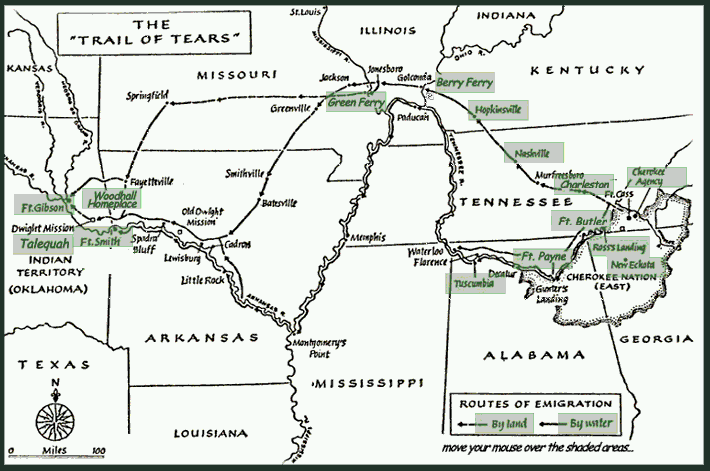
All of the tribes experienced a Trail of Tears due to the forced relocations; some were more or less severe. However, regardless of their differing severity, the forced relocations were all part of the U.S. extermination policy, or genocide, to solve their "Indian Problem." The "problem" in Indian Territory was that the tribes who were forced to relocate under conditions that significantly reduced their population through extermination or starvation, some in harsh winter conditions, was that they survived the forced relocations at all. Hence, a "solution" was needed to insure white domination in Indian Territory. Henry Dawes and his Dawes Act fueled by racism, denial of joint statehood, and a cruel "wedding" fusing Indian Territory with the State of Oklahoma all contributed to Oklahoma's Statehood through the elimination of many tribal lands and the great diminishment or total elimination of tribal political influence.


The white supremist attitudes of Henry Dawes, author of the Dawes Act and which led to the Allotment Era, was paramount in shifting land ownership from whole tribes to the sole individual.


Kill the Indian, Save the Man

Massachusetts Senator Henry Dawes, convinced that the white man's ways were superior, pooh-poohed the idea of communal property, although he did express sympathy for the Natives. "The common field is the seat of barbarism, while the separate farm is the door to civilization," he said. Dawes explained that selfishness was the root of advanced civilization, and he could not understand why the Indians were not motivated to possess and achieve more than their neighbors.


The white supremist attitudes of Dawes was reflected in whites prior to the Allotment Era that Dawes formally initiated.


The Indians Are

Getting Uppity


Berthrong describes the attitudes of the whites who overwhelmed the Cheyenne and Arapahoe reservation subsequent to allotment:

White-Indian relations after the opening of the Cheyenne-Arapaho Reservation were tragic. Deep prejudice often bordering on racism marked whites' attitudes toward their Indian neighbors...If the Indians had possessed more economic potential, skills, and incentives to acquire additional or replacement property, the losses they suffered through fraud and theft would not have been so severe or irremediable. As it was, the discrimination, the loss of property, and the contempt in which the Indian was held by farmers and ranchers made it impossible for many of the Cheyennes and Arapahoes to follow the 'white man's road.' (Berthrong, p.207)

Guy Dull Knife Jr. recalls his boyhood impression of whites outside the reservation borders: "He remembered the dirty looks, the waiting for whites to enter first, the standing in line, others cutting in front of them, the occasional cursing, clerks tailing him up and down the aisles and the signs that said 'No Dogs or Indians Allowed'." (Starita, p.326)


Dawes's anti Indian sentiment bled over into the legislation he created, the notorious Dawes Act. The facts that it authorized the president, Roosevelt at the time, to twist tribal land ownership into individual land ownership if the land was deemed "advantageous for agricultural and grazing purposes" when Oklahoma's primary assets were farming and agriculture prior to its statehood, were by no means innocent and coincidental. To the contrary, it was divide and conquer in retrospect. 

Divide -

(Underline mine)


Source

Be it enacted by the Senate and House of Representatives of the United States of America in Congress assembled, That in all cases where any tribe or band of Indians has been, or shall hereafter be, located upon any reservation created for their use, either by treaty stipulation or by virtue of an act of Congress or executive order setting apart the same for their use, the President of the United States be, and he hereby is, authorized, whenever in his opinion any reservation or any part thereof of such Indians is advantageous for agricultural and grazing purposes, to cause said reservation, or any part thereof, to be surveyed, or resurveyed if necessary, and to allot the lands in said reservation in severalty to any Indian located thereon in quantities as follows:


Source

In addition, the law severely reduced Indian holdings; after all individual allocations had been made, the extensive lands remaining were declared surplus and opened for sale to non-Indians. In 1887, the tribes had owned about 138 million acres; by 1900 the total acreage in Indian hands had fallen to 78 million.


- and conquer.


As Oklahoma sought statehood the U.S. government again divided reservation lands to sell to white settlers, leaving just a small parcel for reservation land.


The Merriam Report: A Look At "Real" Life

The report found many contributing factors, one of the major ones being the Allotment Policy.  In the Merriam Report, it was also said that

Not accompanied by adequate instruction in the use of property, it has largely failed in the accomplishment of what was expected of it.  It has resulted in much loss of land and an enormous increase in the details of administration without a compensating advance in the economic ability of the Indians...it almost seeded as if the government assumed that some magic in individual ownership of property would in itself prove an educational civilizing factor, but unfortunately this policy had for the most part operated in the opposite direction.  Individual ownership in many instances permitted Indians to sell their allotment and to live for a time on the unearned income resulting from the sale.(2)


100 Years in the Land of the Red Man

"When the Allotment Era came into being, it changed every perspective we had on land--it went from the control of the tribe to the control of the individual," he explained.

Those individuals, Jones recounted, were illegally taxed and many lost their land by their failure to pay those taxes, largely because their grasp of the new and foreign concept of individual private land ownership didn't quite match the speed of the government's enforcement of its imposed tax policy.


Continuing, as the Iroquois Confederacy helped to shape American Democracy on a national level, the Sequoyah Constitution helped to shape the Oklahoma Constitution on a state level.


Source

No historian can properly review the provisions of the Oklahoma Constitution without considering the Sequoyah Convention which convened at Muskogee in 1905; for some of the most important provisions of the Constitution derived their inspiration from the Sequoyah Constitution, notably: Article nine on Corporations, the method of Legislative apportionment, the Great Seal, less than a unanimous verdict of Jurors in trials of civil causes, compulsory teaching of Agriculture and Domestic Arts in the public schools, the names of many Counties in old Indian Territory, et cetera.

As Vice-President of the Sequoyah Convention of 1905 and as President of the Guthrie Constitutional Convention of 1906, I witnessed some facts of historical value, hitherto not given publication.

-huge snip -

"You know many people in Oklahoma Territory and I wish you would remember this, 'The politicians of Oklahoma City and Guthrie will try to dominate the convention and shut out the Indian Territory along with western Oklahoma. When statehood comes, remember to keep "tab" on the delegates elected and for some good man over there, not allied with the machine, for president of the Convention'." To which I agreed.


But that wasn't part of the "solution," Roosevelt squelched Indian Territory's attempts at having joint statehood with Oklahoma. As the result, there is no Centennial for Indian Territory.


ENABLING ACT (1906)

After the introduction of a bill for admitting Indian Territory as the State of Sequoyah sank in Congress in December 1905-January 1906, Pres. Theodore Roosevelt recommended joint statehood.


What was part of the "solution" was a cruel "wedding" between Indian Territory and the State of Oklahoma simultaneously with Oklahoma's admittance into statehood.


Source

Rev. Dodson:

Representing the Indian Territory is Mrs. Anna Bennett of Muskogee. 

(Durant presents Mrs. Bennett to Jones, bows, and steps back.)


Mrs. Bennett:

I will.  And to you I present my hand and my fortunes, convinced that  your love is genuine and sincere.


Dodson:

Do you, Mr. Oklahoma Territory, take this woman to be your lawfully  wedded wife, to have and to hold, from this day forth, in union as the  State of Oklahoma?


Photo Sharing and Video Hosting at Photobucket


To bring this to a close, all of the tribes experienced a Trail of Tears due to the forced relocations; some were more or less severe. However, the tears did not end with the forced relocations. The cruel mock wedding ceremony caused tears; being shut out of the democratic process caused more tears after the denial of duel joint statehood, as did the Dawes Act and all the racism that accompanied it. Simultaneously, the Indian Boarding Schools were working their "solution," which would continue until approximately 1970, while the forced sterilizations would work their "solution" and end in the mid 1970's. No Indian, no "problem" for the whites who cut the Indians out of life, democracy, or both.

Labels:

 
by Gordon Taylor | 10/27/2007 10:58:00 PM

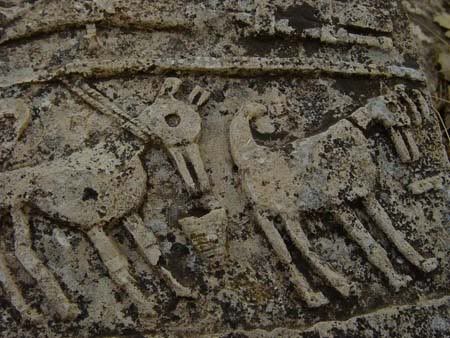
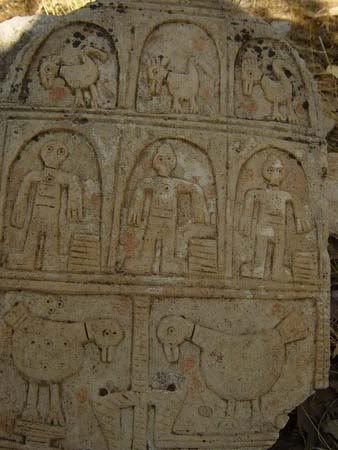
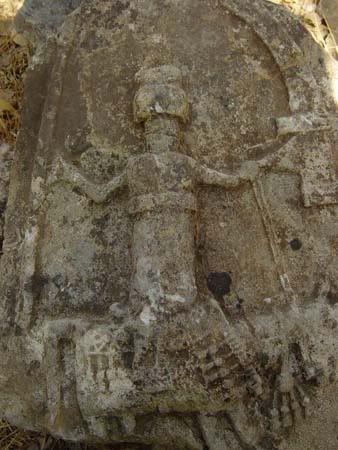
This photograph was taken by Kurdish guerrillas of the HPG, the armed force of the PKK, which has been fighting against the government of Turkey since 1984. I doubt that anyone knows exactly where this picture was taken; anyone, that is, except the guerrillas who took it. I found this photo recently--this and the others which follow--deep in the website of the HPG.

Readers should remember this about Anatolia, the land mass now occupied by the Republic of Turkey: it is a heap of ruins, a treasure house of history, a place whose secrets archaeologists have scarcely begun to uncover. Only in the last ten years, for example, have archaeologists uncovered artifacts in the town of Hakkari, capital of the province of the same name, which belong to a people that the scientists cannot yet identify. Probably they are ancestors of the Kurds who have always lived there. Clearly there is more to the story of the people and civilizations of these mountains than has been discovered so far. And that's why the photograph above is potentially of such interest, especially to the Kurds.


These pictures represent, I believe, a new phenomenon in this high tech age: rebels, outlaws, guerrillas (officially "terrorists" to the Turkish govt., which forbids calling them anything else) hiding out in some of the remotest, least explored mountains on earth, carrying digital cameras in their pockets and using them to document the wonders of the world they inhabit. And one of those wonders is this tunnel.

Photo Sharing and Video Hosting at Photobucket

Who built it, and when? Why did they go to all the trouble to cut through solid rock and gain access to this remote canyon? (By the way, we know that it's remote--very remote--because otherwise the PKK guerrillas wouldn't be there.) I am no expert on this area--probably situated in the mountains of Bohtan: Cudi Dagh (pron. Judi Daah) and Gabar Dagh, near the town of Sirnak--but I have read a substantial amount of the travel literature, and I know of no Western traveler who has explored this area and published pictures like these. Freya Stark did pass this way (on a mule) in the 1950s, but she took a route further north, close to the present-day motor road that runs west from Hakkari to Sirnak and Cizre, on the Tigris. In the 19th century Gertrude Bell explored the south slopes of Judi Dagh looking for the shrine and tomb of Noah (also, as we will see, photographed by the PKK), but she didn't penetrate the mountains themselves. And in 1843 Asahel Grant, M.D., of Utica and Waterville, New York, rode into the western, more settled side, to meet Bedr Khan Bey, the Kurdish emir of Bohtan and progenitor of the Bedirhan clan who have been so prominent in modern Kurdish history.

There was, however, one group of Westerners which passed directly through the very heart of these same mountains. Their passage was hardly a secret and certainly not easy. They were the Ten Thousand Greeks, stranded mercenaries trying to make their way home from the Battle of Cunaxa, near Babylon, in 401 B.C. Their journey is described in the Anabasis of Xenophon.

When they first encountered the villages of the mountain people, the Greeks left them untouched, in hopes that the natives would let them pass unhindered. Their hopes were disappointed. In the seven days it took them to traverse the mountains of the Karduchoi, generally thought to be the antecedents of the Kurds, the Greeks suffered more than in all the battles they had previously fought. The Karduchoi were everywhere, rolling great rocks down upon them, harassing their rear and flanks, shooting at them with bows six feet long and powerful enough to pierce armor with their arrows. It was, as Xenophon describes it, a hell on earth, complete with thunderstorms, rain, and snow: a famous episode in a justifiably famous book. Up to now I'm not aware that anyone has published evidence of the Karduchoi and their society. With these photographs I believe that the guerrillas of the PKK have done just that.

Judging from the order of the photos, the tunnel above appears to lead to this:

Photo Sharing and Video Hosting at Photobucket

It's a cave, obviously, and a spring of some kind, with water emerging from a spigot hewn from the rock. Notice also the stone work. Obviously this is old, but is it ancient enough to be the work of the Karduchoi? The next images show these:

Photo Sharing and Video Hosting at Photobucket

Which is a detail of this:

Photo Sharing and Video Hosting at Photobucket

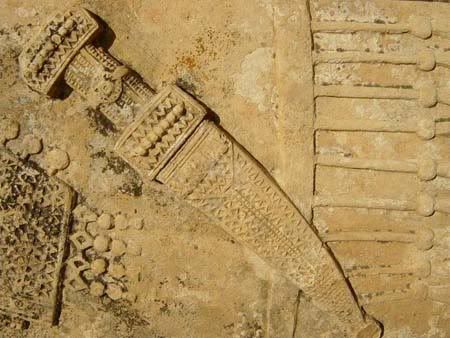
The figure on the left of the stele is a PKK fighter with his weapon. Included in this series are the following images carved from stone:

Photo Sharing and Video Hosting at Photobucket

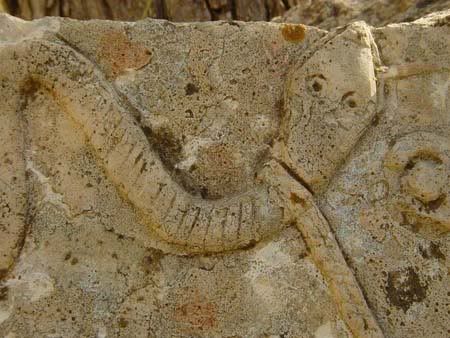
More detail of the dagger on the grave stele. Note that it's virtually the same style of ritual dagger worn by modern Kurd and Arab tribesmen. Also, animals. A snake:

Photo Sharing and Video Hosting at Photobucket

Dogs, and judging by their curved tails, possibly Salukis:

Photo Sharing and Video Hosting at Photobucket

Ducks?

Photo Sharing and Video Hosting at Photobucket

A mounted king:

Photo Sharing and Video Hosting at Photobucket

This should provide enough excitement for anyone, especially those who get seduced by Indiana Jones movies. But Kurdish nationalists, I would think, might especially want to take note. If I'm wrong, and these artifacts have already been thoroughly catalogued by archaeologists, then I will gladly retreat into obscurity. But I think this is fascinating stuff. And the only people who really know about it are the PKK guerrillas.


Labels:

 
by Winter Rabbit | 10/27/2007 02:18:00 PM

NOT VANISHED, JUST OVER-LOOKED

"Viewing Native Americans as a people of the past is the most accessible, convenient perception for Americans. While I believe it is important to create images that are historically, culturally correct and support the preservation of culture, I also believe it is imperative that a modern, contemporary representation of Native culture needs to surface in the mainstream.


A web of land theft in

http://indiancountry.com/content.cfm?id="1096415997

a new kind of Indian war is taking place. Non Indians' racism and genocide denial, who engage in attempting to steal tribal sovereignty through the court system, ignore an obvious question. Where would they meet to practice their religion, a white Caucasian word, if their churches were stolen, condemned, and being used to drill for oil and uranium? The "spirit" seems to be this: "What one group calls genocide, another group may call progress." Let's try to get an overview of the "progress" in the web of land theft in the "New kind of Indian war."


August 26th through the 29th was the SYMPOSIUM ON THE SETTLEMENT OF INDIAN RESERVED WATER RIGHTS CLAIMS (a good overview is here).

I am speculating, but I think that one reason for the Symposium on the Settlement of Indian Reserved Water Rights Claims was because of this:


Red Shirt Village -- Residents of Red Shirt village on the northwest corner of the Pine Ridge Reservation have put up signs warning people of the high nuclear radiation levels found in the Cheyenne River.


Which, I assume in part resulted in this resolution being made.


Defenders of the Black Hills: a group of volunteers without racial or tribal boundaries working to ensure that the United States government upholds the Fort Laramie Treaties of 1851 and 1868.

NOW, THEREFORE BE IT FURTHER RESOLVED,
the GPTCA affirms that any person, agency or entity including federal, state, and county governments, or corporations, businesses or companies who shall cause any nuclear pollution, or contamination to enter the confines of the Indian Reservation Homelands should be prosecuted to the fullest extent of the law, and

NOW, BE IT FINALLY RESOLVED,
the Great Plains Tribal Chairman's Association calls upon all other Tribes and Indian Nations to join with us to protect our Reservation Homelands, to ensure that no damage will come to the people, the culture, the environment including the air and water and economy of the Tribes of the Great Plains because of uranium mining or other processing of contaminants in the region of the Great Plains Region.


Furthermore, I assume that this was created to combat the devastating affects of land theft and pollution in the above case, at the very least:

The Tribal Supreme Court Project is part of the Tribal Sovereignty Protection Initiative and is staffed by the Native American Rights Fund (NARF) and the National Congress of American Indians (NCAI). The Project was formed in 2001 in response to a series of U.S. Supreme Court cases that negatively affected tribal sovereignty.

This information at the international level, beginning with the Cobo Report, is crucial to understand in conjunction with all the above.


Chapter 6: International developments in the recognition of the rights of Indigenous peoples

The Cobo report, as it is commonly known, was prepared over the next decade. It was submitted to the Sub-Commission in 24 instalments between 1981 and 1984 with its conclusions and final recommendations compiled in a consolidated volume in 1987. Underpinning the report's detailed conclusions and recommendations is the recognition that, despite the great diversity of their cultures and systems, Indigenous peoples throughout the world have common experiences of discrimination, oppression and exploitation.

- snip -

- recognition that Indigenous peoples and nations are subjects of international law and must be included within international law processes;

- recognition of Indigenous peoples' special relationship to land and its integral link to their beliefs, customs, traditions and cultures and for efforts to be taken to maintain or restore that relationship;

- the ratification and implementation by States of international human rights treaties such as those on genocide, anti-slavery, racial discrimination, civil and political, and economic, social and cultural rights; and

- the establishment of a working group on Indigenous peoples at the United Nations under the Sub-Commission.[12]

The chairperson altered this, yet some were still against it (emphasis & underline mine).


SPEAKERS CALL FOR INCREASED INTERNATIONAL RECOGNITION OF INDIGENOUS RIGHTS,

Recognizing that most of the world's remaining natural resources -- minerals, freshwater, potential energy sources and more -- are found within indigenous peoples' territories, the sixth annual session of the Permanent Forum has brought indigenous groups together with representatives of Governments, intergovernmental organizations and United Nations agencies to state their views, voice concerns and suggest solutions regarding their lands, territories and natural resources.


We know how that went, don't we?

It falied in the U.S.

Here is more information about it.


Since we're talking about a web of land theft and

http://indiancountry.com/content.cfm?id="1096415997

"a new kind of Indian war, I'm going to make this ending short and sweet about something more well known. I don't agree with the Chief of the Cherokee Nation in regards to the freedman, but I really don't agree with Diane Watson. Let me say why by posing a question which I believe reveals Watson's intent in light of the fact that her "proposal" has so much support, while vital issues as Indian Health Care have failed. My question is based completely upon my own speculation.

Who gets the casinos after the Cherokee lose the right to use them?
Maybe it will be the Cheyenne State of Oklahoma and the U.S. Government. Should the world end their entire relationship with the U.S. based solely on the current sitting president? Right, please sign the pledge below.


Click on: Take A Stand! Click Here!

We "will accept nothing less than the U.S. government keeping the promises made to Native Americans."


Labels:

 
by Jeremy Young | 10/25/2007 01:42:00 AM
If you're going to be at the AHA in Washington, DC, January 3-6, 2008, and want to hang out with some Progressive Historians, please send me an e-mail.

If your "name" is Ahistoricality, Bastoche, James Livingston, elle, Kevin Levin, Jeremy Young, Rob MacDougall, or strandsofpearl, I either already know you'll be there or am assuming you will. Therefore, if you're on this list and don't want to hang out with some Progressive Historians, please send me an e-mail asking me to take you off.

Labels:

 
by Jeremy Young | 10/24/2007 08:03:00 PM
Since I'm now a formerly-pseudonymous blogger, I figured I might as well post this here. I'm on the organizing committee for this conference, which is primarily aimed at graduate students (but I'm not involved in paper selection, so plying me with large amounts of cash in order to get your paper accepted will only make you poor). If you decide to come up to Bloomington, let me know you heard about it at ProgressiveHistorians and I'll buy you a drink when you get here.

If you're interested in digital history, we're also interested in having a panel on that subject with regard to history and the public sphere (hint, hint).

Full CfP is over the fold. Submission deadline is December 1, 2007.


Call for Papers
The Paul Lucas Conference in History at Indiana University
“Public Spheres of History: Writing the Past and Representing the Profession”
Hosted by Indiana University History Graduate Student Association
Friday and Saturday, February 29 and March 1, 2008


Keynote Speaker: Michael Adas, Abraham E. Voorhees Professor of History

Rutgers University, New Brunswick

Saturday, March 1, Time: TBA


This year's conference explores the different spheres that historians study, while also emphasizing the multitude of publics in which history is crafted. Expanding on Jürgen Habermas's original definition of the "public sphere" as a category of analysis, historians increasingly highlight the valuable flexibility of the concept. Embracing this trend, our conference will investigate the different political, social, and cultural spheres studied and inhabited by historians. Conference participants might address wide-ranging subjects and traverse broad thematic, geographic and temporal boundaries, but some questions we hope to address include:


*What is the relationship between the private sphere and political or other larger publics?

*How does the political sphere affect or impinge on the individual? How is the personal of public significance and how does the individual affect or participate in a larger public?

*Does the changing scale of studying history affect ideas about the public? Can we speak of a transnational or global public?

*How do new technology and media impact and transform the way publics are created?

*How is history created or represented within a variety of public settings (museums, for instance), levels of education, or in the wider community?


Submissions of pre-organized panels are strongly encouraged. Individual paper submissions are also welcome and those selected will be assigned by the conference committee to a suitable panel. The panels will include three paper presentations that are each twenty minutes in length. Presentations will be followed by a brief commentary offered by a discussant. Please submit the items and information below no later than Saturday, 1 December 2007. The HGSA Conference Committee will evaluate proposals and inform participants by Saturday, 15 December 2007.


Submission Instructions:

1. names of all authors for panels (also note name of person presenting paper)

2. institutional affiliation and title/position

3. contact information: email address, postal address, telephone/fax numbers

4. title and an abstract of the paper, which is no more than 250 words - requests for any audio-visual equipment (overhead, projector, PowerPoint, etc.) must be cited in the abstract


If you would like to serve as a commentator, please submit a CV and a brief statement detailing your areas of expertise.

While the panels and keynote address will be take place on Saturday, 1 March 2008, participants are encouraged to attend organized events on Friday, 29 February 2008. These will include an additional lecture given by Michael Adas organized by the American Studies Department, a dissertation workshop for advanced IU graduate students, and a conference welcome reception held on Friday evening. This information will be provided to participants.


Submit this information *via email* as an attachment (.doc or .pdf formats preferred) to:

hgsaconf@indiana.edu, or submit a hard copy to:


The Paul Lucas Conference in History
History Department Indiana University
742 Ballantine Hall
Bloomington, IN 47405-7103
Fax: 812-855-3378


The conference is *free* to IU graduate students in any field. Non-IU students will submit a registration fee of $30 (checks payable to HGSA)

Labels:

 
by Gordon Taylor | 10/24/2007 02:02:00 AM

It's time to get some things straight. Logic is misleading us into illusion.

I, like so many others, have said that Turkey would be foolish in the extreme to send troops into northern Iraq. Their attempts to chase out the PKK guerrillas would lead to chaos. An Iraqi Kurdish population, united in its hostility, knowing that Turkish tanks were really aimed at Kirkuk (and they would be), would fight them for every inch. Nothing that they could do would have any long-term effect on the viability of the PKK, who would scatter, vanish, re-group, and then scatter again. It would be an act of madness: a hammer swung hard upon a globule of mercury.

Remember this, however: just because it's madness doesn't mean the Turks won't do it.


We've already dodged one bullet in 2003. When the Turkish Parliament denied Bush the right to send troops across southern Turkey to invade Iraq from the north, they did W. a big favor and dealt away a huge bargaining chip: the right to send their own troops in with them. With the Turks in northern Iraq in 2003, there is no telling what might have occurred. The US Army may very well have found itself caught in the middle of Saddam's army, the Kurdish peshmergas, and the Turks themselves, all engaged in one huge festival of carnage. For the fact is, the Kurds of northern Iraq would never have allowed the Turks to enter. It would have been bloody.

It's the same way now, but even worse. The Kurds are anything but pushovers. Many units of the Iraqi Army, for example, are really Kurds--the best units, in fact. Does anyone really think that these troops will stay in Baquba or Baghdad when they hear that the Turks have pushed south from the Khabur River? They don't give a damn about the central government of Iraq; they'd go north immediately for the really important fight.

Cuneyt Elsever, writing in the Turkish Daily News of 19 June 2007, summarized a Turkish government report that had just come out (13 June) on the situation in northern Iraq. He writes:

Cross-border operations became a method that Turkey often applied in the 1990s, but it is hard to tell if they were successful in general...So far, the number of major Turkish cross-border operations in the region amounts to 24. In practice, the Turkish military [has been] inside Iraqi borders since 1992. Especially in the rectangular area of Zaho, Haftanin, Duhok and Amediye, there is a heavy Turkish military presence. Turkish troops from time to time hold operations from a few kilometers to 60 kilometers deep inside the border.

In other words, the Turks have been deep into Iraq many times, with little lasting effect. Note the name of Amediye (Amadiyah), which is the eastern end of the rectangle. Amediye is close to the Greater Zab River, a major mountain tributary of the Tigris. Beyond the Zab, the ground rises into chaos: a mountain wilderness of high peaks and gorges, with no roads. Obviously, a move toward the PKK "headquarters" on Kandil Mt. would be extremely difficult:

The number of outlawed Kurdistan Workers' Party (PKK) terrorists in northern Iraq varies between 3,000 and 5,000. Number of active PKK terrorists along the border is estimated around 2,000, 1,000 of whom are relatively better trained. The number of terrorists inside Turkey is estimated as 1,500.

After 2003 in particular, over 10 relatively large-scale armed PKK camps were formed in northern Iraq. The total number of camps is estimated at over 20. Weapons and ideological training are also provided here.

The PKK sheltered heavily in the Kandil mountain range away from the Turkish border. The closest point of these mountains is 80-90 kilometers by air, more than 100 kilometers surface distance. Considering terror camps, the distance exceeds 150 kilometers. The nearest airborne support is provided from Diyarbakır or Malatya. Which means that air support is about 456 kilometers away from the operation region. It is very difficult to lay siege on the mountain range entirely. Such an attempt requires a siege varying between 235 kilometers and 317 kilometers at distance, an area over 3,000 kilometer square meters that should be kept under control.

The valley PKK has nested in is at the height of 1,300-1,500 meters. Mountains around the valley are about 2,900 meter high. The summit peak is at 3,500 meters. [In other words], the PKK is in a way placed in a natural fortress. The dimension of this area is estimated as 13.4 X 4.6 kilometers. Zigzag passages should be taken to reach the mountain.

Presumably, the number of terrorists around the Kandil Mountain and surroundings decreased [after] discussions [of] a possible cross-border operation. However, a few hundred terrorists are deployed in well-maintained shelters in the mountain. Some experts believe this figure is about 600. The Mountain is mostly used for training purposes. Newcomers are brought here and trained for bombings and attacks. The “Mahsun Korkmaz Military Academy” and the “Haki Karer Ideological Training Academy” are situated here on the mountain.

In other words, this is a tough one. Any rational government would have negotiated long ago with these people, especially as the PKK has declared several unilateral cease-fires and indicated a desire to stop fighting. The men who run the Turkish Army, however, are not big on rationality. They are nationalists. Nothing will move them. Why, you may ask, doesn't the elected government of Turkey just go ahead and negotiate with the PKK? Because in Turkey the civilians pretend to rule, and the army pretends to let them. And the Army will not budge.

At least one Turkish newspaper columnist, Orhan Kemal Cengiz, writing in the Turkish Daily News, understands quite well what is going on. He begins his column of 20 October 2007 (before the most recent clash in Oramar) by saying, quite frankly, that he doesn't know if he can say what he wants to say without going to jail. Specifically he cites the infamous Article 301 of the Turkish Penal Code, the catch-all provision that the authorities use any time someone says something that they aren't supposed to. This article, which forbids the utterance of anything which threatens the "indivisible unity of the Turkish State," makes John Adams's Alien and Sedition Acts look easy by comparison. You can't say, for example, that the Army doesn't know what it is doing with the PKK. That threatens the...blah blah blah. So Orhan Kemal Cengiz is worried.

But that basically is what Cengiz is saying. Strategy, he says, should be based on reality. But Turkey's "strategists" live in a fantasy world:
When it comes to our “strategists” though, we see a bunch of people whose understanding of what is going on is heavily distorted by their mindset. They are nationalists, they see things through emotionally clouded lenses, their assessment of Turkey's role and power is fundamentally wrong (because they do not understand that Turkey's power comes from its being a bridge, being a democracy, from its potential to become an EU member, and its being an ally of the West and so forth) and they take it for granted, not considering that this power may increase and decrease according to the steps that Turkey takes. Their understanding of the root causes of some problems, like the Kurdish question, is far from reality.


Right on, Orhan Kemal Bey. I thank you and wish you luck. Equally skeptical, but far more pessimistic, is another TDN columnist, Cengiz Candar. Candar thinks that we have passed the point of no return. The public had been enraged by previous attacks, he notes, but Sunday's attack has in his opinion made a Turkish invasion of northern Iraq inevitable. The army, he says, will try to do what Israel did in Lebanon: create a buffer zone of approximately 40 km. in depth into Iraq. And like Israel, he thinks that the effort will come to no good. But it will be done.

This is bad news, not only for George W. Bush, but for anyone who wants a better world. I happen to agree with Cengiz Candar. I think we are looking at dark times ahead.

Labels:

 
by Gordon Taylor | 10/23/2007 01:09:00 PM


Here are the latest pictures of the eight captive soldiers of the Turkish Army, captured by PKK fighters after their battle near Oramar (Daglica) early in the morning of 21 October 2007. These pictures bear the stamp of Ozgur Gundem (Free Agenda), a pro-Kurdish newspaper in Istanbul. They evidently were posted first by Firat Haber Ajansi (Euphrates News Agency), a pro-PKK outlet. I have been unable to connect either to Firat or to the website of the HPG/PKK. Probably they are swamped by Turks looking for news. Note the rugged terrain and narrow, vegetation-choked canyons where they are hiding. These are the former haunts of the Nestorian (aka, Assyrian) Christian tribes who inhabited these mountains for many centuries until they were driven out during the First World War.

P.M. Tuesday note: The HPG website is now claiming that they downed a "Sikorsky-type" helicopter during fighting on Monday.

Labels: , , , , , ,

 
by Jeremy Young | 10/23/2007 11:55:00 AM
It's been an unusually good week for PH exposure. Let's count up the mentions folks here have received:

  • One of Gordon Taylor's posts on Kurdistan and the PKK was quoted by Michael Weiss at Slate.


  • Valtin's post on torture was linked at Bartcop and a couple other places.


  • Lisa Pease's article on George Joannides was republished at Consortium News by editor Robert Parry.


  • My piece on KC Johnson was quoted by The Johnsville News.


  • Dave Praeger's post on sewers was added to an undergraduate syllabus by longtime reader Jonathan Dresner (thanks Jonathan!).


Congratulations to all -- go us!

Labels:

 
by Gordon Taylor | 10/23/2007 01:32:00 AM


The "friends of Aynur" would of course be her fellow guerrillas in the HPG, or PKK, as it's usually called. Here are a few of them, photographed at a conference (probably in an unheated tent) on Kandil Mt. in Iraq. Spread upon the table: the flag of the PKK. Standing and smiling is Dr. Bahoz Erdal, the nom de guerre of a Syrian Kurd named Huseyin Fehman, reputedly a hardliner in the PKK. I do not know why he is called 'Dr.', whether this is an M.D. or Ph.D. or just an affectation. Erdal is the headquarters commander of the guerrilla army, and as we will soon see, their chief spokesman in times like these. The actual commander of the HPG is Murat Karayilan (Murat "Blacksnake"), a longtime associate of Abdullah Ocalan ("Apo"), the smiling, burly (and kind of cross-eyed) man whose picture flanks the dais. Ocalan is, of course, the former leader of the PKK who is now serving a life sentence on an island in the Sea of Marmara. To Erdal's left sits a woman I cannot identify: undoubtedly a commander of the women's forces. To her left, a baby ibex (mountain goat) kept as a pet by the Kurds of the HQ camp on Kandil. (It is shown in several other pictures at their website.)

Soon I'll talk more about Aynur, the female guerrilla whose picture began this series, but first the news. As of this writing the Turkish Army has not invaded northern Iraq, sparking an all-out war with the Kurdish Regional Government. That's the good news. However, more details are emerging about Sunday's clash between the PKK and the TSK (Turkish Armed Forces), and those details don't seem to favor the Turks. Bahoz Erdal has labeled as a "lie" the Army's statement that 34 guerillas were killed. Erdal is saying that in fact the PKK killed 35 Turkish soldiers. (No exact numbers about PKK casualties.) Moreover, they have given out the names of 8 Turkish soldiers who surrendered and are in their custody. Among the weapons captured, they claim, were an "A-6" grenade launcher, three M-16 rifles, and three G-3 (Belgian, I believe) assault rifles. One soldier was slightly wounded, but the rest are evidently OK. The PKK (unlike the Turkish Army) has no history of abusing or torturing prisoners, so it's expected that eventually these men will be set free. That's what has happened before when soldiers fell into the guerrillas' hands. In Turkish cities, meanwhile, demonstrators from the extreme-nationalist (a euphemism for fascist/nazi) elements of Turkish society are calling for an immediate invasion of Iraq.

To see another of photo of B. Erdal, try this. More details, and a resolutely pro-PKK attitude, are available at a blog by Mizgin, a young Kurdish-American woman who "takes no prisoners," as current parlance will have it. From her posts it is obvious that Mizgin knows firsthand the experience of being a Kurdish woman in Turkey. Some of those facts, along with more images, will help us understand more about the brief life of Aynur Evin in coming posts.

Labels: , , , , , ,

 
by Jeremy Young | 10/22/2007 07:28:00 PM
I've previously defended KC Johnson, the Cliopatria blogger who's been the most persistent online critic (at Durham-in-Wonderland) of the Duke University faculty's role in the lacrosse rape case. That's an uncomfortable position for me to be in, because I consider myself far more moderate on academic issues than Johnson is, and because while I haven't yet read his new book on the case, I expect to disagree rather markedly with its conclusions.

Nevertheless, I find myself once again coming to Johnson's defense in the face of this execrable article by Duke professor Charles Piot. Johnson writes his own considerably more cogent response here. (Hat tip, once again, to Ralph Luker for both pieces.) There are many things that could be said about Piot's piece, but since I'm still not terribly familiar with the content of either Johnson's blog or his new book, I'll confine my comments to one aspect of Piot's article: his choice of venue in which to publish it.


Imagine for a moment that you're an anthropologist -- an urbane, sophisticated professional and a member of the Association of Black Anthropologists. You come home from a busy day of teaching and writing to discover an issue of your favorite journal, the ABA's Transforming Anthropology, waiting for you in your mailbox. What fun! you think, as you put on your slippers, take a seat in your easy chair next to a roaring fire, put on your reading glasses, and open the journal. (Hey, a little romanticizing of the academic life never hurt anything, right?) Suddenly, you adjust your glasses in shock: leaping from the pages of your favorite academic journal is not an anthropological study, but a political rant against some blogger you've never heard of who writes about the Duke lacrosse case -- none of which has anything whatsoever to do with anthropology.

Sadly, that's what readers of Transforming Anthropology were treated to when they opened the most recent issue of that journal. There are plenty of appropriate places where Piot could have published his attack on Johnson -- the front page of HNN, his own faculty page, even a more "newsy" academic publication similar to AHA Perspectives. Instead, he decided to claim the academic high ground by taking the extraordinary step of condemning a blog from the pages of a scholarly journal -- and made a complete fool of himself in the process.

Frankly, I'm not certain what exactly Piot was trying to accomplish with his piece, which reads like a moderately-well written blog post. He claims that blogs like Johnson's are "little more than soapboxes where demagogues offer partisan commentary and preach to an already converted choir," then proceeds, incredibly, to turn a prestigious academic journal into just such a soapbox. Piot's piece is absolutely inappropriate for a scholarly publication, and clearly has no place in Transforming Anthropology, whose "contributions deal with conceptual and methodological frameworks to advance the understanding of human diversity and commonality." In just what sense is Piot's piece relevant to that mission?

Had he wanted to, Piot could easily have made his article into an anthropological study of the LAX-spawned blogosphere (though such a focus would likely be inconsistent with his stated research interests in rural West Africa); instead, it shapes up as a purely political knifelike attack on Johnson's blog alone. Incredibly, the editors of Transforming Anthropology do not seem to understand the distinction between a blogosphere dispute and anthropological scholarship. The entire situation is the ridiculous equivalent of my striding into the Waldorf-Astoria, hopping on a table in the Palm Room, and declaiming loudly to the shocked patrons about the uncouthness of the bums outside the front door -- and the maitre 'd applauding wildly and inviting me back for a repeat performance.

Charles Piot needs to think long and hard about why, in his quest to prove that KC Johnson is debasing the blogosphere, he himself chose to demean the far more rarefied space of a major anthropological journal by using it as a forum for political argument. Even more significantly, the editors of Transforming Anthropology should be called to answer for why they decided to turn over their publication to the author of an irrelevant political screed. I'm sure there are plenty of things to criticize KC Johnson for -- in fact, Manan Ahmed begins a very trenchant critique here -- but, like all other types of discussion, such criticisms should follow certain basic rules of venue, decorum, and disclosure (Piot apparently argues in the article on behalf of his partner without mentioning their relatioship, something that would be a scandal even in a blog post). By committing in his own piece every error Johnson has committed and some that he hasn't, Piot displays a cockiness and overconfidence that is truly breathtaking. While he certainly has a right to defend himself from Johnson's drumbeat of criticism, his reckless actions simply prove Johnson's point about the excesses of radical leftists in academia.

Oh, and a final note on Piot's piece: where does he get off blaming KC Johnson for Bill White's racist comments to a Duke professor? That's like if I blamed Hitler's genocide on, I don't know, H. L. Mencken. Not an invocation of Godwin's Law, either, since White is a notorious neo-Nazi and member of the National Socialist Workers' Party. Bill White says whatever the heck Bill White wants to say, and his foul, terrifying rants are nobody's fault but his own. Unless KC Johnson gave White a call and asked him to spew racist epithets at a Duke professor, he has no complicity in White's actions, and shame on Piot for insinuating otherwise.

Labels:

 
by Lisa Pease | 10/22/2007 05:51:00 PM
The CIA is withholding key documents in the JFK assassination case. As Jefferson Morley reports in the Huffington Post:

Lawyers for the Central Intelligence Agency faced pointed questions in a federal court hearing Monday morning about the agency's efforts to block disclosure of long-secret records about the assassination of President John F. Kennedy.
Morley filed a Freedom of Information Act (FOIA) lawsuit against the CIA for failing to disclose records about a CIA officer named George Joannides. Joannides was responsible for running the DRE, an anti-Castro CIA front group that had extensive interactions with Lee Harvey Oswald in the months leading up to the assassination of President Kennedy. The CIA has consistently refused to release Joannides' records, even though they are mandated to by the 1992 JFK Assassination Records Act.

What's at stake here matters greatly to all historians. If the government can simply choose which records to release, and which to withhold, they can pervert and deliberately misshape history to serve their purposes.

In this particular case, the CIA appears hellbent on ondoing the will of the people. The JFK act came into being due to an enormous outcry from the public when they learned, at the end of Oliver Stone's film JFK, that many records relating to the assassination were still classified.

Congress passed what became known as "The JFK Act," which mandated the creation of a board to declassify records and, if necessary, seek out new and pertinent records and make them public. The Board, officially named the Assassination Records and Review Board, put Joannides on the JFK assassination story map when they declassified five personnel reports of his in 1998. In addition, researchers learned that it was Joannides who had helped shut down an early investigation of the CIA's possible involvement in the assassination. Joannides was responsible for kicking out two staffers of the House Select Committee on Assassinations who had been set up with full access at CIA to CIA records pertaining to that time period. When the records they dug up got more interesting in terms of suggesting possible CIA involvement in a plot to kill Kennedy, Joannides had the two staffers removed from their temporary office at CIA headquarters.

Morley discusses why Joannides records are of interest:

Oswald approached the DRE's delegation in New Orleans and offered to train guerrillas to fight the Castro government. He was rebuffed. When DRE members saw Oswald handing out pro-Castro leaflets a few days later an altercation ensued that ended with the arrest of all the participants. A week after that, the DRE's spokesman in New Orleans debated the Cuba issue with Oswald on a radio program. After these encounters, the DRE issued a press release calling for a congressional investigation of the pro-Castro activities of the then-obscure Oswald.

The CIA was passing money to the DRE leaders at the time, according to an agency memo dated April 1963, found in the JFK Library in Boston. The document shows that the Agency gave the Miami-based group $250,000 a year -- the equivalent of about $1.5 million annually in 2007 dollars.

The secret CIA files on Joannides may shed new light on what, if anything, Joannides and other CIA officers in anti-Castro operations knew about Oswald's activities and contacts before Kennedy was killed.
Morley has spent several years now trying to obtain these records, and his frustration is palpable. But his frustration should be ours, as it's our history that is being hidden from us. If the CIA was involved in the Kennedy assassination, wouldn't that change entirely our understanding of events from that time forth, and wouldn't that call into question much of the reporting on the case, and the credibility of the media from that time forward?

And aren't laws meant to be upheld? As Morley writes:

In my admittedly subjective view, the JFK Records Act is being slowly repealed by CIA fiat. In defiance of the law and common sense, the Agency continues to spend taxpayers' money for the suppression of history around JFK's assassination. In the post-9/11 era, you would think U.S. intelligence budget could be better spent.
Several former members of the ARRB, including its chairman, filed affidavits in support of Morley's request. Even anti-conspiracy authors Gerald Posner and Vincent Bugliosi have sided with the law, calling for the documents to be released.

If our government can simply choose which laws to support and which to break, is it really our government anymore?

For more information on Morley's suit, click here.

Labels:

 
by dave praeger | 10/22/2007 04:23:00 PM
On the morning of August 8, three inches of rain fell on Brooklyn. On the 3,200 Brooklyn acres that drain into the Red Hook treatment plant, 260 million gallons coursed into the sewers, mixing with millions of gallons of human waste already headed towards a plant capable of processing only 60 million gallons per day.

When flow exceeds capacity by that much, the only choice is to channel it all, untreated, into the waterways. And so emergency outflow points in Brooklyn's Gowanus Canal and across Upper New York Bay began to ejaculate diluted sewage.

But aside from homeowners whose basements were flooded by Gowanus sewage and beachgoers who swam in feces the next day, few people paid attention. After all, New York averages 53 combined sewer overflows (CSOs) a year, and 772 American communities suffer overflows during heavy rains. But since CSOs rarely make the news and few politicians want to stake political capital on sewers, the political will to fix them probably won't appear until the problem becomes a catastrophe.

This is the story of one such catastrophe: a stench so vile that it changed the course of human sanitation.


London in 1858 was not a pleasant place for people who enjoyed breathing through their nose. The Industrial Revolution had attracted three million fortune-seekers to the big city, turning housing into a two-pronged competition: landlords tried to see how many times they could subdivide a flat and tenants tried to see how many people they could pack into each one. Every inch of real estate not reserved for someone sleeping was appropriated by the machinery of capitalism -- neighborhoods teemed with tanneries, breweries, soap factories, glue works, slaughterhouses, laundries, and bone boilers, and pollution spewed into the skies and streets and sewers from each one.

Spewing waste: that's an excellent metaphor for London in 1858. Waste spewed from buildings and waste spewed from the people. And it was this inexorable brown flow that, in the summer of 1858, brought the city to its knees.

As described in Poop Culture, the flush toilet had by 1858 become a social necessity. The elite Victorians' late 18th Century embrace of the apparatus had trickled down to their social inferiors; mid-19th Century bourgeoisie agreed that anything flushless was uncivilized. But until 1847, law and custom both held that sewers were for drainage and not for human waste -- anything bearing urine or feces was legally and morally obliged to be emptied only in the nearest cesspool. So the majority of flush toilets were plumbed to outflow not into sewers, but into pits in people's backyards.

Cesspools could contain the quantity of waste deposited via chamber pots and privies, but the gallons of water accompanying every flush of the toilet proved too much to bear. As more and more toilets were installed in the city, more and more cesspools began to overflow. Liquid sewage would leach into basements and drinking wells until reaching the nearest sewer -- which, designed for drainage, would channel the muck into the nearest waterway. And so as the summer of 1858 began, the biological and commercial feculence of London was flushed in ever-increasing volumes into the Thames.

June of 1858 was dry. Damned dry. So dry that the current of the Thames slowed almost to a stop.

June of 1858 was hot. Damned hot. So hot that the biological stew floating atop the still waters of the Thames began to putrefy.

And so began the Great Stink.

"A Stygian pool reeking with ineffable and unbearable horror," Prime Minister described it. Human and animal feces, dead dogs and cats, entrails from the slaughterhouses, rotten food, and the mechanized vomit of countless factories bobbed and bubbled while the people of London invested heavily in scented handkerchiefs. But as bad as it must have stunk, smell is something people can get used to. (And it's not like previous summers had been remembered for smelling of roses. Michael Faraday's 1855 description of the Thames: "The whole of the river was an opaque pale brown fluid.") No, the stench of the Thames terrified London because most Londoners genuinely believed the odor would kill them.

In 1858, both science and laymen alike subscribed to the miasma theory of disease: that cholera, malaria, and the common cold were all caused by inhaling air infected through exposure to putrefying matter. Although Dr. John Snow had demonstrated in 1854 that cholera was caused not by miasma but by fecal contamination of water, his theories had few believers at the time of his death on June 16, 1858 -- right at the height of the Great Stink. So while John Snow was being laid to rest at Brompton Cemetery, Londoners feared for their lives of the smells arising from the Thames' clotted waters.

With Parliament right on the banks of the river, the politicians' first act was, of course, to save themselves: they ordered curtains soaked in chloride of lime to be hung in the windows. Presumably the smell of the chemical overpowered the smell of the river and thus, by their science, neutralized whatever foul demons rode the invisible airwaves of odor. For a brief time, Parliament smelled less like putrefying shit and more like the 1858 equivalent of Formula 409, and the business of running the country continued.

But when the stench proved too resilient, Parliament realized more needed to be done to ensure their own well-being. Welsh MP Owen Stanley repeated to the great body Dr. John Bredall's testimony at the Court of the Queen's Bench: "It would be dangerous to the lives of the jurymen, counsel, and witnesses to remain. It would produce malaria and perhaps typhus fever."

So, for the good of the nation, Parliament abandoned the portions of the building overlooking the river.

Well-to-do Londoners fled for the summer retreats. But working-class London stayed put, holding their breath, avoiding the river, and hoping not to die as the stench smothered the city (and, according to one source, spawned an epidemic of giant flies). A few brave sanitary engineers attempted to solve the problem by dumping tons of chemicals into the Thames. Chloride of lime, chalk lime, slaked lime, and carbolic acid went in by the ton, but whatever effects these chemicals may have had were negated by the ceaseless sludge spewing from the buildings and the people. While the Great Stink was created by man, only nature could end it.

Fortunately for London, nature intervened: after a fortnight of misery and terror, the heat finally broke and the rain finally came. The Thames began to flow. The stink began to dissipate. And the politicians began to do their jobs.

Just like our government today is well aware of the problems of combined sewers, so too were London officials fully cognizant of their sewer problems in the years before the Great Stink. By 1847, sanitation had gotten so bad that a consolidated Metropolitan Commission of Sewers was formed to begin surveying and mapping the existing problem. (From an 1849 report: "The smell was of the most horrible description, the air being so foul that explosions and choke damp were frequent. We were very nearly losing a whole party by choke damp, the last man being dragged out on his back through two feet of black fetid deposit in a state of insensibility.") In the eleven years prior to the Great Stink, six separate commissions evaluated 137 proposed solutions without making any tangible progress.

But in the weeks immediately following the Great Stink, Parliament rapidly authorized three million pounds for the Metropolitan Board of Works' famed engineer Joseph Bazalgette to build a massive sewer system. Bazalgette then spent the next seven years building 82 miles of intercepting sewers, 250 miles of main sewers, and 13,000 miles of local sewers to channel London's entire sewage output downstream to Barking and Crossness, where it could be released into the Thames, untreated, during periods of favorable current -- sparing London the dangers of miasmatic sewage, but leaving the question of treatment for a future generation.

Bazalgette's sewers, which became a model for combined sewers in New York City and across the west, experienced their first major overflow event on July 26, 1867, when 3.25 inches of rain fell on London. As per Bazalgette's design, emergency outflow points opened and diluted sewage and water spewed directly into the Thames.

140 years later, on October 11, 2007, 1.48 inches of rain fell on New York City, and the exact same thing happened. On the 3,200 Brooklyn acres that drain into the Red Hook treatment plant, 128 million gallons of runoff coursed into the sewers, mixing with millions of gallons of human waste already headed towards a plant capable of processing just 60 million gallons per day. Emergency outflow points across the Gowanus Canal and Upper New York Bay opened up, and diluted sewage once again spewed into the water.

In London, CSOs spew 5.2 billion gallons of sewage into the Thames each year; New York City's waterways choke on 27 billion gallons of sewage for the same reason. In both cities, and in 772 communities across America, the problem is known but not considered urgent. London's CSOs will cost £2 billion to fix; America is looking at $4 billion for New England's problems alone. But with no movement towards resolution, the sewage will just continue to spill until another catastrophe finally occurs.

This is cross posted from the Poop Culture blog.

Labels:

 
by Jeremy Young | 10/22/2007 01:16:00 PM
If you're interested, please tune in today at 4 PM Eastern Time to the inaugural Internet radio foray of Maryscott O'Connor, the veteran blogger whose help and support initially made ProgressiveHistorians possible. You can read her post on the show here.

Otherwise, feel free to use this as an open thread. What's on your mind?

Labels:

 
by Valtin | 10/22/2007 12:58:00 PM
Aus des Rheines Gold ist der Reif geglüht.

Watching a DVD of the New York Metropolitan Opera's version of Richard Wagner's Götterdämmerung (or Twilight of the Gods [TOG]) the other day, I was struck at how prescient the otherwise reactionary composer was in anticipating the destruction of the voracious classes. (One should not find it odd that in Wagner one finds mixed the most progressive and the most reactionary of views and trends, as in this he is the exemplar of the age, which mixes reason and progress with vile reaction, destruction, and mass murder.)

Dick Cheney, who is Alberich in my analogy with Wagner's opera, was on the stump beating war tom-toms against Iran during a 35-minute talk at the Washington Institute for Near East Policy (WINEP), which The New York Times calls "a research organization". In reality, WINEP is a well-known right-wing pro-Israel lobby. While praised by liberal dreamboat Al Gore as "Washington's most respected center for studies on the Middle East", according to Right Web:

its WINEP's Board of Advisers includes: Warren Christopher, Lawrence S. Eagleburger, Alexander Haig, Max M. Kampelman, [the late] Jeane Kirkpatrick, Samuel W. Lewis, Edward Luttwak, Michael Mandelbaum, Robert McFarlane, Martin Peretz, Richard Perle, James Roche, George P. Shultz, Paul Wolfowitz, James Woolsey, and Mortimer Zuckerman. Wolfowitz and Roche resigned from the board when they entered the Bush administration in 2001, although WINEP still proudly lists them....

in April 2004 WINEP published Policy Focus #47, The West Bank Fence: A Vital Component in Israel's Strategy of Defense, written by Maj. Gen. Doron Almog of the Israel Defense Forces.

Okay. I think you kind of get the idea. This crowd will be quite receptive to Cheney's rant, and following Bush's "World War III" warning (and Bush is Hagan, in my TOG comparison), it would have to be quite a speech. And Cheney didn't let us down.

Cheney, the War God

As reported by the NYT, Cheney is definitely threatening war:

“The Iranian regime needs to know that if it stays on its present course, the international community is prepared to impose serious consequences,” Mr. Cheney said, without specifying what those might be. “The United States joins other nations in sending a clear message: We will not allow Iran to have a nuclear weapon"....

...Mr. Cheney reserved his harshest language for Iran. Calling it “the world’s most active state sponsor of terrorism,” he said, “our country, and the entire international community, cannot stand by as a terror-supporting state fulfills its most aggressive ambitions.”

That language is not radically different from what Mr. Cheney has used in the past. But people at the conference said that, placed in the context of Mr. Bush’s remarks, it represented a significant step toward increasing pressure on Iran. The speech seemed to lay the groundwork for the threat of military action — either because the administration actually intends to use force or because it wants to use the threat of force to prod Europe into action.

The press has been awash in articles noting the build up to war with Iran. Seymour Hersh's article in The New Yorker earlier this month laid out pretty clearly what was up, with Herr Cheney firmly in charge.

This summer, the White House, pushed by the office of Vice-President Dick Cheney, requested that the Joint Chiefs of Staff redraw long-standing plans for a possible attack on Iran, according to former officials and government consultants. The focus of the plans had been a broad bombing attack, with targets including Iran’s known and suspected nuclear facilities and other military and infrastructure sites. Now the emphasis is on “surgical” strikes on Revolutionary Guard Corps facilities in Tehran and elsewhere, which, the Administration claims, have been the source of attacks on Americans in Iraq. What had been presented primarily as a counter-proliferation mission has been reconceived as counterterrorism.

Meanwhile, in the hall of the Gibichungs -- I mean, Congress -- Democratic Congressional leaders Nancy Pelosi and Harry Reid are doing... what? Pelosi supposedly told Arianna Huffington that she wouldn't let a funding bill on the Iraq War come to a vote unless it carried a timeline for the withdrawal of U.S. troops. Never mind that she has promised that before. Who believes her now, except kiss-up bloggers and media hounds?

And Harry Reid! According to Congressional Quarterly (via a story at TPM Muckraker), he's plotting to spike the hold Sen. Chris Dodd put on the shameful FISA wiretapping bill/capitulation, which will allow retroactive immunity to telecommunications companies for all its breaches of customer privacy in the years since 9/11 (if not before). Is this how a party leader is supposed to act, knifing one of his own in the back, and furthering the Bush totalitarian agenda?

Democratic supporters seem to be suspended between shocked awe and craven paralysis. Then there are those who are circling the wagons around idiot electoralism, placing all hope that the Ring of Power will be placed into the hand of their standard bearer in 2008.

The Sun Never Sets on Bushland

As Wagner understood, the Ring is cursed, and the power it brings is only destructive. In Götterdämmerung, his last installment of his monumental opera, The Ring of the Niebelung, Wagner portrayed a world where the quest for ultimate power had perverted all relationships, negated all contracts, and turned beauty and truth itself into a distorted mirror of its opposite. And so it is now, with the founding ideals of America -- life, liberty and the pursuit of happiness -- mutated into death, indefinite detention, and the pursuit of barbarism. Bush and Cheney's dark torture prisons extend like a sinister web even unto the farthest regions of the planet, as the recent stories about Diego Garcia reveal.

From satellite pictures, Diego Garcia looks like paradise.

The small, secluded atoll in the Indian Ocean, with its coral beaches, turquoise waters and vast lagoon in the centre, is 1,600 kilometres from land in any direction....

The little-known British possession, leased to the United States in 1970, was a major military staging post in the invasions of Afghanistan and Iraq. It continues to be, in effect, a floating aircraft carrier, housing 1,700 personnel who call it Camp Justice.

But intelligence analysts say Diego Garcia's geographic isolation is now being exploited for other, darker purposes.

They claim it is one in a network of secret detention centres being operated by the Central Intelligence Agency to interrogate high-value terrorist suspects beyond the reach of American or international law.

These prisoners are known as "ghost detainees" or the "new disappeared," and they're being subjected to treatment that makes the abuses at the military-run Abu Ghraib prison near Baghdad and Guantanamo Bay camp in Cuba look small-time, say intelligence analysts.

Tropical hideaways turned into torture chambers. "Research organizations" become centers of war propaganda. Opposition politicians acting like agents of the party in power. "Democracy" transmuted from ideal into bombing runs on innocent populations.

The Limits of Metaphor, and the Need for Societal Resurrection

As a petit-bourgeois artist of the 19th century, Wagner could see no way out for humanity, unless it consume itself in its inner contradictions, in a fiery twilight of the gods that brings down all civilization with its doomed quest for power, only to (perhaps) rise again and begin the whole process over again, endlessly through time.

Wagner, following some of the Eastern philosophies of his time, may yet prove right. But, the people in his music dramas, the Gibichungs of TOG, were passive bystanders, helpless except to view in horror the destruction that rained upon them. We do not have to be the same. But it will mean a quantum leap in consciousness, especially for the American people, who are tied to the myth of the progressivism of the Democratic Party, like flies to a rotting corpse.

In any healthy party, the clamoring to remove Pelosi and Reid would be deafening by now. But when one of the disgruntled few dared to speak the truth the other day, as Congressman Pete Stark did, the Democrats rushed to denounce him, the better to keep their oath of blood-brotherhood with the Bushites.

Stark told the GOP that Bush was vetoing a $35 billion dollar bill to fund children's health care because he needed the cash "to blow up innocent people if we can get enough kids to grow old enough for you to send to Iraq to get their heads blown off for the president's amusement".

For, in my analogy with Wagner's opera, Stark plays the strange role of the Rhinemaidens, who, confronting the hero with a final chance to return the Ring to its primeval owners and destroy once and for all its curse, with all the dangerous questing after power it entails, are met with stony rejection and ridicule... just as Pelosi denounced Stark.

At the end of Götterdämmerung, it is Brunnhilde who renounces the ring out of love, and returns the cursed gold to the forces of nature, from whence it came. I'm afraid there is no redemption via love for our society. And Hillary Clinton is no Brunnhilde (she, like Pelosi, is a Gutrune figure).

But for love and not from fear change may yet come. If we truly love our children, if we truly love this planet and all life upon it, then we must come to terms with our own fears, and take dedicated action to remove those who would promote American imperium from power. And this is not only America's problem, because in each country the people must take the same stand. Or we face the tragic fate of Siegfried in Wagner's opera, destroyed by those we believe we serve, stabbed in the back because we thought we could live for love, for good times, in peace and happiness, while in fact all around us swirled dark clouds of hate and dreams of vengeful conquest.

Crossposted at Invictus.

Labels: , , , , , , , , , , ,

 
by Gordon Taylor | 10/21/2007 07:33:00 PM


More bad news from the southeast of Turkey:

10/21/07 (AFP) The Turkish general staff said in a statement that fighting erupted in a mountainous region in the province of Hakkari after PKK rebels infiltrated from northern Iraq and attacked soldiers on patrol shortly after midnight Saturday.

Sixteen Turkish soldiers were wounded in the fighting near the village of Daglica, almost on the Iraqi border in Hakkari province.

Clashes were continuing, with helicopters providing air cover, the army said. Troops were monitoring the rebels' escape routes and heavy artillery was pounding 63 likely targets, it said.

The general staff first reported 23 PKK rebels killed, then increased the number to 32, bringing the total number of dead in the fighting to 44.

A senior PKK leader in northern Iraq said the rebels had captured a group of soldiers, but Gonul swiftly denied the claim.

None of these dispatches ever contain much in the way of images. In this case I'll provide one--a very old one. Above is a photo of the village of Oramar, in the mountains of Hakkari province in what was then the Ottoman Empire. I have never been able to get a definitive attribution for this photograph, but I believe it was taken circa 1910 - 1912 by Capt. Bertram Dickson, R.A., at that time H.M. Consul at Van, in eastern Anatolia. This village, then a home for Nestorian Christians, is now called Daglica on official Turkish maps. This, in other words, is where the attack described above happened.


In the photograph we can get glimpses of the village at the lower left and right. If you look closely you can see the flat-roofed houses that are typical of the mountains, with one poplar showing itself (left) and, most important, the terraces where the villagers farmed tiny garden plots. Notice the rock strata that been heaved up. This is major tectonic country, where the Arabian Plate grinds up against the Eurasian Plate. And, as you can imagine, it does not lack for earthquake faults.

Note the phrasing by the Turkish General Staff: "fighting erupted after PKK rebels infiltrated from northern Iraq." Well yes, they probably did come from Iraq at some time, but this makes it sound as if they had come specifically for this ambush. That, as I've indicated before, just doesn't happen. The PKK fighters don't just stroll across the border for a few hours and then go back. They basically live in Turkey, and evidently for quite long periods of time. Just look at that crumpled heap of mountains. Now imagine walking over it, or through it. And imagine trying to find someone there who is determined to get lost. "Heavy artillery," the article goes on, "was pounding 63 likely targets." Oh sure it was. I'm sure they could find at least sixty-three rocks in the area to aim at. Anything else would have been somebody's village. And those too they don't hesitate to target.

As for the village's present name, Daglica, that too tells a story. The Turkish alphabet doesn't translate well to Internet software like Blogger. (If I were to type in the proper characters they wouldn't reproduce correctly anyway.) It's pronounced Dah-luh-jah. It means, more or less, the "little place in the mountains." In the last fifty years the government of Turkey has gone through the Kurdish southeast and Turkified as many place names as it can get away with. Thus Oramar is gone, and this bland label has been slapped on. If you look at Susan Meiselas's book, Kurdistan: In the Shadow of History, you can see a picture (page 364) of a village called Ormanici that was razed by the Turkish Army in their anti-PKK campaigns in the 1990s. The name "ormanici" means "in the forest" in Turkish. In the photograph there is scarcely a tree in sight. The place used to be called Bane, but keeping that name meant that the government would have to admit that there were other people besides Turkish-speaking peasants there. And so, in 1960, some bureaucrat in Ankara probably came up with the name "Ormanici" even though he'd never seen the place. Of course, the people too have to have Turkish names. Anything that is traditionally a Kurdish name is strictly forbidden.

More images later.

Labels: , , , , ,

 
by Valtin | 10/19/2007 11:07:00 AM
I am honored to be have been asked to be an author at Progressive Historians. The other bloggers here are professional, political, and know how to write fascinating historical narrative. I wanted to inaugurate my work here with an important diary first written back in September 2006, but just as timely today.

I first published this piece over at Daily Kos. Ostensibly a book review, it describes the participation of psychologists and psychiatrists in the construction of the U.S. government's torture program when it was in its formative years (the 1950s/1960s). The book is The Manipulation of Human Behavior (MHB), edited by Albert Biderman and Herbert Zimmer. I won't preempt the article below by a detailed description, but MHB has a series of essays that details the fundamentals of psychological torture, as researched by CIA and military psychologists and psychiatrists. I continue to cover this subject, as this recent essay over at my blog Invictus demonstrates, but the essay here is special in introducing a rare historical look at how the massive governmental mind control program worked.

When I first wrote this essay, MHB was an out-of-print book difficult to obtain. In the months since, it went on-line and and can be viewed at Internet Archive: Open Source Books. Enjoy.

Frankenstein's Children: Modern Torture's Scientific Bible (reposted from September 2006)

What if there was a book that dispassionately looked at the history and methodology of torture? What if this book looked at human physiology and psychology and tried to scientifically establish how to best break another human being and bend him or her to your will? What if this book were written by top behavioral scientists and published in the United States? And, finally, what if the studies published in this book were financed by the U.S. government?

Look no farther, there is, or rather was, such a book. Published in 1961 by John Wiley & Sons, The Manipulation of Human Behavior was edited by psychologists Albert D. Biderman and Herbert Zimmer. This book, unfortunately, cannot be found online, nor was a second edition or printing ever made (not surprisingly). But I will provide a review here, and an introduction into the nightmare world of science, torture, and politics that helped shape our modern world and today's news.

This book represents a critical examination of some of the conjectures about the application of scientific knowledge to the manipulation of human behavior. The problem is explored within a particular frame of reference: the interrogation of an unwilling subject....

Much of the work in this book was sponsored by the U.S. Air Force...(p. 1)

Albert Biderman had researched the so-called brainwashing of American POWs during the Korean War. He worked as Principal Investigator of an Air Force Office of Scientific Research contract studying stresses associated with captivity. Biderman was also Senior Research Associate at the Bureau of Social Science Research.

...the U.S. Air Force provided at least half of the budget of the Bureau of Social Science Research in the 1950s. Military contracts supported studies at this Bureau such as the vulnerabilities of Eastern European peoples for the purposes of psychological warfare and comparisons of the effectiveness of "drugs, electroshock, violence, and other coercive techniques during interrogation of prisoners." (from a review of Chistopher Simpson's Science of Coercion: Communication Research and Psychological Warfare,1945-1960)

His associate, Herbert Zimmer, was an Assistant Professor of Psychology at Georgetown University, and also worked at times as a consultant for the Air Force Office of Scientific Research. When you read their book, The Manipulation of Human Behavior (MHB), the various essays by other authors include statements crediting research to grants from the Society for the Investigation of Human Ecology and the Office of Naval Research.

The titles of the book's essays are bone-chilling in their scientific bland exactitude. Here they are, with authors, for the record:

1. The Physiological State of the Interrogation Subject as it Affects Brain Function, by Lawrence E. Hinkle, Jr., Assoc. Professor of Clinical Medicine in Psychiatry, New York Hospital
[I have come to see over the past months of research that this essay by Hinkle is often referenced, and is key in understanding later methods of psychological and modern torture.]

2. The Effects of Reduced Environmental Stimulation on Human Behavior: A Review, by Phillip E. Kubazansky, Chief Psychologist, Boston City Hospital

3. The Use of Drugs in Interrogation, by Louis A. Gottschalk, Assoc. Professor of Psychiatry and Research Coordinator, Cincinnati General Hospital

And because you probably can't wait, and to juice up this account, I'll admit, yes, this is the chapter that goes into LSD, mescaline use and all that. Gottschalk found enough data in the research literature to find that LSD-25 might have "possible applications... to interrogation techniques".

The conclusions reached on mescaline hold equally for the possible applications of this drug to interrogation. As a tool in the advancement of knowledge of psychopharmacology, LSD-25 is a drug on which clinical and experimental research is likely to continue. (pp. 123-124)

Likely to continue..." An ironic understatement?

4. Physiological Responses as a Means of Evaluating Information, by R. C. Davis, Professor of Psychology, Indiana University

5. The Potential Uses of Hypnosis in Interrogation, by Martin T. Orne, Teaching Fellow, Department of Psychiatry, Harvard University Medical School

An aside: Some of you may recognize Martin Orne as the psychiatrist of the famous poet Anne Sexton, who in the early 1990s released the tapes of her psychotherapy sessions with him to a biographer, precipitating a storm of controversy.

6. The Experimental Investigation of Interpersonal Influence, by Robert R. Blake and Jane S. Mouton, Professor of Psychology, University of Texas, and Social Science Research Associate, University of Texas, respectively

7. Countermanipulation Through Malingering, by Malcolm L. Meltzer, Staff Psychologist, District of Columbia General Hospital

Six of the essay contributors were psychologists; two were psychiatrists.

Cui bono?

I cannot give a full review here of all the research and conclusions derived herein. The significance of the book itself is hard to gauge, because nothing of its like was ever published again. We can assume that the government agencies that financed the research passed along the results to those who could use it. Biderman himself in his introduction to MHB put it this way:

In assuming the attitude of the "hard-headed" scientist toward the problem, there is a danger in falling into an equivalent misuse of science....

The conclusions reached do in fact show that many developments can compound tremendously the already almost insuperable difficulties confronting the individual who seeks to resist an interrogator unrestrained by moral or legal scruples....

Several scientists have reported on the possible applications of scientific knowledge that might be made by the most callous interrogator or power. The results of their thinking are available here for anyone to use, including the unscrupulous. (pp. 6, 9) (emphasis mine)

Spine feeling the shivers yet? When I first read the above, I thought I had stumbled into a fascist nightmare out of Robert Jay Lifton's The Nazi Doctors. But then, I read on:

The alternative is to confer on the would-be interrogator a monopoly of knowledge by default. His success, as the various chapters of this book illustrate, depends heavily on the ignorance of his victims. [B. F.] Skinner has argued that those who are most concerned with restricting the vulnerability of men to control others have the most to gain from a clear understanding of the techniques employed. (p. 9)

Was Biderman saying that publishing this material publicly was an oblique attempt to expose what was going on? Was there a twinge of guilt in these men and women, working for the military under the guise of medical and university establishments? I don't know. But Biderman had a few other psychological observations about torture worth quoting (and think about President Bush as you read this, as he said the other day that he has spent a significant amount of time studying the issue of interrogations, torture, etc.):

The profound fascination of the topic under consideration may stem from the primitive, unconscious, and extreme responses to these problems, which gain expression in myth, dreams, drama, and literature. On the one hand, there is the dream-wish for omnipotence, on the other, the wish and fear of the loss of self through its capture by another. The current interest in problems of manipulation of behavior involves basic ambivalence over omnipotence and dependency, which, if projected, find a ready target in the "omniscient" scientist....

Conjectures concerning the prospects of "total annihilation of the human will" appear almost as frequently as those regarding the threat of mankind's total destruction by thermonuclear of similar weapons.....

Viewing the problem in magical or diabolical terms is not an altogether irrational analogy, given the existence of those who simultaneously practice and seek perfection of the means for controlling behavior and conceive their efforts as directed toward
"possessing the will" of their victims....

Thus, magical thinking and projections, as has been indicated, pervade prevalent judgments regarding the significance of the behavioral alterations that interrogators can effect. (pp. 4-6)

No matter whatever qualms these researchers had, they were sure of two things: "that some potentialities of interrogation have been overestimated", particularly those that relied on old methods (extreme violence); and

There is no question that it is possible for men to alter, impair, or even to destroy the effective psychological functioning of others over whom they exercise power. (p. 10)

The problem for the torturers, though, was the "elicitation of guarded factual information". For this, something more scientific was needed, something better than the old, unreliable techniques. -- In many ways, the disputes over interrogation now embroiling Washington are about the utility of methods, with Bush and Rumsfeld and Cheney representing the old (omnipotence-craving) school, and McCain, Powell, and the military representing those who understand that psychological manipulation (often amounting to torture itself) gets them what they want, without the international treaty entanglements. The CIA is itself split within by a similar two wings.

The Experiments

The basic conclusions of the authors of MHB is that drug and hypnosis in interrogations is often not useful, and that while deserving more study (from their 1961 standpoint), the most promising research was in the area of sensory deprivation and a study of personality and identity formation and interpersonal methods of control.

More than one MHB author pointed to the work of Donald O. Hebb, McGill University, also a President of the American Psychological Association, whose 1954 presidential address to the APA, Drives and the Conceptual Nervous System, is considered a classic psychology text. Hebb focused on the effects of isolation and sensory deprivation upon the human organism. Such isolation, in combination with sleep deprivation and self-induced fatigue (through stress positions, etc.) formed the new torture paradigm, producing what they called "disordered brain syndrome."

From Hinkle's chapter:

The experiments of Hebb and others... who have concerned themselves with "sensory deprivation," have consisted of putting men into situations where they received no patterned input from their eyes and ears, and as little patterned input as possible from their skin receptors.... The subjects were deprived of opportunity for purposeful activity. All of their bodily needs were taken care of -- food, fluids, rest, etc. Yet after a few hours the mental capacities of the participants began to go awry. (pp. 28-29)

Alfred McCoy, author of A Question of Torture: CIA Interrogation from the Cold War to the War on Terror, and Professor of History at University of Wisconsin, Madison, gave an interview with the Australian Broadcasting Company, linking the torture of David Hicks in Guantanamo prison with the CIA-researched, Hebbsian torture paradigm MHB explores.

Dr Donald O. Hebb at McGill University found that he could induce a state akin to psychosis in a subject within 48 hours. Now, what had the doctor done? Hypnosis, electroshock, LSD, drugs? No. None of the above. All Dr Hebb did was take student volunteers at McGill University where he was head of Psychology, put them in comfortable airconditioned cubicles and put goggles, gloves and ear muffs on them. In 24 hours the hallucinations started. In 48 hours they suffered a complete breakdown. Dr. Hebb noted they suffered a disintegration of personality. Just goggles, gloves and ear muffs and this discovered the foundation, or the key technique which has been applied under extreme conditions at Guantanamo. The technique of sensory disorientation. I've tracked down some of the original subjects in Dr Hebb's experiments of 1952 and men now in their 70s still suffer psychological damage from just two days of isolation with goggles, gloves and ear muffs. David Hicks was subjected at peak to 244 days of isolation, the most extreme isolation in the 50-year history of these CIA psychological torture techniques. David Hicks has suffered untold psychological damage that will take a great deal of care, a great deal of treatment and probably the rest of his life to move beyond.

Kubazansky, 45 years before Prof. McCoy spoke on Australian TV, more dryly summarized the effects of isolation and sensory deprivation in his MHB essay:

The boredom, restlessness, irritability, and other mood changes observed also may well apply. The stimulus-hunger and increased suggestibility which have been observed may make an individual more vulnerable to revealing information he might otherwise withhold, particularly when accompanied by the social uncertainty induced in the interrogation situation. Unprepared for these consequences of isolation and deprivation, like many experimental subjects, an individual may become apprehensive and indeed panicked by his reactions. The appearance of hallucinatory-like phenomena and their emotional accompaniments have often been quite anxiety provoking. (p. 90)
Then Kubazansky gave some unsolicited advice for those who could, very unfortunately, find themselves in such tortuous circumstances:
Knowledge of the importance of retaining spatial and time orientation, and self-stimulation in concrete tasks, are two examples of techniques for reducing stress by increasing psychological structure. (p. 90)

There is so much more I could write here, but I'm aware this diary has already approached the limits of most people's attention, at least to material presented in this format. I hope that in providing this information I am providing a public service by widening our knowledge of the history of the subject, by showing the breadth and depth of the subject, and giving substance to the sometimes trivial or cursory examination of the issues that drive the most important political battles of our day.

If this diary gets an appropriate response, and there is demand, I'll take up a second diary in the future examining the research from the rest of the book.

Labels: , , , , , , , , ,

 
by Gordon Taylor | 10/19/2007 01:11:00 AM


I want to look again at this beautiful girl and try to figure out the usual--who, what, why. But current events keep getting in the way. As everyone knows, the Turks have massed--what, 60,000?--troops on the border, and they're threatening to go into Iraq after the PKK. In other words, they want to go to where Aynur is standing in this photograph.

What everyone doesn't know is--this is absurd. The bulk of the PKK forces are not in Iraq anyway: they're in Turkey. And they're certainly not going to hang around their home base on Kandil Mt. (approx. 12,000' alt.) waiting to be attacked. What's more, the Turks' tanks are useless in this terrain, and they would have a very hard time staging a helicopter-borne raid 100 miles into Iraq--which is where Kandil is located. This is a tough army, the PKK. They walk everywhere. They move at night, live in caves, and subsist on caches of food. They strike at Turkish military targets hundreds of mountain-strewn miles from their base on Kandil Mt., and they flee on foot. If they survive, that is. Many do not. The HPG web page features complete rosters of their martyrs, year by terrible year. And yet, despite all their losses, they seem to find no trouble attracting young people not only from Turkey, but also from Iraq, Iran, Syria, Armenia, France, and Germany. And they are unique because, in the Muslim Middle East, they use women as the equals of men.


Before we look at Aynur's life, and try to figure out how it could end so tragically, I'd like to take a closer look at the right-hand photograph itself. Obviously, it is springtime: green grass is peeking through, and yet no leaves have appeared on the scrub oak in the background. Then there is her clothing and equipment. First, the shoes. They look like good quality merchandise, with nylon laces, leather uppers, and thick rubber soles for walking (quietly!) in the mountains. Obviously the HPG provides well, for these are a lot better than the stuff I've seen Turkish peasants wearing. Next, the shalvar (or shalwar), the wide pantaloons that are traditionally worn by mountain Kurds. These are essential for climbing steep slopes--try doing it in tight jeans sometime. Around her waist is the cummerbund (Persian: kemer-i-band) that the Kurds always wear. The uniform shirt and photographer's vest are also standard guerrilla issue for PKK/HPG fighters. All in all, let's take note--she has good, sturdy clothing. These are not cheap. When I was at Ani, the ancient Armenian city on the Soviet border, in 1977, the Turkish soldier who showed me around, a conscript, was literally in rags--patched-up, sewn-together, frayed-at-the-cuffs rags. His rifle was an American M-1 Garand rifle, WWII-issue, no doubt handed down to the Turks for their participation in the Korean War. Aynur, by contrast, looks sharp indeed. If you look at the left photo above, Aynur's head shot before the flag of the PKK, you can even see the manufacturer's name sewn into the lining of the shirt. And of course, she has a Kalashnikov--doesn't everybody? In a 1990s issue of Harper's (you'll have to trust me; I don't remember the issue #), the Harper's Index listed the price of a Kalashnikov in Uganda: two chickens. That's how hard they are to get.

I am blogged out for the night. Tomorrow we'll return to Aynur and try to guess why she would end up where she did. From there we'll move out to other images from the mountains and the stories they have to tell.

Labels: , , , , ,

 
by midtowng | 10/19/2007 12:51:00 AM
Workers Rise; Seize Control In Cities
- NY Times headline, March 16, 1920

There has been nothing more inspiring to the working class than a popular movement of the people, taking over the streets, flexing their muscles by sheer numbers, and sweeping away all that oppose them. And nothing is more terrifying to the entrenched power than this scenario.
Class struggle has been with western society since the dawn of civilization, and it will continue as long as there is inequality in the world.


"When Adam delved and Eve span, who was then the gentleman? From the beginning all men by nature were created alike, and our bondage or servitude came in by the unjust oppression of naughty men. For if God would have had any bondmen from the beginning, he would have appointed who should be bond, and who free. And therefore I exhort you to consider that now the time is come, appointed to us by God, in which ye may (if ye will) cast off the yoke of bondage, and recover liberty."
- renegade priest John Ball, 1381


The first recorded general strike happened in Rome in 494 BC. Because General Strike was not a term that had been invented yet, the term used was Secessio plebis - in which all the plebians (i.e. working class) simply left the city until the patricians (i.e. aristocracy) gave in. The name of this conflict was known as the Conflict of the Orders.
It didn't happen often, but Secessio plebis was extremely effective when it was used. The plebians used it in 494 B.C. to force the patricians to create the political office of tribune.
There, without any commander, in a regularly entrenched camp, taking nothing with them but the necessaries of life, they quietly maintained themselves for some days, neither receiving nor giving any provocation.
A great panic seized the City, mutual distrust led to a state of universal suspense.
In 449 B.C. it was used to force the creation of a written and published legal code, something the authorities vehemently opposed.
In 287 B.C., the last time Secessio plebis was used, the working class managed to force the patricians to abolish debt slavery, laws forbidding the marriage of a plebian and a patrician, gave plebians final say in all legislative matters, and allowed any plebian to hold any political office.

In other words, a non-violent general strike was far more successful for the average, working class person than any armed revolt in history.

The Return of the General Strike

The middle ages were filled with failed peasant revolts (especially the 14th, 15th and 16th Centuries), the General Strike became something largely forgotten. That is, until the birth of the Industrial Revolution.

The first major General Strike in the modern era was in Scotland in 1820. The general strike came to America in 1835 when several Philadelphia labor unions walked out at the same time.
Big Bill Haywood called the 1871 Paris Commune, probably the most dramatic example of people power in history, a general strike. In 1905 a general strike was an instrumental part of a Russian Revolution that forced the Tsar to create the Duma.
General strikes continued to get larger and gain in size throughout the 19th Century and early 20th Century, culminating with a wave of major strikes all over the world from 1918 to 1920. It is this two year period that I would like to focus on.

Round 1

This massive wave of general strikes started even before the guns had fallen silent on the Western Front. It started in Dublin, Ireland in 1918. It was known as the Conscription Crisis.
A general strike was called in protest, and on 23 April 1918, work was stopped in railways, docks, factories, mills, theatres, cinemas, trams, public services, shipyards, newspapers, shops, and even Government munitions factories. The strike was described as "complete and entire, an unprecedented event outside the continental countries".
False claims that the strike was German-inspired and arresting all the leaders of Sinn Féin did nothing but gather sympathy for the strikers.


Irish Anti-Conscription Committee

In the end, the conscription drive in Ireland had completely failed to bolster the British Army. The war ended before the draft could effectively start.
Within a year Ireland was in full rebellion against the British.

Round 2

In early February of 1919, eight workers at 'La Canadiense' in Barcelona, Spain were laid off for protesting a wage cut. Normally this action was ignored and forgotten. Instead what happened was the most successful general strike in Spain's history.
140 workers walked out with the fired workers. Three days later the rest of the employees of the plant also walked out. A sympathy sit-in strike happened at another plant. A week later, 80% of the workers in the textile industry walked out, demanding recognition of a union and an eight-hour day. By February 21st Barcelona's power grid had been completely shut down.
Authorities declared martial law, and the government in Madrid called up workers for military service to be used to break the strike. The problem was the call went almost totally unheeded. In fact, it wasn't even printed in the newspapers because the unions had gently threatened them beforehand. When word of the military call-up finally reached Barcelona, it caused trolley and railway workers to strike.
The government arrested over 3,000 strikers, but that didn't even come close to breaking the strike. By the middle of March the government began negotiating with the unions. When it finally ended on April 1, the government caved to every major union demand, including an 8-hour day, reinstatement of the striking workers, and union recognition.

Round 3

Winnipeg, Canada is not the first place you would think of for radical unionism. But at 11AM on May 15, 1919, virtually the entire working population of Winnipeg had walked off the job. 30,000 to 35,000 people were on strike in a city of 200,000.
Work stopped quickly at the big railway shops and yards across the city, while and all factory production ceased. Winnipeg had no mail, streetcars, taxis, newspapers, telegrams, telephones, gasoline, or milk delivery. Most restaurants, retail stores, and even barber shops closed. Police, fire fighters, and employees of the water works shocked and frightened many in Winnipeg by joining the strike.


The reason for the strike was because the management of the Building Trade Council and Metal Trade Council flat out refused to negotiate with the growing labor movement. On May 6, the Winnipeg Trades and Labour Council (WTLC) polled its members. Only 600 voted against the strike, as opposed to 11,000 for it. Even the union leaders were shocked by the support. Business leaders established a Citizens' Committee to discredit the strike, calling them Bolsheviks and "alien scum". The press took a similar hard-line. The NY Times declared "Bolshevism Invades Canada." The Manitoba Free Press printed cartoons showing hook-nosed Jewish radicals throwing bombs. This is despite the fact that like most general strikes, it was a relatively peaceful strike and the unionists merely wanted to reform the system, not destroy it.
Sympathy strikes spread to the cities of Calgary, Edmonton, Vancouver, Victoria, and dozens of others.
The federal government then decided to intervene. Representatives met with the Citizens' Committee, while refusing to meet with the Labor Council. All federal employees were fired and the definition of sedition was broadened. But the strike continued.


Mounted soldiers riding through Winnipeg

On June 21, 10 strike leaders were arrested. Four days thousands of strikers assembled at Market Square.
The Mayor called on the North West Mounted Police to disperse the crowds. In the ensuing confrontation, two strikers were killed and at least 30 injured. As the crowd scattered onto nearby streets and alleyways it was met by several hundred "special police" deputized by the city during the strike. Armed with baseball bats and wagon spokes supplied by local retailers, the "specials" beat the protesters.
It became known as "Bloody Saturday". A few days later the Labor Council called off the strike in order to prevent more violence.
The Citizens' Council had won...or had they? The Conservative government was routed in the 1921 election in the backlash from their handling of the strike. The Liberal government that took its place enacted many of the demands from the Labour Council, such as union rights and worker safety laws. One of the members elected to that government was J.S. Woodsworth, who had been arrested during the strike.


J.S. Woodsworth

Round 4

In the year 1919 there were two major general strikes in America, one in Pittsburgh and an even larger one in Seattle. Both of them are worthy of their own diaries, so I'm going to skip over them here and continue onto the most unlikely of nations.
This country had two nationwide general strikes, one in 1918 and one in 1920. Both general strikes led to the downfall of the governments at the time. In fact, the success of the general strikes in this country had much more to do with worker revolts all over the world than did the Bolshevik Revolution in Russia.

Wilhelmshaven mutiny

Most people are under the impression that Germany surrendered in WWI much like how WWII ended, with Germany under occupation and their military completely destroyed.
Instead when Germany surrendered in 1918 their troops were still spread all over eastern Europe and half of Belgium. So why did Germany surrender? Because Germany's military refused to fight anymore.
On 24 October, 1918, Admiral Franz von Hipper ordered the German fleet at Kiel, near Wilhelmshaven, to sail out against the British blockade in what would basically have been a suicide mission. Peace negotiations had already started and the German military was waiting for an end to the war. Admiral Hipper's orders were a bitter blow to moral


The battleship SMS Thueringen

On October 29, the crews of the ships Thuringia and Helgoland refused to lift anchor. They even went so far as minor sabotage. However, the mutiny failed to catch on with the rest of the fleet. The following day some torpedo boats pointed their cannons at the two battleship and the sailors aboard gave up without a fight. Approximately 1,000 arrested mutineers were held for court-martial, but their mutiny had been effective.
The German High Command, now with real doubts about the loyalty of the fleet, canceled the planned suicide mission. However, if the German leadership thought this was the end of the mutiny they were about to discover a shocking surprise.

Other sailors of the fleet, knowing that the mutineers had acted in their interests as well, sent a delegation of 250 men to petition for the release of their comrades on November 1. The fleet officers refused to even meet with the delegation and they shut down the Union Hall in Kiel where the sailors had been meeting. That's when the sailors did something that the German leadership never expected.


Karl Artelt

Led by the sailor Karl Artelt, and shipyard worker Lothar Popp, both USPD party members, the sailors called for a large open-air meeting at Großer Exerzierplatz on November 3rd. The USPD ("Independent Social Democratic Party of Germany") was formed in 1917. It was a union labor-based political party formed after the Social Democratic (SPD) opposition party (the mainstream labor-based political party) banned the anti-war voices. The USPD demanded an immediate end to the war.
When the November 3rd meeting took place, labor unions were also represented.
The slogan "Frieden und Brot” (peace and bread) was used at this time, showing that the sailor's caused had been adopted and expanded by the unions.


Lothar Popp

The meeting ended with a call to march on the military prison. Thousands marched down the streets and were met by a military patrol commanded by sub lieutenant Steinhäuse. The patrol fired into the demonstrators when they refused to turn back, killing seven people and wounding 29. Some of the demonstrators were armed and returned fire. Steinhause was injured with a rifle butt. Both the demonstration and the patrol were scattered. Nevertheless the mass protest turned into a general revolt.
The following morning large groups of mutineers moved through town. At this point the sailors engaged in mass disobedience. Karl Artelt organised the first soldier's council, and soon many more were set up. The naval commander was forced to negotiate with the mutineers, and eventually he freed the imprisoned sailors. Sailors and workers brought public and military institutions in the city under their control.
When troops from outside the city were ordered to put down the revolt, mutineers and workers met them on the outskirts of Kiel and either turned them back, or got them to join in the revolt. By the evening of November 4th, the entire city was firmly under the control of 40,000 sailors and labor unions members.

That evening SPD deputy Gustav Noske arrived in the city under strict orders to put down the revolt. He managed to get himself elected chairman of the soldiers' council and began limiting the influence of the labor councils, but he failed in his primary objective - he failed to keep the revolt from spreading.
Even as Noske arrived in Kiel, delegations of sailors were heading out of town to other major cities. By November 7, all large coastal cities in Germany were under the influence of the revolt, as well as the cities of Hanover, Frankfurt and Munich. In Munich a Workers' and Soldiers' Council forced the last King of Bavaria, Louis III, to abdicate.
Bavaria declared an end to the Empire and became a "Council Republic" (Räterepublik) Bavarian Soviet Republic. In the following days the royals of all the other German states abdicated, the last one on November 23.
The Workers' and Soldiers' Councils were almost entirely made up of SPD and USPD members. Their programme was democracy, pacifism and anti-militarism. Apart from the royals they only deprived the hitherto almighty military commands of power. The imperial civilian administration and office bearers –police, municipal administrations, courts- remained unscathed. There were also hardly any confiscations of property or occupations of factories because such measures were expected from the new government.
On the evening of November 9, the USPD called up 26 assemblies in Berlin and announced a general strike and mass demonstration for the following day. The demand was put forth that the Kaiser abdicate. A rifle regiment was called into the city to restore order, but the soldiers were unwilling to fire on their fellow citizens.

In the meantime the Kaiser got a report from his commanders on the Western Front. The troops were unwilling to follow the Kaiser's orders anymore, and one Guards unit had openly mutinied for the first time.
The Kaiser fled to Netherlands without even abdicating first.

What followed was known as the German Revolution, and it deserves its own diary as well. But it is more about extremist politics, where the center-left sold out the working class to the fascists, and less about general strikes. So I'm going to cut off the story here.

The Kapp-Lüttwitz Putsch


The forerunner of the Nazi brownshirts was known as the Freikorps, a volunteer paramilitary created during WWI to bolster the Army. They were unreliable, but had fascist tendencies by nature. Some even wore the swastika as a symbol of resistence to the "red pack". They continued to fight for a "Greater Germany" (in the new Baltic Nations) nearly a full year after the end of WWI. They were also instrumental in crushing the communist Spartacist League revolt in January 1919. Hundreds of german communists and union members were executed by the Freikorps following the revolt, their bodies dumped into a nearby river.

The question today is not democracy or dictatorship. The question that history has put on the agenda reads: bourgeois democracy or socialist democracy. For the dictatorship of the proletariat does not mean bombs, putsches, riots and anarchy, as the agents of capitalist profits deliberately and falsely claim. Rather, it means using all instruments of political power to achieve socialism, to expropriate the capitalist class, through and in accordance with the will of the revolutionary majority of the proletariat.
- Spartacist Manifesto


The Freikorps had 250,000 registered in early 1919 (not counting 350,000 in the regular military), but under the terms of the Versailles Treaty Germany was supposed to reduce its military to just 100,000. The Freikorps had to be dissolved, and in March 1920 the order was issued.
The Freikorps were not happy about the way Germany surrendered in 1918, and how the leftists of their homeland had overthrown the monarchy. They were especially unhappy about how the German government had failed to support them in the Baltics when victory was within their grasp. And now they were being asked by a government they didn't like to lay down their arms.


Members of the Freikorps during the putsch
Its leaders were determined to resist dissolution and appealed to General Lüttwitz, commander of the Berlin Reichswehr, for support. Lüttwitz, an organiser of Freikorps units in 1918-19 and a fervent monarchist, responded by calling on President Ebert and Defence Minister Noske to stop the disbandment. When Ebert refused, Lüttwitz ordered the Brigade to march on Berlin.
The Freikorps marched unopposed into Berlin on the morning of March 13, 1920. The new royalist government immediately declared the Versailles peace agreement annulled, much to the concern of the allied powers, and dissolved the parliament.
Defense Minister Noske had ordered the regular army to stop the Freikorps, and had been flatly refused. General Hans von Seeckt, a senior Reichswehr's commander, told him: "Reichswehr does not shoot on Reichswehr". The German government was forced to abandon the capital and a proto-Nazi government took over.


Dr. Wolfgang Kapp, president of the German Fatherland Party, assumed the Chancellorship. Major General Baron von Luttwitz, formally military governor during the Rape of Belgium, was named Commander in Chief.

"This government is not capable of warding off Bolshevism, which is threatening from the East. Germany can only escape external and internal collapse by the re-establishment of a strong State power...any opposition to the new order will be unsparingly put down."
- statement issued by the Kapp-led government, March 14, 1920


This development could be considered very ironic because Friedrich Ebert and the rest of the German government fully supported the Freikorps during the German Revolution, betraying their most active supporters to their deaths.
Now the same murderers that Ebert had turned to a year earlier, had now deposed him. So who did Ebert turn to for help? Why the same labor unions he betrayed the previous year.
The unions no longer trusted Ebert, but they were damned if they were going to tolerate their murderers to remain in power without a fight. The labor unions of Germany called for a general strike and the workers answered.

"We won't knuckle down to the Socialists and workmen who think they can run the country."
- Kapp government spokesman, March 16, 1920


The Freikorps quickly learned that they did not have the support of the populace. They didn't even have strong support in the military. For instance, the troops in Munich never joined with the Freikorps putsch.
The workers in Hamburg walked out first. Cologne, Dusseldorf and Essen workers followed the next day. Gas and electricity was shut off in Berlin by strikers. Fighting broke out in Frankfurt. The March 17th NY Times reported that in Kiel the cruiser Eckernforde fired into the city, intentionally targeting unarmed striking workers, killing and wounding hundreds.
Street fighting broke out in Dresden when Kapp's troops stormed a government building that strikers were holding. Dozens were killed and wounded. Troops fired into protesters in Leipsic. Street fighting reached the suburbs of Berlin.

By the 16th, only three days after taking Berlin, the Kapp government was already trying to negotiate with the Ebert government. One of proposals that the Kapp government sent to the Ebert government was:
"The new and old Governments shall issue a joint declaration that under present conditions a general strike is a crime against the German people."

Herein lies the explanation of why the Kapp government was failing so quickly.

Spartacides Rise, Attack Soldiers
Workers Win Battles

- NY Times headline, March 18, 1920

With the Kapp government losing power, and the Ebert government unable to regain it, the communists of the Spartacist League began declaring Soviets in various regions. The Kapp government was forced to rush troops around the country to crush the Soviets, which was increasingly difficult because of the railroad strike. The resistance put up by the communists became increasingly bold, as many of the workers were also veterans of WWI.
Workmen's Councils, the same groups that led the 1918 general strike, began to take control of the contested regions.

"In the eastern parts of the industrial region at Bochum, Dortmund, Gelsenkirchen and Unna, the proletariat is in charge. Armed laborers are speeding to various places to assist their comrades engaged in fighting."
- NY Times, March 18, 1920


By the 18th troops were beginning to refuse orders from the Kapp government. At this point even Kapp's colleagues began to urge him to step down before the country descended into anarchy, or worse, the workers took over.

"All those present urged Kapp to sign his resignation, as military reports from all over Berlin made it quite apparent order could not be maintained if the masses were not pacified. Danger that the Bolsheviki would gain the lead was imminent."
- NY Times, March 19, 1920


Kapp and Lüttwitz fled to Sweden.
As the Freikorps marched out of town defeated, workers turned out to "hoot and jeer" them. The troops turned their guns on them and open fired, wounding many. As they passed the Brandenburg Gate they opened fire again, hurting many more.
Kapp's coup did the most damage to the Conservatives, who were left discredited and distrusted. The workers of Germany turned further to the left.
When back in Berlin, the Ebert government issued this announcement: "Traitors to the people who forced you to resort to the general strike will be most severely punished by the Government."

But in fact the Ebert government had no intention to fulfilling that promise. The fact is that few who took part in the coup were even arrested. Fewer still were thrown in jail.
This inexplicable lack of accountability was to doom the Wiemar government to chronic instability, and eventually to failure.

Labels:

 
by Jeremy Young | 10/18/2007 05:06:00 AM
Like others in the history blogosphere, we at ProgressiveHistorians mourn the untimely death of digital history pioneer Roy Rosenzweig, the man who almost single-handedly made what we do here the subject of scholarly discussion and debate. I never had the pleasure of meeting Dr. Rosenzweig, a fact that will always be a source of sadness for me. Here's to you, Roy, wherever you are.

When Gil Troy and I agree on something, it's a shock -- particularly when that something is Al Gore.

Two links from Ralph Luker's post here have me hopping mad. Re: Christopher Hitchens, is a drunken bloviating twit who physically threatens a priest really the best leader we atheists can find? What happened to people like Robert Ingersoll, Clarence Darrow, and the late Stephen Jay Gould, brilliant thinkers who could out-argue Presidential candidates and leading creationists? In a time when atheism is on the rise both in the US and worldwide, does it really have no better spokesmen than Hitchens and the slightly-more-respectable Richard Dawkins? We call so frequently for religions like Islam and Christianity to repudiate their fundamentalists -- atheists should likewise publicly reject our malevolent windbags and find people to champion who truly speak for us. I'm also somewhat miffed by the actions of one side in the continuing Duke-Johnson controversy chronicled in that post, which I'll write about this weekend if I can find the time.

Finally, a technical question: are readers who view the site in IE6 seeing a giant white space below the banner at the top of the page? I know that's not the case in IE7 or Firefox, but I used an IE6 computer the other day and I saw it that way.

What's on your mind?

Labels:

 
by Gordon Taylor | 10/18/2007 02:12:00 AM
As the most minor of Asia Minor historians I cannot help but have an opinion about that age-old problem, the Armenian genocide and massacres of World War I. Is there anyone on the planet who is not heartily sick of this whole disgusting controversy? I would much rather continue my posts of images from the PKK guerrillas of Kurdistan, but tonight I am stuck on this topic. To get past it, I have written the following letter to the Seattle Post-Intelligencer. Don't tell me: I know that even if they print it, it will do no good whatsoever. But at least I will have tried. And I defy anyone to come up with a better way of saying what has to be said.


To the Seattle Post-Intelligencer:

I for one am sick to death of the eternal controversy regarding the Armenian massacres (aka, the genocide) of World War I. The U.S. Congress cannot afford to offend either side; the two sides will not agree; and so we are stuck. We need a way out. In that spirit, I offer the following, a Draft Resolution for the U.S. Congress and for all people of goodwill who want to end this stalemate now:

Be it enacted, etc.

(1) By this measure, the Congress of the United States takes note of the heritage of suffering borne by its citizens of Armenian descent, especially those trials undergone during the years of World War I: the forced migrations, starvation, disease, and killings that have come to be known, in many nations, as the Armenian genocide.

(2) At the same time, we recognize the following: that no people holds a monopoly on virtue, victim-hood, or villainy; that the prelude, fighting, and aftermath of World War I brought suffering and death to uncountable multitudes in Turkey, the Balkans, Greece, the Caucasus, and eastern Anatolia; that the Turks, Kurds, Muslims, and Assyrian Christians of those lands suffered no less than others; and that their own deaths, forced migrations, and exiles deserve notice by anyone who mourns the injustices of the past.

(3) Last, we call upon those two great nations, the Republics of Armenia and Turkey, who share a common heritage of culture, music, and language, as well as a centuries-long history of cohabitation and amity, to throw aside their grievances and to realize—as should all peoples—that the recitation of past suffering is useless unless it leads to a better life for those who live and those who are to be born. We, the Congress of the United States, stand ready to work with them in this undertaking.

This is the best diplomatic language that I, a layman, can summon. It will, of course, be forgotten the day it is written. Consider it a last candle before I begin, once again, to curse the darkness.

Gordon Taylor

Credit: Gordon Taylor, a former Peace Corps Volunteer in Turkey, is the author of Fever & Thirst: Asahel Grant and the Tribes of Kurdistan (Academy Chicago, 2005). For twenty-seven years he has been a driver for King County Metro Transit.

Labels:

 
by Kevin | 10/17/2007 07:55:00 AM

There is a new and extended trailer for the upcoming film Still Standing: The Stonewall Jackson Story. Check this new clip out if you didn't think it possible for an even more absurd treatment of this very important historical figure. This time historians James I. Robertson and Col. Keith Gibson offer commentary. Robertson touches on the "trauma of [Jackson] being given away" at an early age which is no doubt true. He concludes that "family became far more important than a normal person" and this shaped a more "tender-hearted person" which is "not shown in battle." This serves as a wonderful lead-in to the absurd claim made by Richard Williams that Jackson "was the champion of enslaved men and women" and the "proclaimer of good news."

First, someone please point out to me the places in Robertson's book where Jackson is interpreted as some kind of champion of the very people he owned. The editor of this trailer did a wonderful job of interpreting Jackson and slavery along traditionally paternalistic lines. Jackson valued and yearned for family and this must be evidence that his ownership of slaves was benign. Actually, not only was it benign, but we are being asked to celebrate Jackson's ownership of slaves.

I know some of you are wondering why I keep harping on this and related issues. Well, let me just say that I am a teacher and I care about what is both taught in the classroom and distributed for viewing in the general public. In the end this kind of film is dangerous. It perpetuates the same stereotypes that one can find in movies such as Birth of a Nation and Gone With the Wind. What makes this worse is that we are at a point where we know so much more about the "peculiar institution". But even if we ignore the scholarship the idea that anyone will seriously consider the possibility of celebrating slave ownership is perverse in the extreme.

Do we really have to ask Mr. Williams whether he would be willing under any circumstances to exchange places with one of Jackson's slaves to make this point? Of course, I have not seen this film nor do I have any interest in doing so. I've seen enough!

Labels:

 
by Ralph Brauer | 10/16/2007 11:24:00 PM
northdakotahomesteader
North Dakota Homesteader


Sources that cause us to reexamine our history sometimes appear in strange places, among them an abandoned grain elevator on the desolate North Dakota plains that now harbors dead and dying towns where the winds sweep down from the north making a peculiar keening sound as they blow through broken glass windows and unhinged doors. The conventional view has seen the history of these towns in terms of the rugged individualism many associate with the American frontier, but what lies in that grain elevator offers an alternative perspective.


A close friend whose genealogical research helped to inspire my book The Strange Death of Liberal America sent me an email the other day telling me what he had found in that Williams County, North Dakota grain elevator where he had been researching a fascinating book about immigrant life on the high plains. What he excitedly wrote me about is that he found evidence that the county's welfare program dates back to the early 1900s.

This confirms what other historians have found in other areas of rural America: that the idea of government coming to the aid of the needy did not begin with the New Deal. Of course, it has been common knowledge that there were limited reforms during the early 1900s. Missouri established the first widow’s pension in 1911, followed by 39 other states. Jeanette Rankin, the first woman to serve in the House of Representatives, introduced the 1921 Sheppard-Towner bill which provided federal funds to local health departments for maternal and child health. But family aid programs like those in Williams County are a revelation for in implementing what today we term welfare they anticipated the New Deal.

Perhaps the most influential historical work I have read in the last four year is Delivering Aid: Implementing Progressive Era Social Welfare in the American West by Thomas Krainz. He confirms that programs like those in Williams County also existed in Colorado. In an impressive series of accompanying tables, Krainz shows that four Colorado counties provided aid ranging from $4.97 to $30.90 per month to almost 2,000 people. Perhaps the most fascinating table shows the number and percentages of people sent away without aid, with Lincoln County being the highest at 32.91% while the other counties have numbers in the single digits.

According to the meeting minutes Big Meadow Township in North Dakota had a similar program. In his family history my friend observed:

The township board also considered charity cases even before a welfare program was systematically organized at the state level. There was a very limited welfare program, but welfare nevertheless. Lack of funds prevented the township from doing much, but even when they did nothing, they gave the requests serious consideration.

The fascinating question is why are these local efforts finally coming to light? One obvious reason lies in the changing nature of American historical research as a new generation of graduate students and young historians has focused not on the big names and big events, but on the American people themselves. Their resources have included oral histories, material culture and forgotten records such as those Krainz uncovered. He reports rummaging through attics and dank basements to find those records which the counties themselves had all but forgotten. My friend reports the Williams County records reside in that abandoned grain elevator and were rescued only through the efforts of his nephew, a county official who thought the records should be preserved rather than go to the landfill.

I believe that records like these exist across America lying forgotten in forgotten places waiting for someone like Krainz or my friend to bring them back from what literally have become mouldy tombs. Sadly, many such records no longer are in salvageable condition while others have already been destroyed. So if you are reading this article, please for history's sake make sure your local government preserves its records.

The importance of this cannot be underestimated. If, as I suspect, counties across the rural Midwest and perhaps elsewhere had programs like those in Colorado and Williams County, they cast an entirely new light on a key period in this nation's past. We know the Progressive Era inspired a host of reforms, but the histories of this period tend to view this largely as a top down activity. The county records suggest it also may have percolated from the bottom up.

Even more important they suggest that those like Karl Rove, who believe the late nineteenth and early twentieth century marked the triumph of laissez-faire government, may be perpetuating a myth. This myth--and Williams County and Colorado show it is a myth--stresses that a great many government officials sided with William Graham Sumner and others who thought that charity was a waste of time. Sumner advocated:

The next time that you are tempted to subscribe a dollar to a charity, I do not tell you not to do it, because after you have fairly considered the matter, you may think it right to do it, but I do ask you to stop and remember the Forgotten Man and understand that if you put your dollar in the savings bank it will go to swell the capital of the country which is available for division amongst those who, while they earn it, will reproduce it with increase.

These records should cause us to rethink the fundamental American myth that the frontier was populated by rugged individualists who wanted nothing to do with "big government." What Krainz and the Williams County experience suggest is that far from disdaining government, these rural homesteaders and pioneers welcomed it as a "safety net" against unforeseen setbacks.

A farmer whose arm disappeared between grinding gears, a widow trying to make a go of it after her husband had succumbed to a fatal ailment, had their lives jerked out from under them through no fault of their own, the way someone clumsily yanks off a table cloth, leaving everything to crash to the floor. No doubt the calculations made by county and township boards sometimes relied on prejudices and local circumstances so that, as Krainz points out, aid amounts and practices varied widely, but that does not diminish the principle behind their actions.

One of the most despicable aspects of the current Republican Counterrevolution lies in its attempt to rewrite American history. In my previous essay on Ronald Reagan, Nonpartisan quite eloquently suggested Reagan was a "history assassin." The same could be said about the Counterrevolution which began with his presidency. In their zeal to roll back the reforms of the New Deal and the Progressive Era, these modern disciples of Sumner have preached a "survival of the fittest" individualism that would have made George W. Bush's fellow Skull and Bones member proud. The GOP preaches that government programs do not work, that the New Deal was a fraud and only World War II brought the nation out of the Great Depression.

The latest entry in this attempt to denigrate the fundamental belief of Liberal America--and American Democracy--comes from Amity Schlaes who attempts to turn Franklin Delano Roosevelt's "Forgotten Man" speech upside down saying the true victims of the New Deal were the likes of Andrew Mellon, the Pittsburgh plutocrat who was a Sumner disciple. It was Mellon who said:

Give tax breaks to large corporations, so that money can trickle down to the general public, in the form of extra jobs.

The unfortunate consequence of the Counterrevolution is that many Americans have bought its assertion that "government is the problem." They think the idea of government helping people in need is some crackpot idea FDR hatched with the aid of pipe-smoking professors. They believe that Main Street had little use for what is now derisively referred to as welfare.

But welfare existed on the high plains long before the WPA, hatched not by college professors but by plain folks, many of them new immigrants or children of immigrants who had come from places where you literally starved to death or found yourself in indentured slavery if you had a run of bad luck. These people believed that this nation like the hardscrabble land they homesteaded was a blank slate upon which anyone could write new rules for government. One idea they wrote onto that slate was that government could help people in need.

Thomas Krainz details how on October 23, 1912:

Mary Yoder appeared before the Lincoln County commissioners. Recently widowed with three children, “she asked the county commissioners for help. For the next two years and eight months, commissioners provided Yoder and her children with assistance in the form of supplies, coal and medicine.”

I believe historians like my friend and Krainz literally are rewriting the American past. Much as feminist historians and people of color have destroyed old myths about the passivity of slave culture and the domesticity of American women, these historians of rural America have uncovered a different vision of what Main Street believed and acted upon. America is not a place that disdains welfare, rather it embraced it in counties across the high plains. It was not rugged individualism but collaboration that enabled those homesteaders to survive.

These historians are painting a radically different vision of America, a vision that is not Sumner's but that of Williams County. Just as the GOP Counterrevolution seems on the verge of convincing the nation that government is--in Ronald Reagan's words--the "problem," while the Democrats triangulate and bottle Republican Lite, we are discovering the true soul of America in the people of Williams County who believed government had a moral as well as civic obligation to keep the playing field level.

None of the candidates in this election seem aware of this history and none of them embrace it on the moral grounds that moved those on the high plains. Maybe that stems from not having to grow up in a place that for all practical purposes was still a medieval civilization. Maybe that stems from never having experienced being quarantined on Ellis Island where they were poked and prodded in the most intimate places by callous officials who sorted them like cattle and then gave them new names because they could not pronounce the old ones or misspelled them. Maybe it stems from never knowing what it was like to leave Ellis Island with barely enough money to book a train to the promised land, something relatives frequently helped with (another distortion of the current debate about immigration). Then came the brutal work that our generation cannot really grasp, as the new Americans lived in dugouts, sod houses, and tents until they could hand dig a well and begin the hard life of a rural farmer.

During the years Willams County and those counties in Colorado were instituting their welfare policies, the one presidential candidate who understood them was William Jennings Bryan, who today is regarded as a fundamentalist crackpot just one step removed from insanity. The denigration of Bryan and the forgotten records of the Williams Counties of America go hand in hand, for to denigrate Bryan is to denigrate his people and to denigrate his people is to denigrate Bryan.

All this causes me to wonder if another selective memory is not at work today. For example, little attention has been paid to the grassroots efforts of people of color that are growing day by day into a new Civil Rights Movement and the efforts of women and union workers who insist that government can do something to help level what has become a tilted playing field.

Contemporary historians and grassroots organizers may be carving out yet another major turn in the American experience. Like those in the Revolutionary generation they cannot quite articulate it, but rest assured it will have as its moral foundation the idea that government exists to keep the playing field level. I may not live to see that day, but my son will because he is one of those working on it.

So when you have dark nights as we all do and wonder whether this election will truly mean anything, then comfort yourself with the thought that history is on your side. Yes, eventually good people can win--it sometimes just takes awhile. While the Republicans view the American people with skepticism if not fear, most people do have an innate goodness and sense of justice.

Those people on the high plains did harbor an explosive idea whose power comes from helping their neighbors instead of pursuing "survival or the fittest" competition. If more grain elevators, attics and cellars harbor similar revelations it promises to create a chain reaction that will redefine the most sacred myth of the American past.

This view of the American people echoes what Ma Joad said in her memorable speech at the end of John Ford's Grapes of Wrath:


Rich fellas come up an’ they die, an’ their kids ain’t no good, an’ they die out. But we keep a-comin’. We’re the people that live. Can’t nobody wipe us out. Can’t nobody lick us. We’l go on forever, Pa.

We’re the people.


Labels:

 
by Gordon Taylor | 10/16/2007 02:54:00 AM

This is a photograph that breaks my heart. Her name is Aynur, which means "moonlight" in Turkish, and I am, I confess, totally in love with her. As you will see, I do not say that flippantly.

Here (in Turkish) are the bare facts about her, as posted in http://hpg-online.com, the website of Hazen Parastina Gel, the "People's Defense Forces," the latest name for what used to be the ARGK, the military arm of the Kurdistan Workers Party (PKK):

Kod: Devrim Siirt
Adı Soyadı: Aynur Evin
Doğum tarihi ve yeri: 1982 / Siirt
Katılım tarihi: 1 Ekim 2002 / İstanbul
Şahadet tarihi:
30 Eylül 2005 / Cudi

Her code name was "Devrim Siirt," or "Siirt Revolution," after the place of her birth, but her real name was Aynur Evin. She was recruited to the cause on 1 October 2002 in Istanbul. Almost exactly three years later, on 30 September 2005, she died on Cudi Dagi, or Mt. Judi, the imposing mountain (just east of the town of Cizre, on the Tigris) which has always been regarded by people of the region as the landing place of Noah's Ark. She was twenty-three years old.

Aynur's picture is the first of several posts that I plan to send out as I mine the "terrorist" website noted above. The picture above arouses in me a storm of conflicting emotions, emotions that I will attempt to enunciate as the days pass, the storm clouds gather, and the Turkish Army continues its "masturbation with artillery shells" on "suspected PKK positions." Stay tuned.

Labels:

 
by PhDinHistory | 10/15/2007 03:43:00 PM
Cross-posted at PhDinHistory.

Between 1974 and 2005, according to the Survey of Earned Doctorates, 3.11 percent of all history PhDs went to Chicano/Latinos. During that time period, their annual share started out at a low of 0.87 percent in 1974 and then peaked at 5.26 percent in 2001. Between 2002 and 2005, the average was that Chicano/Latinos earned 4.5 percent of the history PhDs. These partial gains were spread quite unevenly from one university to the next.

The entries in the below table are sorted first by the percentage of history PhDs awarded to Chicano/Latinos at a particular school, from 1974 to 2005. The universities that awarded zero percent of their history PhDs to Chicano/Latinos between 1974 and 2005 are sorted by the total number of history PhDs they awarded during this time period. The first forty-seven universities listed in the left column, through University of Massachusetts at Amherst, were above average. The remaining one hundred and twenty universities, starting with University of Illinois at Chicago, were below average in the percentage of history PhDs they have awarded to Chicano/Latinos.

These figures should be read with some caution, since a small percentage of these doctorates were probably self-reported as history PhDs, when in fact they were not awarded by a history department.

For me, this data raises several questions: Why has the percentage of history PhDs being earned by Chicano/Latinos fallen since 2001? What is the ideal percentage? Are Chicano/Latino graduate students in history avoiding certain schools and favoring others? What are the history departments in this list doing to recruit Chicano/Latino graduate students? What are they doing that repels Chicano/Latino graduate students? How much of a correlation is there between history departments with faculty who are either Chicano/Latino and/or who specialize Chicano/Latino history and the percentage of history PhDs they award to Chicano/Latino graduate students?

Labels: , , ,

 
by Bastoche | 10/15/2007 02:15:00 PM
Robert Kagan, it seems, has evolved. In his recent essay with Ivo Daalder, “The Next Intervention,” he has called for a “Concert of Democracies,” a new international “arrangement” in which “the world's democracies could meet and cooperate in dealing with the many global challenges they confront.” This new concert, composed of America, Great Britain, Germany, France, Japan, Australia, etc., would meet in order to discuss crisis situations around the globe. Most important, this group of nations would, if it achieved consensus, legitimate, on an international basis, military intervention in those critical situations, an intervention led, one assumes, by the dominant military power in the world, America.


Kagan thus seems to be pulling back, if only a little, from the position he puts forward in his most famous work, Of Paradise and Power, published in 2003, just prior to the American invasion of Iraq. In that work, Kagan attempts to account for the political rift that has opened between Europe and America and finds its cause in their divergent views of military power. The Europeans, having constructed a Kantian paradise of perpetual peace, have renounced military power as a tool of international relations while America, mired still in a Hobbesian realm of conflict, continues to use military power as a key tool of foreign policy and to use it unilaterally and without qualm if it must. (The previous installments in this series can be found here[I], here[II], and here[III].)

The Kantian paradise in which Europe lives is, according to Kagan, a realm of peace and reason. The Hobbesian realm in which the rest of the world functions, on the other hand, is a realm of conflict and power. The nations of Europe, chastened by over two centuries of competition, war, and violent death, the result of their commitment to a Hobbesian politics based on power, have renounced such a politics in favor of a Kantian one based on cooperation and rules, a politics that has the potential of realizing the Kantian ideal of perpetual peace. Unfortunately, most nations outside Europe have not renounced a politics based on Hobbesian power, and those nations still operate according to the Hobbesian methods of deception and force. Standing on the border, protecting the Kantian paradise of Europe from the Hobbesian autocrats and terrorists is America, a nation devoted to Kantian reason and rules but committed also to Hobbesian power and its effective use.

This distinction between a Kantian paradise of reason and rules and a Hobbesian realm of conflict and power is, for Kagan, a fundamental one, and he uses it as the principal structuring device of his argument. He never, though, precisely delineates either those elements of the non-European sector of the world that are specifically Hobbesian or those elements of the European sector that are specifically Kantian. He merely tells us that Europe is characterized by reason and rules and is therefore Kantian, and that the world outside Europe is characterized by power and anarchy and is therefore Hobbesian. And he pretty much leaves it at that.

We might therefore think that he is throwing around the terms “Hobbesian” and “Kantian” as rhetorical window dressing, an easy way of lending his argument a bit of intellectual heft and philosophical spiff. Such, though, is not the case. If Kagan refers to the non-European sector of today’s world as Hobbesian, he has good reason to do so and he knows it. If he refers to Europe as a realm of Kantian reason and peace, he again has good reason to do so and, again, he knows it. But even if Kagan’s use of these terms is sufficiently well-grounded in the writings of Hobbes and Kant, we would do well to perform a bit of unpacking for ourselves and determine to what extent their ideas are applicable to Kagan’s analysis of world affairs. As we’ll see, in certain respects their ideas do support Kagan’s neocon analysis of the current international situation. But as we’ll also see, their ideas illuminate the dynamics of Kagan’s neocon worldview in ways that he might not expect.

1. It’s a Jungle Out There

I’ll start with the philosopher with whom Kagan feels, I think, most attuned, Thomas Hobbes. In 1651 Hobbes published his most famous work, Leviathan, in which he argues that civic peace and prosperity can flourish only under a government in which one person has the power to promulgate laws and enforce them. In order to justify his ideal of government—a state ruled by a sovereign whose power is complete and indisputable—Hobbes begins with a depiction of a world without government, the original state of nature as he calls it, in which a central organizing power does not exist and individuals are obligated to accomplish on their own their most fundamental goal: the preservation of their lives.

For Hobbes, the fundamental and always the foremost motivation of the human individual is self-preservation. In the state of nature, as he describes it, there is no government to establish and maintain a stable society in which the individual’s life is reasonably secure. In such a situation, the individual must therefore rely solely on his own ability to preserve himself. He and he alone is responsible for rescuing himself from pain, misery, starvation, and death. And what is most troubling, he knows that pain, misery, and death are his potential lot not just today but for the whole of his future life. Past experience has taught him, for example, that the lack of food causes the pain of starvation and, potentially, death. Because he has the ability to project this experience of hunger into an indeterminate future, he knows that even if he is not suffering hunger today, the real possibility exists that he will suffer it tomorrow and for the rest of his bleak and miserable existence. Because of the individual’s ability to project this simple cause-and-effect relationship (the lack of food causes suffering and death) into an indeterminate future, Hobbes says,

it is impossible for a man who continually endeavoureth to secure himself against the evil he fears, and procure the good he desireth, not to be in a perpetual solicitude of the time to come…so that man which looks too far before him, in the care of future time, hath his heart all the day long gnawed on by fear of death, poverty, or other calamity, and has no repose, nor pause of his anxiety, but in sleep. (Chapter xii, section 5)


In the state of nature, anxiety about the future is constant and unavoidable. Even when the individual successfully procures today the good he desires and achieves some measure of happiness, he knows that his happiness is temporary, ephemeral, impermanent and that he must struggle to establish it again and yet again. At the core of his present happiness, then, tainting it, unsettling it, blighting it, is the anxiety that he will not be able forever to replicate it, indeed that he will lose it and become vulnerable to pain and misery and death. As Hobbes says, “the object of man’s desire is not to enjoy once only, and for one instant of time, but to assure forever the way of his future desire” (xi, 1). And so the individual strives to control and dominate the future, to find a way to make his present happiness permanent and thus gain the assurance that his desire will never again suffer the taint and blight of anxiety.

In the state of nature, unfortunately, such assurance proves consistently elusive. Two conditions combine to thwart the individual’s efforts to achieve his ideal state of permanent happiness. First, the resources by means of which he satisfies his needs are limited. Second, he must engage in a fierce and deadly competition with others for those limited resources. His competitors envision themselves, exactly as he does, in a future of deprivation and misery and death, and to avoid such a future they are ready, exactly as he is, to fight and kill for the resources that will insure their survival. In the state of nature, Hobbes says, “if any two men desire the same thing, which nevertheless they cannot both enjoy, they become enemies; and in the way to their end, which is principally their own conservation…endeavor to destroy or subdue one another” (xiii, 3).

The first and fundamental cause of conflict in the state of nature, then, is competition for limited resources. The second great cause of conflict in the state of nature occurs as a result of what Hobbes calls “diffidence,” that is, suspicion of the motives of others. In the initial competition for resources, the individual may successfully establish a domain that will satisfy his needs. But he can never rest content with it because other individuals will newly arrive in the vicinity. Immediately he will suspect their motives. Very likely they will envy his possessions and want them for themselves and, impelled by their envious desire, seek at some point to deprive him of his land, his goods, and his life. And so the individual, provoked by his suspicions to secure himself against such an eventuality, will do the prudent thing: he will preemptively attack and kill his potential competitor before he becomes an actual competitor. As Hobbes puts it, because of the mutual mistrust that reigns in the state of nature, “there is no way for any man to secure himself so reasonable as anticipation [preemptive attack], that is, by force or wiles to master the persons of all men he can, so long till he see no other power great enough to endanger him” (xiii, 4).

A final cause of conflict in the state of nature has its origin not in a material desire but rather in a psychological one: the drive for fame and glory. In some individuals, after they have secured sufficient territory permanently to satisfy their material needs, “there succeedeth a new desire…of fame from new conquest…” (xi, 2). Hobbes thus recognizes, and correctly so, that the drive for honor and fame and glory is a crucial factor in human endeavor and an important cause of human conflict. So too do the Kagans, Donald and Robert, recognize the drive for honor and distinction and fame as a fundamental motive in the human creation of history, and I will return to this aspect of Hobbes’ theory in my next post.

2. And In It, Only the Strong Survive

To summarize, Hobbes claims that “in the nature of man we find three principal causes of quarrel: first, competition [for resources]; secondly, diffidence [suspicion]; thirdly, glory. The first maketh men invade for gain; the second, for safety; and the third, for reputation” (xiii, 6-7).

Obviously, in the state of nature in which competition for resources is a fundamental and ongoing activity, that which gives the individual an advantage over his competitors is power. Power is embodied first in his person: he is the strongest and most skillful fighter in the region. Power is also embodied in his instruments: he has weapons that augment his physical endowment. The combination of his physical endowment with the instruments that augment it enable him, in the ongoing struggle with his competitors, to acquire those objects that he needs in order to survive.

Of course, even if he is the strongest and most skillful fighter and has the best weapons, others can pool their strengths and their weaponry in such a way as to overcome his initial advantage. In order, therefore, to guarantee that he has sufficient power to prevail in any conceivable struggle for the resources he needs, he must strive ceaselessly to augment his power.

So that in the first place, I put for a general inclination of all mankind, a perpetual and restless desire of power after power, that ceaseth only in death. And the cause of this is not always that a man hopes for a more intensive delight than he has already attained to, or that he cannot be content with a moderate power, but because he cannot assure the power and means to live well, which he hath present, without the acquisition of more. (xi, 2)


Unfortunately, however great the power he acquires, he can never gain complete assurance that it will be sufficient to defeat all future competitors or groups of competitors. In the state of nature he is thus condemned to live in a state of continual uncertainty. His struggle for happiness can never be permanently decided, and peace will never be a condition he can securely enjoy. However much power he accrues, he will remain always vulnerable to attack, and his life will always stand on a shifting and precarious foundation. He will live in “continual fear and danger of violent death,” and even if he initially succeeds in the competition for resources, he knows that his success can be short-lived and that after the next fight he can be relegated quickly and for good to an existence that is “solitary, poor, nasty, brutish, and short” (xiii, 9).

From these elements of Hobbes’ vision of the state of nature we can, I think, identify four factors that characterize the present-day Hobbesian jungle as Kagan conceives it. First, the nations outside of Europe are engaged in a competition for resources, the most important of which is at present oil. Second, each nation in the Hobbesian jungle must remain suspicious and mistrustful of the motives of every other nation. Third, in the competition for resources each nation must accrue as much military power as it can and be willing to use it to protect and promote its vital interests. Finally, and for Kagan most importantly, each nation competes for resources and for power not only as a means of augmenting its economic well-being but also, and even primarily, as a means of augmenting something less tangible but more compelling: national honor and prestige.

I’ll return to each of these in the last part of this post, but first we must briefly look at the exit strategy that Hobbes provides for those caught in the perpetual war that prevails in the state of nature, an exit strategy that Kagan, for all his celebration of power, rejects in favor of the one provided by Kant.

3. The Way Out According to Tom

From his vision of life in the state of nature Hobbes draws his basic conclusion, namely that “during the time men live without a common power to keep them all in awe, they are in that condition which is called war, and such a war as is of every man against every man” (xiii 8). This condition of war, actual or potential, and the consequences that proceed from it—anxiety, insecurity, turmoil, violence, death—is finally insupportable to those living in it, and they are prompted to seek an exit from it by both their passions and their reason. Specifically, according to Hobbes, they are prompted to seek an exit from the state of war by two great Laws of Nature. The first Law emerges from their “passion” for self-preservation. Since in a state of war their lives stand always on a very precarious foundation, they naturally seek to replace a state of war with one of peace. The “first and fundamental law of nature,” then, according to Hobbes, is “to seek peace, and follow it” (xiv, 4).

From the first law quite reasonably follows the second, that every man, in order to achieve a stable and lasting peace, will, when he sees that every other man agrees to do the same, “lay down this right to all things, and be contented with so much liberty against other men, as he would allow other men against himself” (xiv, 5). In other words, men will lay down their arms and agree to abide by a covenant: they will give up the liberties they enjoy in the state of nature—and especially the liberty to attack and kill and subdue one another in order to control available resources—as long as all other men agree to give up the very same liberties.

In order to enforce this covenant, the people create a sovereign to whom they transfer their power. The people thus give up to the sovereign much of their liberty and virtually all of their power in order to create and preserve the one condition that guarantees the preservation of their lives—peace. Thus is the great Leviathan, the State, instituted when individuals agree to create a single locus of power, the sovereign, and authorize him to use his power to create those conditions that will ensure their safety and security. (Note: Hobbes also allows that an assembly of aristocrats can serve as such a sovereign, but the whole thrust of his argument inclines him toward a single monarchical power. See especially Chapter XIX: "Of the Several Kinds of Commonwealth.")

Once he is created and authorized, the sovereign has absolute power in all matters that pertain to the establishment and maintenance of peace, and his subjects are obligated to obey his dictates in these matters. The sovereign designs laws that compel the peaceful conduct of his subjects and will enforce those laws by punishing those who break them. Many might feel tempted to break his laws in order to satisfy their desires, and some will. But most of the sovereign’s subjects, however strong their temptation to break his laws, will abide by them because, one, they fear the sovereign’s power to punish and, two, they fear the state of universal war that will recur if the legitimacy of the sovereign disappears.

Kagan, though, does not apply Hobbes’ solution—the all-powerful sovereign—to the problem of the Hobbesian jungle with which America, in his view, has to contend. Kagan certainly envisions as a possibility a conflict between America and one or another of the world’s autocratic powers: Iran, China, Russia. After all, these autocratic nations still abide by the methods of the Hobbesian jungle, and war between America and any power that commits itself to autocracy and/or terror cannot be ruled out. But should America prevail in such a conflict, as it almost certainly would if it retains the will to use its military might, it would not act as a Hobbesian sovereign or imperialist power that would force its defeated foes forever to lay down their arms and make themselves subservient to the dictates of its hegemonic will.

Kagan remains enough of a neocon realist to reserve for America the right to use its power to achieve its goals, though he cautions that America should use its power prudently. At bottom, though, Kagan is a neocon idealist. Kagan is sincere when he claims that the origin of America is freedom and that it is America’s great destiny to spread freedom and democracy to all nations on earth. Against those terrorist and autocratic states that refuse to honor the principles of freedom America might very well have to apply military force and, after its victorious application, occupy the territory of its defeated enemy. But if America dismantled the military capacity of its defeated foe and temporarily promulgated for it rules of international conduct, it would do so only as a step toward the completion of its own historical destiny: to transform the government of the defeated autocrat and bring it into the fold of democratic nations—America, the European Union, Japan, Australia—that abide by the dictates of Kantian reason.

Kagan, therefore, would adamantly refuse to concede that his vision of America is imperialist. Imperial nations act like the successful competitor in the state of nature, as Hobbes describes it. They seek to concentrate all power in their own hands and deprive their defeated competitors of their liberty and even of their lives. Kagan would certainly concede that America seeks a predominance of military power. But for Kagan that power is an instrument designed to help America accomplish its mission in history: the realization of universal freedom and perpetual peace. We might therefore say that America is indeed in the process of establishing an empire. But it is an empire of reason and rules, an empire that derives from America’s role as the historical embodiment of freedom, the nation that, in order to achieve Kant’s ideal of perpetual peace must engage in the Hobbesian war of all against all. Simply put, by means of Hobbesian power America will achieve an empire of Kantian peace.

I will have more to say about Kagan’s imperial idealism in future posts. But first I want to examine, with the help again of Thomas Hobbes, Kagan’s devotion to that glorious intangible: honor. Though Kagan claims to admire the realm of reason and rules that Europe has created, the place in which he envisions America as an actor creating history (as do his father Donald, his brother Fred, and his sister-in-law Kimberly) is not the Kantian paradise of reason and peace but the Hobbesian jungle of power and war. For only in war can one achieve, by means of military power and prowess, that which is of the utmost importance in Kagan’s scheme of things: honor and glory and fame.

4. Tom as Our Guide to the Neocon Present

But before I discuss the role of honor in Kagan’s ideology, I want briefly to comment on those other three aspects of Hobbes’ state of nature that accord, in general, with the neocon view of the world.

As Hobbes argued, in the state of nature each competitor distrusts the motives of all other competitors. The Hobbesian sector of our present world, in the neocon view, is composed of those terrorist and autocratic governments—Iran certainly in the present, Russia and China very possibly in the future—that feel compelled to dominate not only their own peoples but the peoples of other nations as well. In order to expand the reach of their power they will manipulate and lie and practice every conceivable deception. Diplomacy is, therefore, not only useless but self-defeating as a method of dealing with such governments. We cannot trust them to abide by a diplomatic agreement, since they will honor it only as long as it is in their self-interest to do so. When they deem that it is no longer to their advantage to keep an agreement they will betray it without the flicker of an eyelash.

The only methods that, finally, are effective with nations that abide by the Hobbesian methods of deception and force are those based on military power. As long, therefore, as America remains mired in history, as Kagan puts it, and must deal with nations that act according to the methods of the Hobbesian jungle, it must maintain its military strength and the will to use it, preemptively and unilaterally if necessary.

There is, however, one essential condition that America must satisfy if it is to retain its preeminence as a military power. It must secure the resource that fuels its military might—oil. Already in November 2003, James Paul asserted the obvious:

Modern warfare particularly depends on oil, because virtually all weapons systems rely on oil-based fuel – tanks, trucks, armored vehicles, self-propelled artillery pieces, airplanes, and naval ships. For this reason, the governments and general staffs of powerful nations seek to ensure a steady supply of oil during wartime, to fuel oil-hungry military forces in far-flung operational theaters.


From the neocon point of view, we have intruded our presence into the Middle East primarily in order to establish democracy. We have also, though, and quite clearly invaded Iraq in order to secure the oil that fuels our military might. The neocons often seem loath to admit this very simple point, as if the realistic motive renders void the idealistic one. It does not. Quite the contrary, in fact. The struggle of freedom and democracy against Radical Islam will be a long one, and we must do what is necessary to secure the resources that we need to win it, oil included. Further, the struggle against Radical Islam is not the only one that we will be facing in the next half-century. The two autocratic giants, Russia and China, while not yet threats, either economically or militarily, to our global hegemony, have the potential to become so. We must therefore act decisively now to secure the fuel that our military forces will need should we be compelled to deploy them in a future clash with either the one or the other or both of these giants.

Those prospective clashes, if and when they come, will be clashes of ideology: democracy against autocracy. They will take place in a world of Hobbesian power, and America will be the nation who will protect democracy against the autocratic ambitions of Russia and China. America, that is, will once again do the honorable thing and commit its energy to the protection of freedom against those who would curtail and even eradicate it.

It sometimes seems that the neocons admire, even worship America’s military might for its own sake. Not so Robert Kagan. Kagan is a “dangerous” neocon writer and thinker because his admiration of America’s power is tied to a Big Idea: America’s power is at the service of America’s destiny and America’s honor.

Crossposted at dailykos.

Labels:

 
by Mentarch | 10/15/2007 02:06:00 PM
Google/Blogger has called this day of October 15, 2007, a Blog Action Day with the Environment as the theme.

I thought it might be an opportunity to reflect upon where we are now, as opposed to where we could have been, with regards to global warming.


First, here is a riveting video which drives home the message that "Global Warming is real" - and it does indeed bear repeating over and over:


Now, here is a speech given by Al Gore (then still U.S. Vice-President) on the occasion of Earth Day, back in April 2000, and which merits another read (emphasis mine):
I have worked on environmental causes for more that two decades now. But in all my years of work on this issue, I have never seen a more hopeful sight that the crowd that is gathered here today.

Standing with us are captains of industry; labor leaders and working men and women; Teamsters and auto workers; lifelong environmentalists.

Ten years ago, if you’d told me you were assembling this crowd, I’d have thought it was an episode of Crossfire.

We’ve come a long way. Today, we’re not shouting at one another – we’re standing shoulder to shoulder, working together, meeting our responsibility, doing the right thing.

To see how we have come together, for our economy and for our environment – to see how former adversaries are working together, and planning together, for a cleaner and stronger future – all this gives me a sense of renewed optimism for our country and for our environmental future.

The people in this room have shown that if we make the right investments – if we make the responsible choices – we don’t have to choose between the economy and the environment.

Look at the past seven years. We’re cleaning up the great American rivers. We’ve speeded up toxic waste clean-ups. We’ve worked with industry to strengthen the public’s right to know about chemicals released into their air and water. America is taking strong measures on its own to fight global warming.

Our environment is cleaner than it has been in a generation. At the same time, we have entered the longest period of economic growth in our entire history. America has almost 21 million new jobs. Here in Detroit, you can be proud that after fourteen years of trailing Japan, America has led the world in car and truck production for six years in a row.

Today, we take the next great step forward – to create good new jobs for American families; to keep pollution out of our air and water; and to reduce our dependence on foreign oil at the same time.

It has been seven years since we first joined with the leading auto makers to create the Partnership for a New Generation of Vehicles. Our goal was to work with the best manufacturers to come up with vehicles up to three times more efficient than what we had then -- with no sacrifice in performance, safety, or cost.

From the beginning, this partnership was designed to make our auto industry even more competitive in world auto markets. And it will.

As I announced last month, we can now look forward to a date in the next three or four years when cars with far greater fuel efficiency will be mass-produced, and on the showroom floors, being bought by American families.

We can also look forward to the day when families will be able to buy cars with remarkable new fuel cell technology – engines that run on water, and are likely to increase fuel efficiency by 400 percent. These vehicles will create no greenhouse gas emissions at all -- and the concept cars at this year’s auto show not only got over 100 miles per gallon, they can drive for 500 miles without re-fueling.

Starting next year, we’re going to expand this research partnership to place a greater focus on how we can produce cleaner and more fuel-efficient SUV’s as well as cars.

Today, we take another important step toward a cleaner, stronger future. Together with the nation’s leading manufacturers of heavy trucks and truck components, we are launching a new 21st Century Trucks Initiative – to dramatically improve fuel efficiency and reduce emissions from America’s heavy trucks and buses.

Through the hard work of all the people in this room, we believe we can double the fuel economy of an eighteen-wheeler by 2010. And we believe we can triple the fuel economy of heavy pick-up trucks and large delivery vans in that same period.

This new partnership will save businesses, truckers, and taxpayers billions of dollars a year in reduced fuel costs -- while cleaning the air and helping to combat global warming.

And the United States Army, which owns a quarter of a million trucks and buys them for all our armed forces, will be a strong and central partner in developing the new technologies, in buying them, and in putting them on the road. In fact, since more efficient military trucks can go a lot farther without refueling, this partnership will increase our Army's fighting strength.

Just as importantly, by investing in these energy-efficient trucks and technologies – by encouraging their purchase and their use – we can cut America’s reliance on foreign oil, which will mean lower prices at the gas pump, not just in the near-term, but in the long-term.

This new partnership pursues a strategy against pollution that must reach across our economy, and all around the world in the coming years. A strategy that sees people as allies, not adversaries, in meeting environmental challenges. An approach that builds upon our responsibilities to one another – to the air, the water, and the land that we hold in common, across borders and across the generations.

It continues a journey that many of us have made for many years now. I remember one part of my own journey a decade ago, in a different kind of vehicle – one that moves just a bit faster than today’s showroom models.

The trip was on the U.S.S. Pargo – a nuclear submarine that traveled under the Arctic ice sheet all the way from Greenland to the North Pole.

When we reached the pole, the sub broke through the summer icepack – and as I climbed through the hatch, I caught my first glimpse of the North Pole. The light was stunningly bright; clouds of ice crystals sparkled in the frozen air.

That submarine was part of a U.S. fleet patrolling secret routes under the ice – routes that took our subs and missiles close to the former Soviet Union’s northern border. In the process, the Navy had been collecting data about the thickness of the ice cap – merely to identify spots where subs could break through the ice.

Most of the information that was gathered had no national security purpose – so it was recorded and stored, but never examined or analyzed. It was “exformation” – it existed, but no one knew what it said.

As that submarine returned from the pole, deep beneath the ice, it occurred to me that if we shared this data with scientists, we could map a timeline of the ice cap, and the effects of global warming.

When I returned to Washington, I began to discuss the idea with our military and intelligence agencies. One hundred top environmental scientists gained top-secret clearance to review the data, and scrub it of anything that could compromise our national security. Later, as Vice President, I held a conference with Russian government officials and scientists, where both sides agreed to share our scrubbed data about the Arctic – as well as previously-secret sonar and satellite data about the northern oceans.

The results were startling. We learned that the Arctic ice cap had thinned by 40 percent since the 1970’s – a story that made headlines all over the world. The loss has averaged four inches a year for the past decade.

When I first started working on this issue more than two decades ago, this information was accumulating – but no one had ever seen it. It was easier to make excuses, to ignore the threat altogether, or to attack the messenger.

Now it is increasingly clear that global pollution risks not only our quality of life, but the very fabric of life itself.

Each generation of Americans has its own unique challenge, its own special responsibility.

In this decade, in this generation, we have been given one of the greatest responsibilities of all: saving the environment -- not just for ourselves, not just for our children, but for generations far into the future.

I believe we have to make the next ten years the Environment Decade, in America and around the world.

I believe we can and must turn the tide against pollution and global warming. And the people standing here today are proving that we can save our environment and safeguard human health – while sustaining our economy as the strongest in the world.

We know there are still powerful apologists for pollution – despite the new partnerships we are forging together. Some will always argue that pollution is the inevitable price we pay for our prosperity.

That is false; and even worse, it invites and excuses a politics of environmental irresponsibility. A lot of us have been fighting against this irresponsibility for a long time.

I remember the fierce criticism I got eight years ago, when I wrote “Earth in the Balance.” I expected that criticism then, and I wear it as a badge of honor today.

The critics rushed to assail the idea that we could create cleaner, more efficient cars, and end our dependence on the internal combustion engine over a period of, say, 25 years.

We were told that this process would mean an end to the auto industry. In fact, we all know now that it will mean new, more efficient, more competitive cars and trucks; it will mean new jobs for Michigan, and new business for America.

So let me say to the critics on this issue: the people in this room – the workers, the manufacturers, and the business leaders of Michigan – are proving that the skeptics were wrong.

And I have an admission to make. I was wrong, too, when I thought we could end our reliance on the internal combustion engine in 25 years. Because of our work together, we can do it in less than 25 years – while preserving and creating good jobs.

That is why the companies here today are investing so heavily in cleaner, more efficient engines. They know it’s a smart investment. By seeing to it that America leads the growing market for cleaner cars and trucks with lower gas mileage, we will create jobs, not destroy them – good union jobs for Teamsters, for the UAW, and for all working Americans. We will strengthen industry, not weaken it. We will sell more to the world, not less.

We have heard – and in the months ahead, I’m sure we will hear – every possible scare tactic on this issue. But we will not give in, and we will not back down.

It is not extreme but mainstream to champion cleaner fuels, and energy efficiency. It’s the right thing to do – and it’s the responsible thing to do.

When it comes to our air, our water, and the Earth itself, we all have a responsibility to look not just to ourselves, not just to the politics of the moment, but to future generations.

This weekend, we mark the 30th anniversary of the first Earth Day – and the first Earth Day of the 21st Century.

Earth Day has always been a recognition of our most powerful common link, the air, the water, and the planet we share. This year, on this Earth Day, let us renew our resolve to meet our responsibility

To achieve strong and sustainable growth that does not undermine human health, or disrupt the climate of the world.

To forge a future where none of our children have to worry whether the water they drink or the air they breathe is safe and pure.

To create a more livable America -- where there are parks and open spaces, instead of endless, cookie-cutter sprawl; where families can walk and bike and play together; where a clean environment and a high quality of life are a source of security, dynamism, and hope for the future.

In the Environment Decade, we must form partnerships with every industry – just like the ones here today, which will produce fuel-efficient trucks that the critics said could never be made.

In the Environment Decade, we have to make the free market the friend of the environment, not its enemy – and the clearest examples are our partnerships for cleaner cars and trucks.

In the Environment Decade, we have to invest more in conservation, in renewable energy, and in fast-growing technologies that combat pollution.

In the Environment Decade, we need to enforce tough, realistic, achievable standards to reduce smog and soot, and protect our children’s health.

In the Environment Decade, we have to expand the right to know to every area where pollution of any kind threatens public health. As we work to clean up abandoned Brownfields and toxic waste sites, parents need to know if a street-corner is unsafe – or if poisonous chemicals can lead to sickness and disease.

In the Environment Decade, we have to protect our forests and our rivers and our precious public lands – so that families have places where they can hike and climb, and reach out toward the stars.

In the Environment Decade, we have to encourage smarter growth, and more livable neighborhoods – so every community will have the chance to grow according to its own values, in a way that preserves its own character.

In the Environment Decade, we must also meet persistent global environmental challenges. We must continue to ban the chemicals that eat away at our ozone layer and expose us to dangerous, cancer-causing ultraviolet rays. If we face this challenge head-on, we have the prospect of completely closing the ozone hole over Antarctica over the next two generations.

And in this time, we must take decisive steps – not just in this country, but everywhere -- against global warming. I believe we have to ratify the Kyoto agreement, which would commit America to significantly reducing greenhouse gas emissions.

I know we don’t yet have a consensus on this issue -- and that many in this room may still have disagreements. I feel very strongly that we must move forward. But I pledge to you today: I will work with all of you, to move forward in a way that is good for our economy, good for our environment, and good for the entire world.

We must ensure that all developed and developing nations are committed to doing their part. And I believe we can combat global warming in a way that creates jobs – by aggressively pursuing a global market for new energy technology that is expected to reach $10 trillion in the next two decades.

I know these challenges are not easy. And for me, they have never been without controversy. More than a decade ago, when I set out to write “Earth in the Balance,” I was warned not to do it; that it was politically foolish to make so clear a commitment to environmental protection, written down in black and white, for all to see.

But for me, a commitment to the environment has always run deeper than politics. We have to do what’s right for our environment, because it involves all of our lives – from the simple security of knowing that our drinking water is safe, to the more ominous thinning of the ice caps at the top of the Earth.

One hundred years from now, when our great grandchildren gather to mark the first Earth Day of the 22nd Century, I want them to know that we were thinking of their time with the same vision, the same dedication, and the same commitment that we applied to our own time.

I want them to know that their future meant more to us than the irresponsible pursuit of short-term gain.

For the earth is in the balance. Save it we can, and save it we must – for this is the great responsibility of our generation. Now let us resolve to finish the job.
Al Gore made this speech looking back on the preceeding 8 years as his days as Vice-President waned, while he sought the higher office of the U.S. Presidency.

Al Gore spoke these words with optimism and rightly so - because back in 2000, some eight years ago to this day, things did look optimistic with regards to the environment and the potential technological and economic solutions that would not only slow down global warming (at the very least), but furthermore ensure continued employment and economic growth.

That was the road which lied ahead of us some eight years ago.

Instead, we ended up with the Bush administration, the death of Kyoto, an increased reliance on fossil fuels, wars in the Middle East, and a worsening of global warming overall.

Some eight years after that speech by Al Gore, the electric cars have long disappeared mysteriously while George W. Bush is still pushing for his duplicitous "voluntary measures", supported by his equally environmentally-inept, disassembling and procrastinating Canadian (neo)conservative emulator, Stephen Harper.

Some eight years ago, thanks to decicated leadership on the part of Al Gore, industry, unions, workers and environmentalists had begun working together. Business was at least seeing the potential for profits and sustained economic growth in "going green".

Again - thanks to dedicated leadership.

Some eight years ago, Al Gore called our then-coming decade the Environment Decade. In lieu of its promises of a better and healthier world in the eight years since, we have instead been reaping the rotten and dead fruits of a complete absence - if not actual deficiency - of leadership as we find ourselves actually having regressed beyond the eight years spoken of in 2000 by Al Gore.

Hence, over sixteen years, we find ourselves back to square not one, or even zero, but minus one. We find ourselves in our very own Semi-Dark Ages.

That is the most eloquent and damning argument against "voluntary measures" I will ever hear, read or see.

Without leadership, you have laissez faire.

And with laissez faire, you have what we have today.

This is the road we have been riding on since January 2001.

How often I wonder about that other road not taken ...


(Cross-posted from APOV)


Labels: , , , , , , , ,

 
by Ralph Brauer | 10/14/2007 11:19:00 PM
reaganmoviestrip

In this digital age, many of us have forgotten what a film negative looks like and fewer still have ever viewed an actual reel of a movie. Yet if you've never seen a strip of movie film or even handled a negative, you can't really understand Ronald Reagan.


They made us handle them with white gloves at the Library of Congress as we opened the heavy canisters and threaded them through the sprockets on the projection table. Held in your hands they possessed an almost transcendental quality. You could distinctly make out the shapes and colors of the images captured in the celluloid, yet you could also see right through them as if they were ghosts. The rows of square holes on the sides propelled these apparitions at a speed of twenty-four per second in front of the blinding, flickering light; fast enough to play a trick on the human eye that made the specters come to life, called back from that place in the imagination where they first took form.

Few Americans understood the power of these apparitions better than Ronald Reagan. Even before the days of digital manipulation he intuitively grasped not merely that images could be manipulated and altered to construct a new and separate reality, but so could real people. Ronald Reagan was our first PhotoShop, YouTube president.

Dixon

When Reagan was growing up, Hollywood sucked young people from the small towns of the Midwest as surely as tales about rich homesteads first pulled their ancestors towards the setting sun. For Reagan's generation Hollywood loomed as a Disney-like Fantasyland carefully built by press agents and studio publicists who showed the royalty of the silver screen riding in coach-like Duesenbergs to fashionable balls held in palatial castles.

For Reagan the journey may have geographically far, but in his mind it was right next door, for even as a boy Reagan had lived in two worlds. Biographer Edmund Morris reminds us:
I can understand Dutch's wry remark that his fellow citizens would have looked askance at him had he ever confessed the full extent of his youthful fantasies. [p. 51]

Reagan PhotoShopped his life even as he was leading it and then constantly edited the images over his life as he constructed the YouTube movie that was his life.

Reagan's life story could not have been imagined even by the most imaginative of those screenwriters, for even today the plot seems wildly improbable: the former Dixon lifeguard and Des Moines sports broadcaster lands the coveted screen tryout, works his way from "B" pictures to playing Errol Flynn's sidekick, is elected to head the Screen Actors' Guild, then Governor of California and finally President of the United States. By the time he died, the real Reagan and the mythic Reagan have become so intertwined that unraveling them has become all but impossible--so that like that famous line from The Man Who Shot Liberty Valence, whose theme was the intertwining of myth and reality--the preference is to "print the myth."

Cowboy Hats and Italian Saddles

A widely-circulated photograph that has become an American icon symbolizes The Myth known to millions of Americans, for even if you did not know the face in the picture, it is not hard to view it as the quintessential portrait of what people around the world label as "American." This Charles Russell painting come to life shows a man whose face seems sculpted from granite wearing a well-creased tan cowboy hat tilted at an optimistic angle. With eyes narrowed by the sun, Reagan sports a smile that has the appealing slant of a man leaning casually on a fencepost. So powerful is the image it seems beyond parody.

Yet like everything coming from Hollywood, the image is as false as the computer-generated graphics that now grace any image. In the Hollywood of Ronald Reagan before digital manipulation that schoolchildren take to easier than multiplication tables, artifice and reality became so intertwined that those who were part of it often could not separate the two, sometimes with tragic consequences for the Marilyn Monroes of the world. As for the public, its need to believe often overcame its better judgment.In some ways there was a Rosebud in the attic of every American mind.

One detail of Reagan's life captures this contradiction between myth and reality: Reagan rode with a jumping saddle, which stereotypes associate with effete British leisure class snobs who live on monstrous country estates. Reagan also favored the long riding boots of prep school equestrians, the same riding boots you occasionally see on Prince Charles and his pals as they partake in a friendly game of polo on immaculately manicured lawns while ladies in flowing dresses play at being Jane Austen heroines. Many informal pictures of Reagan "At the Ranch" on the Ronald Reagan Library website show him in a polo shirt and riding boots with tucked-in khakis we rural Midwesterners used to call "dude style."

In Riding with Reagan John R. Barletta tells us:
The saddle he used was a Perianni forward seat jumping saddle, which was made in Italy. He bought it as a young man, and by the time he was president, it was more than thirty years old...President Reagan had other saddles, as well. The Queen of England gave him a beautiful Steuben saddle made in Germany...The King of Morocco gave him a saddle as a gift. (pp. 75-76)

Walk into any cow country bar with a jackalope or deer rack mounted on the wall next to a neon Budweiser sign and ask anyone nursing a drink to describe a "forward seat jumping saddle" and if you are lucky they will only laugh. Tell them that was Ronald Reagan's favorite saddle and they're liable to toss you out before you have a chance to explain.

No true Reaganite would believe that rather than being Kit Carson or Wyatt Earp their hero resembled one of those aristocrats who bought cattle ranches in the nineteenth century and paid people like Bill Cody to lead them to buffalo they would shoot until their arms ached from the recoil of fifty caliber rifles.

The Answer to a Presidential Trivia Question

The deceptions of Reagan's image encompass more than his pretending to be a cowboy. Ronald Reagan is the answer to a fascinating trivia question: he was the first president and certainly one of the first Americans to wear contact lenses, which according to the Reagan Library he "began wearing when he began his acting career." Without them instead of playing the Gipper, Reagan might have been assigned the stereotypical four-eyed roles Hollywood still favors--bankers, accountants, nerds and assorted wimps.

Instead he PhotoShopped the glasses out of the picture, something that Harry Truman would have disdained. Imagine how different history might have been had Ronald Reagan had to wear spectacles in public? There is a glimpse of it in a letter Edmund Morris quotes in his Reagan biography Dutch. Written by a fellow student at Eureka College it captures Reagan in a far different light than the legend:
Our four-eyed friend is getting increasingly rah-rah. After freezing his bum on the squad bench last summer, he's now leading the yells at basketball! [p.76]

In Reagan, In His Own Hand, authors Kiron K. Skinner, Martin Anderson, Annelise Anderson write that "he didn't like to wear eyeglasses," so when he gave a speech he would pop out one contact just before leaving the car or plane so he had one short vision eye and one long vision eye. The symbolism of this dual vision practically leaps off the page, expressing the duality of Ronald Reagan's life. [p. xviii]

One of Reagan's films--and one of the most bizarre movies ever made--captures Reagan's contradictions.The Santa Fe Trail has nothing to do with the famous trail, but instead focuses on the "Bleeding Kansas" of John Brown, with Reagan as George Custer to Errol Flynn's Jeb Stuart and Raymond Massey's Brown. Santa Fe Trail shows how Hollywood could so twist history and reality that what emerged was barely recognizable and yet people stepped up to the box office and paid to see it. That neither Stewart nor Custer were ever in Bleeding Kansas or chased after John Brown matters little in this grotesque plot. The movie ends with Custer marrying the daughter of Jefferson Davis!

Facade and Enigma

Just as no one sitting in a theater watching Santa Fe Trail seemed to mind its ridiculous sense of history, Reagan's followers are virtually silent about his well-constructed facade. Reagan admirer Dinesh D'Souza even titled his biography, Ronald Reagan: How an Ordinary Man Became an Extraordinary Leader. The cover features--what else--that iconic picture of Reagan in a cowboy hat. There is no mention of English riding boots, expensive Italian saddles or contact lenses. D'Souza believes:
Reagan owned the affection of the American people because he seemed like a regular guy. [p. 9]

Note the use of the word "seemed." His biographers all express their frustration in understanding his character, a frustration that prompted Edmund Morris to weave his own life together with Reagan's. Every line of the Reagan story--even those written by his most doctrinaire supporters--confirms none of them ever really felt they knew the man.

D'Souza begins his biography by noting:
Any intelligent examination of Reagan must begin with the recognition that he was a mystery both personally and politically...Even Reagan's family found him enigmatic and impenetrable...Nancy Reagan also felt there was a part Reagan that was inaccessible to her. [pp. 1-2]

In an article on Reagan in TIME's 100 most influential people series Reagan speech writer Peggy Noonan wrote:
For all that, there was of course his famous detachment. I never understood it, and neither, from what I've seen, did anyone else. It is true that when you worked for him, whether for two years or 20, he didn't care that much about your feelings. His saving grace — and it is a big one, a key one to his nature — is that he didn't care much about his feelings either. The cause was all, the effort to make the world calmer and the country freer was all.

A Political Dream Factory

A major reason Reagan has remained a paradox is that people have looked for explanations of his life in the wrong places. To understand Ronald Reagan you have to understand Hollywood in the 1940s. Hortense Powdermaker once called Hollywood "the Dream Factory." Ronald Reagan made politics a dream factory. Powdermaker, who was an anthropologist, studied the film capital during the years Ronald Reagan was at his height as an actor. What she found helps explain the paradoxes of Ronald Reagan, for the aptly-named Tinseltown was a place of paradox.

When she interviewed actors and actresses, Powdermaker found they exhibited a dichotomy between "look at me" and "look at what I've done." She found the proverbial star who longed to really "show" they could act by doing Shakespeare or a serious role. Reagan himself longed for more parts like his critically-acclaimed role in Kings Row, a film in which Reagan made "where's the rest of me" into a brilliant piece of acting. In an unusually perceptive observation Reagan admitted:
So much of our profession is taken up with pretending, with the interpretation of never-never roles, that an actor must spend half his waking hours in fantasy, in rehearsal or shooting. If he is only an actor, I feel, he is much like I was in Kings Row, only half a man--no matter how great his talents. [Dallek, p. 11]
Hollywood gave Ronald Reagan a chance to perfect the role he would later play as president, one that would make us believe his symbol was a cowboy not an Italian jumping saddle. If you watch Santa Fe Trail you can see all the mannerisms he would use as president, that cocked head with its wide smile, the aw-shucks attitude, the square-jawed, steely-eyed look he could get about something that mattered.

Like other Hollywood stars Powdermaker studied, Ronald Reagan had a lifelong difficulty separating reality and fantasy. In his brilliant book on Reagan, Robert Dallek theorizes that the president always cast himself as a hero, even if it sometimes meant stretching the truth. Reagan, of course, was famous for his "stories" which even the press sometimes snickered over. In his Reagan biography Lou Cannon reports that the president told both Israeli Prime Minister Yitzhak Shamir and Nazi hunter Simon Wiesenthal:

His concern for Israel could be traced to World War II when he photographed the Nazi death camps. [p. 401]

Reagan never served overseas during World War II. He did see the death camp films as part of his duties making, editing and cataloging films at an army camp outside Hollywood.

The Shamir story illustrates Ronald Reagan's propensity to PhotoShop reality by literally rewriting history. If George Custer could marry Jefferson Davis' daughter, then he could film the liberation of the camps. The he told the leaders of Israel a bald-faced lie did not matter.

This style of editing history became most forcefully expressed with what became a hallmark of the Reagan presidency--his use of anecdotes. In this Reagan went far beyond the Hollywood scriptwriters who created Santa Fe Trail and anticipated the YouTube era, for the essence of YouTube is short video segments whose standard of excellence is no their truthfulness, but how much they manipulate reality. The more unreal they are; the better they are.

So it was with Reagan's anecdotes. It was Ronald Reagan who invented the Welfare Queen and her Cadillac to justify cuts in social programs. It became common for Reagan to answer critics with a YouTube story. For example Dallek reports that when Senator Robert Packwood objected to Reagan's budget cuts, he replied with a "story":
You know a person yesterday, a young man, went into a grocery store and he had an orange in one hand and a bottle in the other and he paid for the orange with food stamps and he took the change and paid for the vodka. That's what's wrong.[p. 72]

Powdermaker saw the paradox behind artifice and reality as the heart of the relationship between film stars and their audience. She relates the tale of Errol Flynn, whose 1943 trial for raping two underage girls ended in acquittal by an all female jury. Powdermaker reports that the judge in the trial received many letters from women who were mothers who came to the actor's defense. She observed:
Often there is the attitude that a movie hero or heroine can do no wrong, when they appear to indulge their instinctual life more than is customary. [p. 250]

I once had a personal experience with this refusal to accept reality when Elvis Presley died. A national magazine called me and asked for a comment. I mentioned that towards the end of his life Presley had gained weight and no longer looked well. Little did I know the firestorm that would set off. The hate mail all had one theme--Presley had not put on weight and looked fine. His fans refused to see Presley as he had become, but instead saw the myth.

Even today the worshipers of Ronald Reagan see the cowboy hat but not the riding boots and the Italian saddle. They see him as a "man of the people," even though he was so aloof not even his wife felt she really knew him. People who have pictures of Reagan in his cowboy hat posted all over the Internet essentially refuse to believe their hero rode like an upperclass British twit.

The Hollywood Paradox

History is less susceptible to the "Hollywood paradox" than people living with it and nowhere is this truer than with Ronald Reagan. Powdermaker's book contains an interesting tidbit that I have not seen in any Reagan biography. It lists the salaries of the top stars of 1946. Humphrey Bogart heads the list at $432,000 followed by Bette Davis at $328,000. Ronald Reagan ranks tenth at $169,750 not that far behind Errol Flynn at $199,999. In terms of salary, in 1946 Hollywood thought Ronald Reagan was the tenth best movie star in the country, but today I doubt Hollywood or anyone else would rank him so high.

My sense is we also may come to see his presidency that way as we unravel his PhotoShop reality, YouTube editing job. For Ronald Reagan the contacts, cowboy hat and the riding boots were not mere affectations, instead they expressed the very core of the man's beliefs and the philosophy some still refer to as Reaganism. Ronald Reagan's greatest performance was to convince the American people he was a regular guy wearing a cowboy hat when in fact he was an elitist in riding boots who inaugurated a Republican Counterrevolution dedicated to rolling back the New Deal and reaffirming the "survival of the fittest" ideology of the late nineteenth century.

To understand that you need to explore what most regard as his greatest speech, his First Inaugural, which will be the subject of a future essay.

Labels:

 
by Mentarch | 10/13/2007 02:33:00 PM
(Updated below)

Al Gore was awarded a Nobel Peace Prize jointly with the U.N. Intergovernmental Panel on Climate Change (IPCC).

As expected, the smear attacks and indignant cries of right-wingers, global warming denialists and all assorted anti-Gore maniacs have been flooding the blogosphere.

Incidentally, the same thing is going on in numerous MSM outlets.


Just this day, I found four columns from so-called news columnists/editors - each one repeating the same barbs, same lies and same global warming denialism.

Four different columns, each one equally displaying utter junk journalism.

Let us begin with Terence Corcoran's piece in the National Post, titled "A coup for junk science". Here is the opening line of Mr. Corcoran's opus:
Global warming theory has been in political and scientific trouble for some time.
Yawn. The same type of blatant lie as the one pushed by creationists/IDists with regards to evolution. Same quack tactics - not surprisingly, because what else can deniers do in the face of an established scientific consensus among an overwhelming majority of scientists?

In any case, this opening line from Mr. Corcoran's column is quite telling of the kind of incompetent news columnist that he is.

But it gets better. Then comes the (expected) parroted barbs and sneers against the actual value of the Nobel Peace Prize:
Rescuing and rewarding the obscure and the absurd has been a Nobel sideline for some years. The award has gone to half a dozen fringe movements and futile causes (the Gameen bank, Mother Teresa, nuclear disarmament, land mine activists, peace negotiators), ineffectual United Nations agencies and personalities (including KofiAnnan and the UN itself ), occasional warmongers (Yasser Arafat), plus an international assortment of minor and woolly-headed players on the world stage (Wangari Masthai, Jimmy Carter).
From there, Mr. Corcoran goes for the jugular:
Onto this heap of forgotten causes and marginalia the Nobel has just tossed Al Gore and the Intergovernmental Panel on Climate Change, the UN's official climate science group. What a blow the award must be to the IPCC, self-proclaimed home of scientific rigour, to now be lumped in with Reverend Al and his Travelling Snake Oil Road Show and Climate Terror Machine.

If history is any guide here, the IPCC is now doomed to slide into obscurity, joining the list of similarly feted UN agencies that beaver away in relative obscurity and ineffectiveness, their Nobels rotting on shelves: The International Atomic Energy Agency (2005), United Nations peacekeeping forces (1988), the UN High Commissioner for Refugees (1981), the International Labour Organization (1969) and the UN Children's Fund (1965).

The first task of the IPCC now, one would think, is to craft a statement disavowing any link with Gore, whose film and book, both titled An Inconvenient Truth, deserved a Nobel for science fiction rather than peace. Not that the IPCC is squeaky clean on the science of climate accuracy. Even the Nobel committee's statement on the IPCC captured the agency's primary role as political shaper of opinion and builder of consensus. IPCC scientific reports have "created an ever-broader informed consensus" about man-made global warming. The Nobel committee said it wanted to "contribute to a sharper focus" on climate change around the world.
This illustrates well the intellectual vapidity and dishonesty of Mr. Corcoran.

First, he casts aspertions on the IPCC for its scientific rigor because, well you know, that is all ignoramuses like Mr. Corcoran can do in order to reassure themselves that their intellectual sloth-driven "beliefs" are sound - nevermind if you have no idea what science and the scientific method are all about. Hence, in Mr. Corcoran's primitive mind, the scientists affiliated with the IPCC must be suspect in their scientific rigor and, consequently, wrong about global warming. Yeah - that's the ticket!

Second, Mr. Corcoran can't help himself but spit literally on Mr. Gore by seeking to ridicule him.

Hence, what we have here are two classic tactics of right-wing nutterers, denialists, fundamentalists and other assorted madhaters: refuse to recognize competence in, and heap ridicule upon, those who "threaten" your ignorance-based beliefs and ideologies.

Typical incompetent human behavior.

Then, of course, Mr. Corcoran perpetuates junk journalism by parroting junk journalism from elsewhere, with regards to that recent ruling by a U.K. judge concerning Al Gore's An Inconvenient Truth:

Just hours before the Nobel announcement, Gore was busy spinning his way out of a devastating United Kingdom court case that found nine substantial science errors in the film version of An Inconvenient Truth.

The nine errors, listed on Page A19 of this newspaper, are truly major. But Gore's office, in true political form, tried to turn the science disaster into victory, claiming he was "gratified" that the U.K. court had not totally banned distribution of his film in British schools. Instead, it would have to circulate like a package of cigarettes, with a warning label: Children watch this movie at peril of being politically manipulated by Al Gore into thinking what they are watching is true.
Mr. Corcoran is referring to another article in the same journal where he contributes, which in turn draws exclusively from the same misinterpretations of other (mostly) conservative-leaning newspapers from the U.S., the U.K. and Australia.

As I am fond of saying: garbage in, garbage out.

To this effect, do take the time to read the actual ruling of this U.K. judge here. You will notice this very telling passage:
In the event I was persuaded that only some of them were sufficiently persuasive to be relevant for the purposes of his argument, and it was those matters - 9 in all - upon which I invited Mr Chamberlain to concentrate. It was essential to appreciate that the hearing before me did not relate to an analysis of the scientific questions, but to an assessment of whether the 'errors' in question, set out in the context of a political film, informed the argument on ss406 and 407. All these 9 'errors' that I now address are not put in the context of the evidence of Professor Carter and the Claimant's case, but by reference to the IPCC report and the evidence of Dr Stott.
As someone else puts it: "if you noticed the quotation marks around 'error' (...) Burton is not saying that there are errors, he is just referring to the things that Downes alleged were errors".

In other words: junk journalists like Mr. Corcoran and all others of his ilk have been listing without thinking (or perhaps knowingly indeed) nine instances put forth by the plaintif which the complaint deemed "scientific errors" and yet not recognized by the U.K. judge, because the judge himself ruled that it is essential to appreciate that the hearing before him did not relate to an analysis of the scientific questions!

Hence, the judge never outlined errors in Gore's movie and never ruled them as errors!

(For more on this blatant excercize of incompetence on the part of journalists with regards to the ruling of this U.K. judge, read this excellent article).

So, once again, what we have here is another display of stenographing and amplifying outright falsehoods through MSM outlets - thanks to incompetent journalism.

But this doesn't stop Mr. Corcoran from ripping away at Al Gore, his movie (and even his 1997 climate change book as well!), leading to his conclusion:
Given his science gaffes, and his political liabilities, the Nobel may be more of a liability, not just to Gore but to the entire global warming community. The prize has elevated junk science, gross exaggeration and outright misrepresentation to high international stature, the most prestigious award in the world, discrediting all who work honestly to find the facts and do the right thing.
Actually, what we have here is another blatant excercize of junk journalism - nothing more, nothing less.

And as I mentioned at the beginning of the present article, Mr. Corcoran was not alone in displaying utter incompetence today.

Indeed, we were also graced with the "serious, thoughtful and knowledgeable" David Warren, with his piece "If only there were a Nobel prize for deception" in the Ottawa Citizen. I've already discussed Mr. Warren's utter ignorance of all things related scientific. Suffice it to say that his column of today is a mere mirror image of Mr. Corcoran's column discussed above, complete with the same displays of shameless ignorance, vapidity, inanity and parroting of falsehoods (once again, especially with regards to the ruling from the aforementioned U.K. judge). And since three's company, the "serious, thoughtful and knowledgeable" David Frum likewise penned a column on the very same subject in the National Post (again), titled "Honouring a panic-monger", filled to the brim with the same falsehoods, sneers and blatant display of intellectual sloth-driven ignorance and incompetence.

A fourth column, an editorial by The Gazette and titled "Al Gore is out of his league", proved to be somewhat of an exception today. Indeed, the editorial does not dispute global warming but could not help itself in seeking to demean the value and significance of the Nobel Peace Prize awarded to (gasp!) Al Gore while mentionning the now-robotic misinterpretations of the U.K. judge's ruling on his movie. But considering the sad and tragic current state of journalism, credit must nonetheless be given where credit is due - I therefore do so by outlining the ending of this editorial:
Despite all this, however, nobody could deny that Gore has done much to spread the word about climate change, a problem with the potential to create resource conflicts in many parts of the world.

Gore's co-winner of the Peace Prize, the Intergovernmental Panel on Climate Change, was lauded by the Nobel committee for scientific reports that have "created an ever-broader informed consensus about the connection between human activities and global warming."

Gore's crusade has helped the world understand those reports. The challenge now, for all of us, is to find sensible ways to slow down emissions and cope with those effects that are already inevitable.
Again - although this is far from constituting a call for mobilization to fight global warming, at least we do not have yet more climate change denialism on display in an MSM outlet.

All in all, and considering the offerings we were served today, I can only conclude that Mr. Gore's Nobel Peace Prize constituted an opportunity for duplicitous, mendacious, ignorance-based and/or outright sloppy journalism to rear its ugly head again.

(Where Mr. Gore and global warming are concerned - nothing new here, unfortunately)

In short: today was a veritable coup for junk journalism.

But truth be told - days like today seem increasingly like just another typical day in MSM Land.

Sadly enough.

Yet another truth laid bare - applicable anywhere.


Update: 10/14/2007 - Faux News hosts and commentators keep reacting like shrilling and sniping, utterly ignorant tweenies with regards to Mr. Gore's Nobel Peace Prize - again, not surprisingly. You can read more on the junk journalism about this subject here. On a related note, you can read another exhaustive and reality-based analysis of the U.K. judge's ruling on An Inconvenient Truth here. Enjoy.


(Cross-posted from APOV)

Labels: , , , , , , , , , ,

 
by Jeremy Young | 10/12/2007 09:14:00 PM
In case you haven't heard, Al Gore's won the Nobel Peace Prize. In case you haven't heard, a lot of people want him to run for President. In case you haven't heard, I'm one of those people.

Here's why it's not going to happen. And no, it's not because of this guy's pathetic historical argument.


More than any other historical politician, Gore has always reminded me of Adlai Stevenson. Both were scions of patrician political families (Gore's father was a longtime Senator from Tennessee; Stevenson's grandfather was Vice President under Grover Cleveland); both were viewed as out-of-touch intellectuals (the term "egghead" was popularized during Stevenson's 1952 and 1956 runs); both were visionaries in a particular category of political analysis in ways that were only realized after their political years (Stevenson in foreign policy, Gore in environmental policy); both had unexpectedly large popular followings that they were perennially unable to connect with on a personal level.

In 1960, Stevenson had been the Democratic Presidential nominee in the two previous election cycles, and he announced that he wouldn't be seeking the nomination again that year. The field he left behind bore a striking resemblance to today's Democratic crop: a hotshot young Senator (John Kennedy), a political powerhouse from the South (Lyndon Johnson), a couple of less-popular Senators (Hubert Humphrey, Wayne Morse), and a former Cabinet official (Stuart Symington). Yet the rank and the file of the Democratic Party were dissatisfied with this field: the top two candidates, Kennedy and Johnson, were viewed as potentially unelectable (as a Catholic and a Southerner, respectively), and the rest of the field was very, very weak. (I mean, seriously. Stuart Symington for President?)

I'm not going to tell the rest of this story very well, since I don't have my copy of Theodore White's The Making of the President 1960 with me; but understand that I'm basically retelling how he tells the story. As Stevenson continued to give front-porch speeches on political subjects as diverse as the Cold War and the primary system, all the while insisting that he had no desire to run for President, reporters thronged to hear him speak, and the common people lapped up his every word. In that day and age, when the major party nominations were largely decided at the conventions, this was the equivalent of a potent draft campaign.

At the convention in Los Angeles, which both Kennedy and Johnson hoped to dominate, firebrand Minnesota Senator Eugene McCarthy, who would make his own Presidential run in 1968, stood and delivered a powerful oration nominating Stevenson for President. I highly recommend esperanto41's excellent piece on this event, which he lived through as an 18-year-old volunteer for Stevenson. (He's also got a link to McCarthy's bullhorn of a speech, which is well worth a read.) As someone present at the convention, he remembers what happened next: the convention organizers, who had neglected to bolt the doors of the hall once the convention started, were stunned to discover that it was now filled with tens of thousands of ordinary Los Angelenos who had literally walked in off the streets and were now spontaneously chanting "Stevenson, Stevenson, Stevenson!" in an endless mantra.

Unlike Gore, Stevenson didn't have an Oscar, an Emmy, or a Nobel Peace Prize to his credit, but tens of thousands of chanting Americans in the convention hall were shockingly effective at turning him overnight into a serious candidate for the 1960 nomination. Stevenson, who wasn't really even expecting to be placed in nomination, wasn't at the convention, but when the chanting had gone on for hours and completely disrupted the convention, he was informed that he'd better start thinking about whether he wanted to run for President again. And despite his protestations to the contrary, Stevenson did in fact want the nomination so bad he could taste it.

So he placed a call to the man who had been his floor manager at the 1952 and 1956 conventions, Mayor Richard J. Daley of Chicago -- and Daley told him he was already backing Kennedy and nothing could change his mind. And as Theodore White tells it, that was that; without a solid state organization or an experienced floor manager, Stevenson hadn't a chance at the nomination for all the public support in the world.

Today, of course, individual state organizations mean a lot less to a Presidential candidate's chances, and convention floor managers are essentially nonexistent. But the basic plan is the same: if there is a candidate in the race with fantastic organization and a solid public persona, no candidate without both those attributes is going to be able to beat them. Right now, there is such a candidate: Hillary Clinton. Chris Bowers, as he so often does, absolutely nails it:

Gore has long been thinking about running, but the main calculation is whether he, or anyone else, can defeat Hillary Clinton. If he grows convinced that no one can beat Clinton for the nomination, then he won't run. If he is convinced that either Edwards or Obama can defeat Clinton, then he won't run. However, if he is convinced that he can defeat Clinton, but that Edwards and Obama cannot, then he will run.


With all due respect to John Nichols, who is a smart guy, it's not enough that Gore would instantly become the anti-Clinton candidate in the race; he'd have to transform the field so much that Clinton would be the anti-Gore candidate. A good comparison would be if Hillary Clinton had suddenly jumped into the 2004 Presidential field in September of 2003, when Howard Dean was at the apex of his run. Clinton wouldn't simply have become the anti-Dean candidate; she would have become the instant frontrunner, with Dean shunted to the sidelines and everyone else essentially out of the race. In a weaker field, Gore might well be able to pull this off. But with Clinton in the race, Gore would simply become one of a field of heavyweights, just as Stevenson was unable to dominate a field with Kennedy and Johnson in it. Given how little time he would have to raise money and organize a ground game, Gore wouldn't be able to triumph in such a race. His Nobel acceptance speech would certainly be worth lots of free publicity, but enough to counter Hillary's $80 million? I don't think so.

A vainer man might well run anyway, hoping for an unexpected break to materialize, but to his credit, Gore is thinking of something much more important. His climate change initiative would be crippled by his reentrance into partisan politics, as people would see it as a political stepping-stone for him rather than as a timeless and critical issue. This would be more than compensated for if Gore became President and could actually make policy on climate change, but Gore knows that's not going to happen unless Hillary falters, and he also know she isn't going to. He's seen the Clinton political machine, and he knows the strategy: play it safe, keep it smooth, don't make any mistakes. Sure, Bill Clinton had to play the Comeback Kid innumerable times, but frankly that's just because he couldn't keep it in his pants. Hillary doesn't have that problem, and she's not going to give Gore an opening.

So Gore's not going to run for President, no matter how hard we try to draft him. He knows the votes just aren't there, and the stakes are far too high to take the risk. It's not an act of cowardice on his part; it's an act of humility, of strong character. It may not be the action one expects of a politician, but it is most definitely the action of a statesman.

Labels:

 
by Jeremy Young | 10/12/2007 06:53:00 AM
You're looking at the slimmed-down, tidied-up, completely-redesigned, face-lifted ProgressiveHistorians. What's changed, you ask?

What's Old

As with any major change, things are lost as well as gained. Most notable in this regard is the departure of one of our Admins, Ahistoricality. With his encyclopedic knowledge of history bloggers and tireless devotion to the site, Ahistoricality quickly became the vital heart of the ProgressiveHistorians community. We thank him for his service, and want him to know he will be missed -- though he promises to return often in comments (a promise we will hold him to, by golly!).

Also departed are the several generous readers who donated their time and energy to the ProgressiveHistorians Volunteer Book Review Board, which has now gone the way of the dinosaur. We thank them for their service as well as for their fantastic reviews.

ProgressiveHistorians is no longer accepting ads or subscriptions, since we are no longer using paid software. Thanks to all who have supported us in the past.

Finally -- and this is probably what you noticed when you first logged on -- user diaries are gone; this is now a group blog, where only frontpagers can post (but anyone can comment). Why did I make this choice? Simply put, user diaries take more time for me to administrate (and recruit) than does running the rest of the blog put together; it was either make this change or shut down the site entirely, something I was unwilling to do. While no new user diaries can be posted, all the old ones have been archived here.

What's New

First of all, the site design is new, and in my (admittedly biased) opinion much improved. I'm quite a fan of the face-lift this site has received! Thanks in particular go to strandsofpearl for designing a new ProgressiveHistorians banner. (If you're nostalgic for the old one, you can still see it here.)

The focus of ProgressiveHistorians has changed slightly, and you'll notice that change reflected in the site's new subtitle: "History For Our Future." Unlike the old site, which straddled the breach between history and politics, ProgressiveHistorians 2.0 is primarily a place to make and do history among a tightly-knit group of fellow-travelers. By the same token, though, we've removed the strictures on what our posters can write about; they're now free to talk about anything from politics to history to toothaches, and you'll probably see a lot more variety of subject matter on the front page than ever before. Our ultimate goal has not changed: to make history useful for and relevant to our own time through skillful intellectual endeavor.

Finally, as you may have noticed from the author's name on this post, "Nonpartisan" has a name! After nearly five years of writing as Nonpartisan, I simply grew tired of ghostwriting for a pseudonym. As such, any posts or comments I make on this site from now on are going to be under my real name -- Nonpartisan is no more.

So please join me and my fellow posters on this new adventure -- I predict many fascinating discussions will be had and intellectual leaps made, and most of all, it should be a lot of fun.

Let the games begin!

Labels: